
This day in history: Commission predicted energy crisis would spark downtown Spokane rebirth. Feds raided establishments without local police help
From 1975: The City Plan Commission predicted that an increasing number of families would be moving closer to downtown, and as a result, the city center should be oriented toward “people, pedestrians and shoppers, as opposed to the automobile.”
The commission concluded that the recent energy crisis had reversed the previous decade’s “flight to the suburbs” and had stimulated “a return to inner city living.” The commission projected an increase in Spokane’s population from about 176,000 to “between 194,000 and 218,000 by the turn of the century.” (The actual 2000 census would show 195,629.)
In a related story, Spokane Unlimited was developing a six-point plan to upgrade the central business district. The plan included adding recreational opportunities in Riverfront Park, promoting tourist and convention activities, providing better housing, and providing better vehicle and pedestrian access.
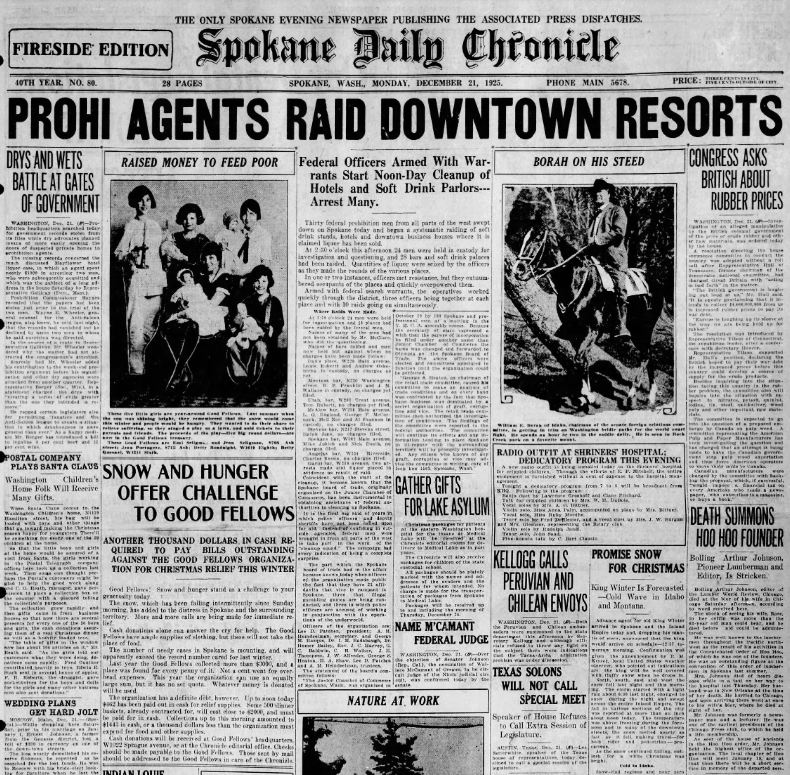
From 1925: About 30 federal Prohibition agents conducted a massive raid of Spokane’s downtown hotels, bars and “soft drink stands.”
The drinks were not exactly “soft.” Large quantities of liquor were confiscated. At least 24 men had been arrested and more were expected,
“It is the first big raid in years in which police officers and deputy sheriffs have not been called upon for aid,” said the Spokane Chronicle. “Instead of confiding in outside agencies, federal men were brought in from all parts of the West to take part in the work of the ‘cleanup squad.’ The campaign had every indication of being a complete surprise.”
Federal agents were apparently acting on information “that vice is rampant in Spokane” and that some police officers “are accused of working in conjunction with the operations of the underworld.”