
‘He’s going to get judgment’: Man linked to two Spokane killings dies on parole in Boise
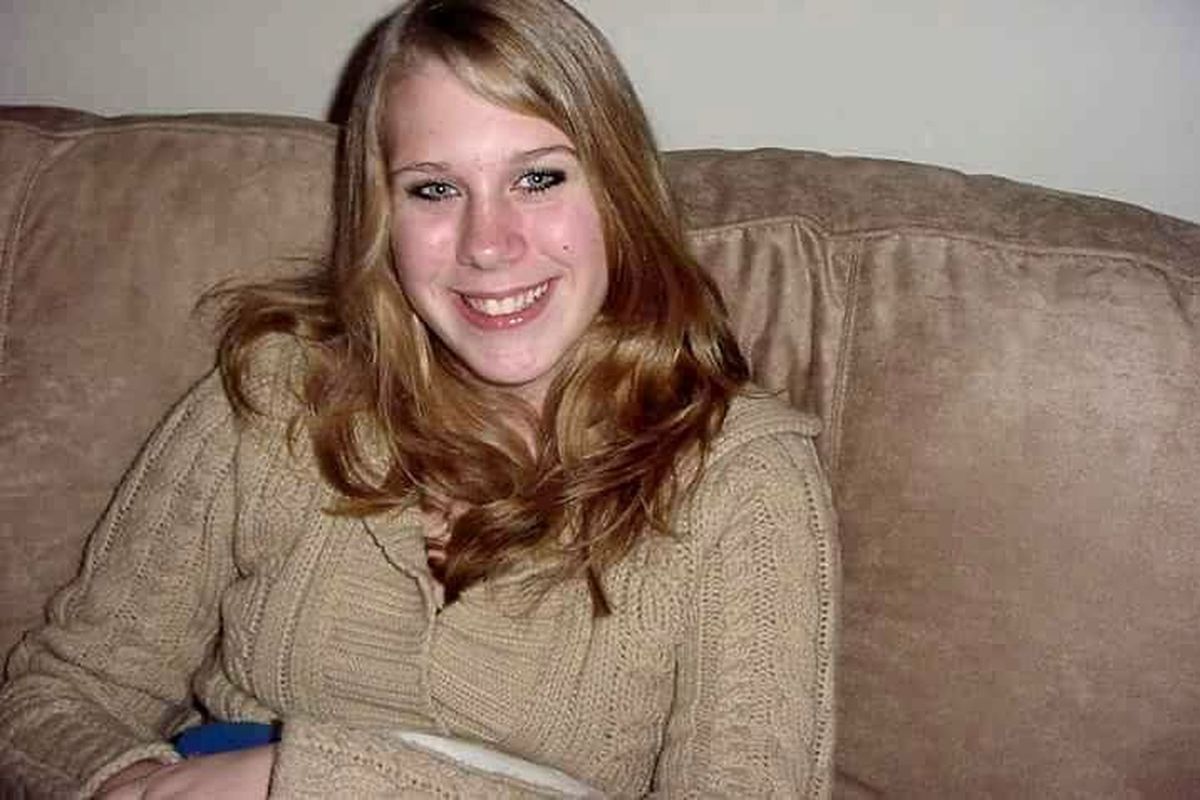
Some unnamed recipients will soon receive the transplanted liver and kidneys from a double killing suspect from Spokane.
Surgeons on Tuesday afternoon harvested the organs from Robert G. Davis, 55, who was on parole in Boise after serving several years in an Idaho prison for twice choking a Coeur d’Alene woman to unconsciousness on June 21, 2014, in a sexually motivated attack that was thwarted by the woman’s dog. Davis was pronounced dead Tuesday evening in Boise.
But Davis’ death, caused by a medical event at a Boise gym on Dec. 24 that left him brain-dead, means that he will never face justice for the 2012 killing of 20-year-old Kala Williams. Davis’ DNA was found on items next to Williams’ body, which had been cut in half.
Davis earlier had admitted to his mother, Sherri “Raynell” Cook, of helping dispose of the remains of Heather Higgins, who disappeared from Spokane in 2010. Higgins was last seen getting into a van driven by Davis.
“My heart goes out to the mothers of those women,” Cook told The Spokesman-Review on Tuesday. “They’ve waited all this time for him to go to court. It feels like they are being cheated. There is nothing I can do about it.”
Spokane Police Sgt. Zac Storment said Tuesday that investigators had been building a case to present to Spokane County Prosecutor Preston McCollam to charge Davis with murder in connection to the Williams killing, but that had not occurred prior to Davis’ death. McCollam was appointed prosecutor in September to replace the retiring Larry Haskell.
“With Preston McCollam coming in, he signaled that he would be a lot more interested in charging than they were before,” Storment said. “It seemed to me that everything was moving forward. Now obviously, we are in a different situation.”
Julie Beauchaine is the first cousin of Williams, whose remains were found on Mother’s Day weekend in 2012. Her bisected body was found in an undeveloped forested area near West 14th Avenue and South Lindeke Street in Spokane.
Beauchaine helped raise Williams, who she described more as a sister than a cousin. She said the news of Davis’ death hit like a “gut punch.”
“There should still be some reason why they didn’t charge (Davis) beforehand. The prosecutor’s office should still be held accountable,” Beauchaine said. “They took an oath that they haven’t followed to this very day. They failed our family to this day.
“They should be in front of my face and telling me why our family wasn’t important enough for them to do their jobs. But that’s never going to happen.”
Jackie Forney is the mother of Higgins, who was 39 when she got in the van with Davis in 2010 and was never seen again. She learned Tuesday about Davis’ impending death.
“He got away with it on this side,” Forney said. “I guarantee you just minutes after his spirit leaves his body, he’s going to get judgment. We would rather he got it here.”
An ‘angry’ man
A dog mauled Robert Davis’ face when he was 3. The dog ate part of his cheek, leading to several reconstructive surgeries that left him with permanent scars, Cook said in a 2017 interview.
The scars caused a speech impediment. Teachers wouldn’t call on him in class. Students never let him forget.
“He was angry. It had a great effect on how he dealt with other people,” Cook said. “His scars get red when he gets angry or his blood pressure rises.”
Davis started using drugs and showed symptoms of mental health problems. Cook said she tried to get help for him many times, but he would often slip away at the last second.
The first known contact police had with Davis for a serious crime came in 2007 when a woman named Dawn Sandell reported that Davis had choked her unconscious and raped her.
According to court records, Spokane police described Sandell as “mentally ill and a sometimes substance abuser. (She) declined to pursue charges.”
That case was eventually forwarded to prosecutors, but not until 2013. They never charged Davis in connection with those allegations.
But in 2010, some three years after Sandell reported being raped by Davis, she made an odd introduction.
Higgins was Sandell’s neighbor across the street in Spokane and a student at Eastern Washington University.
While she always paid her rent, she had bipolar disorder. About two weeks before she went missing, Higgins suffered a bad episode that required her to be hospitalized.
While in the hospital, someone broke into Higgins’ apartment and stole the cash she needed to get her new apartment.
Desperate to keep the rental agreement intact, Higgins needed a ride to her bank. She also told a friend she could hock some rings at a pawn shop.
She then walked across the street and asked Sandell if she knew anyone who could give her a ride.
Sandell gave her Davis’ name and number, police confirmed. Davis arrived that day, Sept. 20, 2010, in a blue minivan with fake wood paneling on the sides. Higgins was never seen again.
Sandell died on April 25, 2017, of a drug overdose, four days after an interview request by The Spokesman-Review about Davis and Higgins. Sandell was 47.
After Williams was found dead in 2012, Cook came forward and told detectives how her son, Davis, claimed to have helped dispose of Higgins’ body in 2010.
Then in 2016, the Higgins case was assigned to a new police detective, Paul Lebsock. He remembered the detail of how Forney said Higgins had rings to hock. Lebsock checked records at local pawn shops and discovered that Davis hocked six rings the day after Higgins disappeared.
One of the rings bore a distinctive pattern.
“It was my mother’s ring,” Forney said. “Nobody checked the pawn shops for five-and-a-half years?”
Williams case lingers
Despite finding DNA evidence linking Davis to Williams’ crime scene, Spokane County prosecutors never filed charges.
Haskell initially pointed to the cause of death. Former Spokane County Medical Examiner Dr. John Howard ruled Williams’ manner of death as “undetermined,” despite her body being cut in half.
“It was so obvious that it was a homicide that the detective hired a different coroner to examine the body,” Williams’ mother, Martine Maggio, of Spokane said in 2017. “They found DNA evidence under her fingernails and defensive marks. Why does it take so long” for charges to be filed? she asked. “They wait so long that it almost becomes a cold case.”
That changed in 2022 when new Medical Examiner Dr. Veena Singh changed the cause and manner of death to “homicide.”
However, prosecutors still didn’t charge Davis, and he eventually was paroled in 2024 to a halfway house in Boise.
Cook said her son recently had been working, although she was not sure at what job.
“I know he was working steady because he bought a car and he bought a Harley-Davidson,” she said. “He was clean and sober. He was doing everything right. He had some time doing the right things and being the person we all knew was in there. He was very proud that he bought a Harley.”
Davis told his mother he was going to pursue a commercial driver’s license so he could become a long-haul trucker.
“I wanted to light a candle and say, ‘Please do not let this happen,’ ” Cook said. “I would not have wanted to be picked up by him.”
Between shifts, Davis had been exercising at a local Planet Fitness gym. Then on Dec. 24, he collapsed while lifting weights.
“They did CPR on him for 20 minutes. He never woke up,” Cook said. “They were finding people who were a match. That’s the only reason he has been kept alive this long. Otherwise, he would have been removed from life support.”
Cook said she knew her son’s time as a free man probably was coming to an end even before he collapsed.
“This isn’t really fair for the families he attacked,” Cook said. “I know they were getting ready to (arrest him). Major Crimes (detectives) had been here talking to me about it. If I understand it correctly, they were tidying it up for the prosecutor to have him picked up, and then this happened.”
As she waited for surgeons to harvest her son’s organs, Cook was busy donating Davis’ belongings to the halfway house and other charities.
It gives her some comfort to know that a son accused of killing others may save lives through his organ donation.
“I’m not saying that I believe there was any chance he was innocent,” she said. “I know what they had as far as evidence is concerned. But everybody deserves their day in court.”
For Forney, Davis’ death ended the last best chance of ever finding her daughter’s remains.
“I was hoping he would tell his mother something before he died,” she said.
Forney still cries every day over her loss.
“When you have an adult child murdered, you never get over it. It’s a life sentence,” she said.
Investigators missed their chance by not charging Davis with the 2007 reported rape, she said.
“Then he gets my daughter, and they didn’t do anything,” Forney said. “Then he gets Kala Williams … and they still wouldn’t charge him. Then he goes and tries to kill (the Coeur d’Alene woman).
“I would like law enforcement to know, there is more than one victim to these crimes,” she continued. “Can you imagine for what he did to Kala that that man was allowed to go free? What kind of society have we become?”