
Reconciliation bill aims to ramp up logging on federal lands
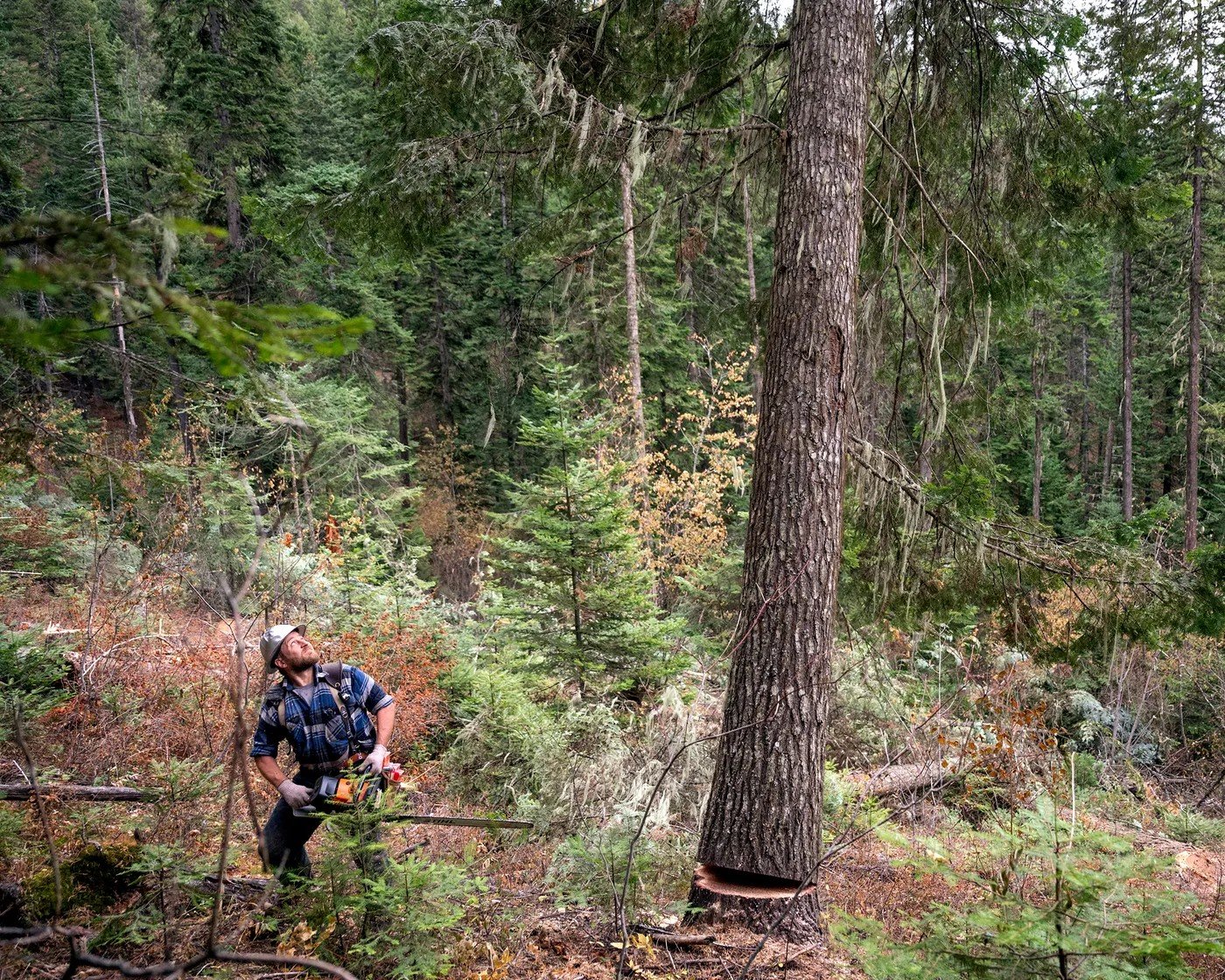
LEWISTON – The budget reconciliation bill being debated in the U.S. Senate mandates a dramatic increase in federal timber sales.
The Senate version of the bill calls for the U.S. Forest Service to increase the volume of timber it sells by at least 250 million board feet year over year starting in 2026 and lasting through 2034. The Bureau of Land Management would have to increase its timber sale volume by 20 million board feet year over year.
The Forest Service sold 2.8 billion in 2024. If the year-over-year demand is applied to that base, it would raise the volume sold to about 5.13 billion over nine years, a level not seen since the early 1990s.
The legislation would also give the companies that purchase timber sales at least 20 years to do the logging, roughly double the length of today’s contracts. Proceeds from timber sales would be deposited in the U.S. Treasury and used to help offset tax cuts elsewhere in the legislation that the Congressional Budget Office projects will add more than $3 trillion to the national debt.
The timber industry supports the mandatory harvest increases but not the longer contracts. A letter organized by the American Forestry Resources Council and signed by 72 timber companies and associations, including the Idaho Forest Group, called the legislation’s timber provision a top priority and essential to their needs.
“This language and approach provides our industry with predictability and certainty – clarifying achievable, implementable, required volume increases to federal timber supply now and into the future.”
Conservationists said setting timber sale targets in a congressional budget bill ignores on-the-ground realities and will ultimately harm forests, fish and wildlife and water quality. They fear it will lead to logging in remote areas like federally recognized roadless areas rather than in forests near homes and communities where wildfire carries a greater risk.
Last week, the Trump administration announced it will seek to rescind the national roadless rule that protects 59 million acres of remote forest from most roadbuilding and logging. (The rule does not apply to Idaho, which has its own roadless rule.)
Randi Spivak of the Center for Biological Diversity noted the Department of Agriculture unveiled new implementing regulations associated with the National Environmental Policy Act on Monday that she said reduces public comment opportunities.
“It’s going to be devastating,” she said. “They have removed any semblance that the public can hold the Forest Service accountable.”
If the agency builds roads and logs in roadless areas, Spivak said it stands to increase fire risk rather than reduce it.
“Roads are vectors for human-caused fires.”
John Robison of the Idaho Conservation League said smart, well-planned logging with public input that targets overstocked forests near communities makes sense.
“There are far more areas, like in roadless forests, where it could have long-term negative effects for watersheds and downstream communities. That is the challenge with an arbitrary top-down goal,” he said. “We have had better success working to increase timber harvest in a way that also complements other goals such as water quality improvement, wildlife habitat and wildfire risk reduction and those are all driven locally from the bottom up.”
Nick Smith, spokesperson for the American Forest Resources Council, said the industry is urging caution when it comes to extending contracts to 20 years or more. The organization wrote that longer contracts can help the industry invest but could reduce competition by allowing some companies to lock up all available timber volume in some areas.
They also said the bill’s requirement that timber sale proceeds be sent to the treasury cuts rural counties out of a share of the proceeds. Counties historically have received 25% of those receipts to help fund schools and roads. They have recently received funding from the Secure Rural Schools Act instead.
Another portion of timber proceeds was traditionally retained by the Forest Service to plant new trees and plan future timber projects.
“For these reasons, we recommend that the long-term contracting language be removed from the Reconciliation bill so that we can work with you and the Administration to meet our mutual goals, and the needs of the forest products industry, loggers, and county governments,” the timber interests wrote.
The June 26 letter was sent to Sen. Mike Lee of Utah, chairperson of the Senate Committee on Energy and Natural Resources and his counterpart in the House, Rep. Bruce Westerman of Arkansas.