
Iceland volcano leaves visual spectacle in 12th eruption in four years
A volcano in southwestern Iceland erupted early Wednesday in a spectacular show of spewing lava and glowing magma, marking the 12th eruption on the Reykjanes Peninsula since 2021.
The Sundhnukur volcano’s overnight eruption is the ninth in the area since December 2023 and prompted evacuations in the surrounding areas, including the fishing town of Grindavik and the Blue Lagoon geothermal spa, one of the country’s most popular tourist sites.
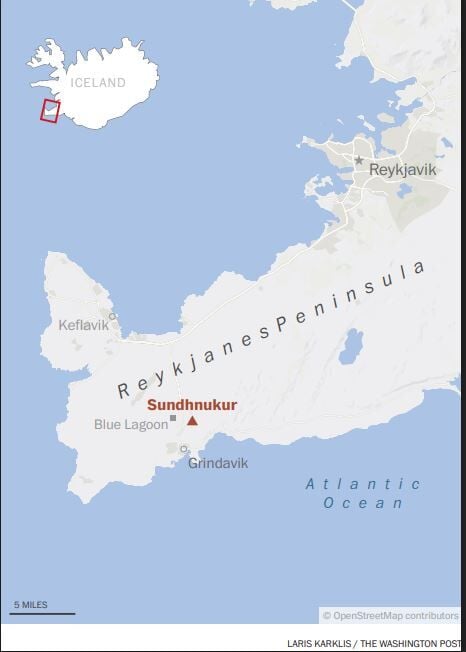
Magma forced its way through to the surface at 3:56 a.m. local time, over two hours after seismic activity started on the Sundhnukur Crater Row, the Icelandic Meteorological Office said. The eruption created a fissure measuring between 0.4 and 0.6 miles long.
The volcano erupted just northeast of Stora-Skogfell – about 30 miles southwest from the capital, Reykjavik – and magma flow was reported to be in a similar area to previous eruptions, a Met Office official said, according to public broadcaster RUV.
The crater lies between Grindavik and the Blue Lagoon. In November 2023, police ordered the evacuation of Grindavik, a town of nearly 4,000 residents – the first time in half a century that a sizable populated area had to be fully evacuated ahead of an eruption in Iceland. The town has remained largely deserted since.
As of 9 a.m., there were no reports of immediate damage or injuries and no threats to infrastructure, but all routes heading in and out of the area were closed, according to the Icelandic Road and Coastal Administration. Flights at Keflavik airport, an airport used for access to the Blue Lagoon, were operating normally and on schedule.
Gas pollution is expected over Reykjanesbær, home to the Blue Lagoon, and other southwestern regions, the meteorological office said.
The past two volcanic eruptions on the Reykjanes Peninsula were in November and April.
Iceland, often referred to as the land of fire and ice, sits on the Mid-Atlantic Ridge, a mostly underwater mountain range where the North American and Eurasian tectonic plates are slowly spreading apart and widening the Atlantic Ocean.
While volcanic eruptions are common across Iceland, this force, which has been building up over hundreds of years, is the reason for the ongoing, increased activity since 2021.