
50 years after the Snake River dams were completed, can they continue to coexist with salmon?
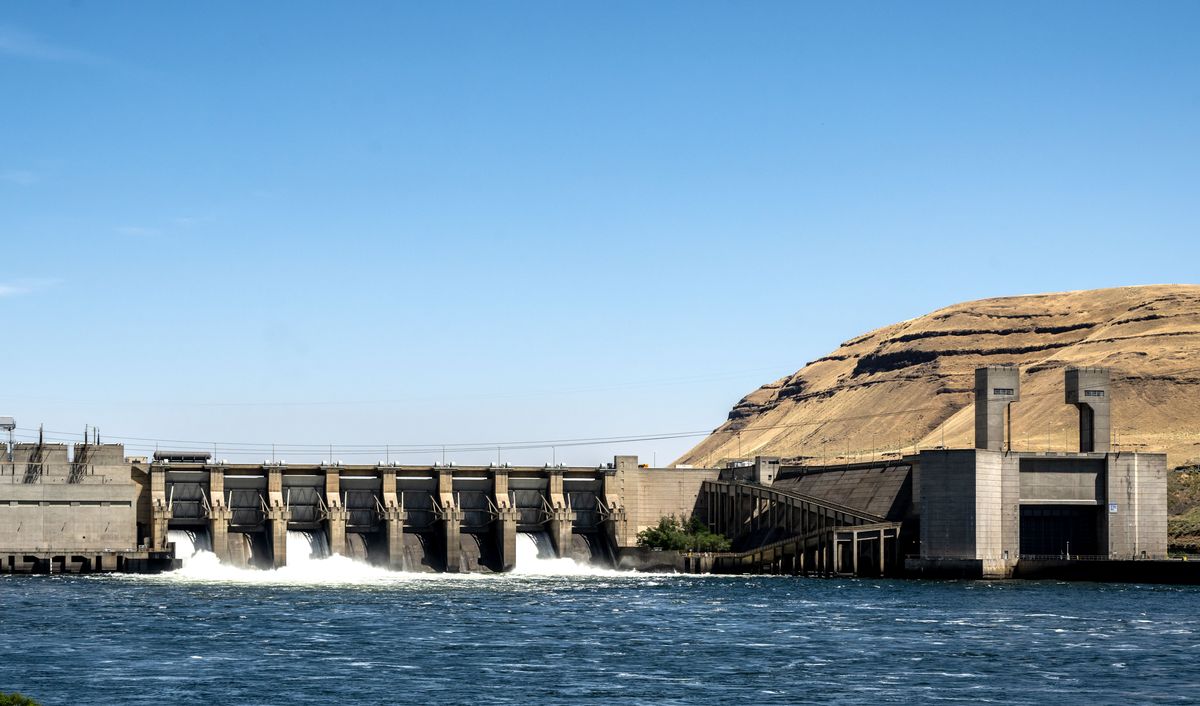
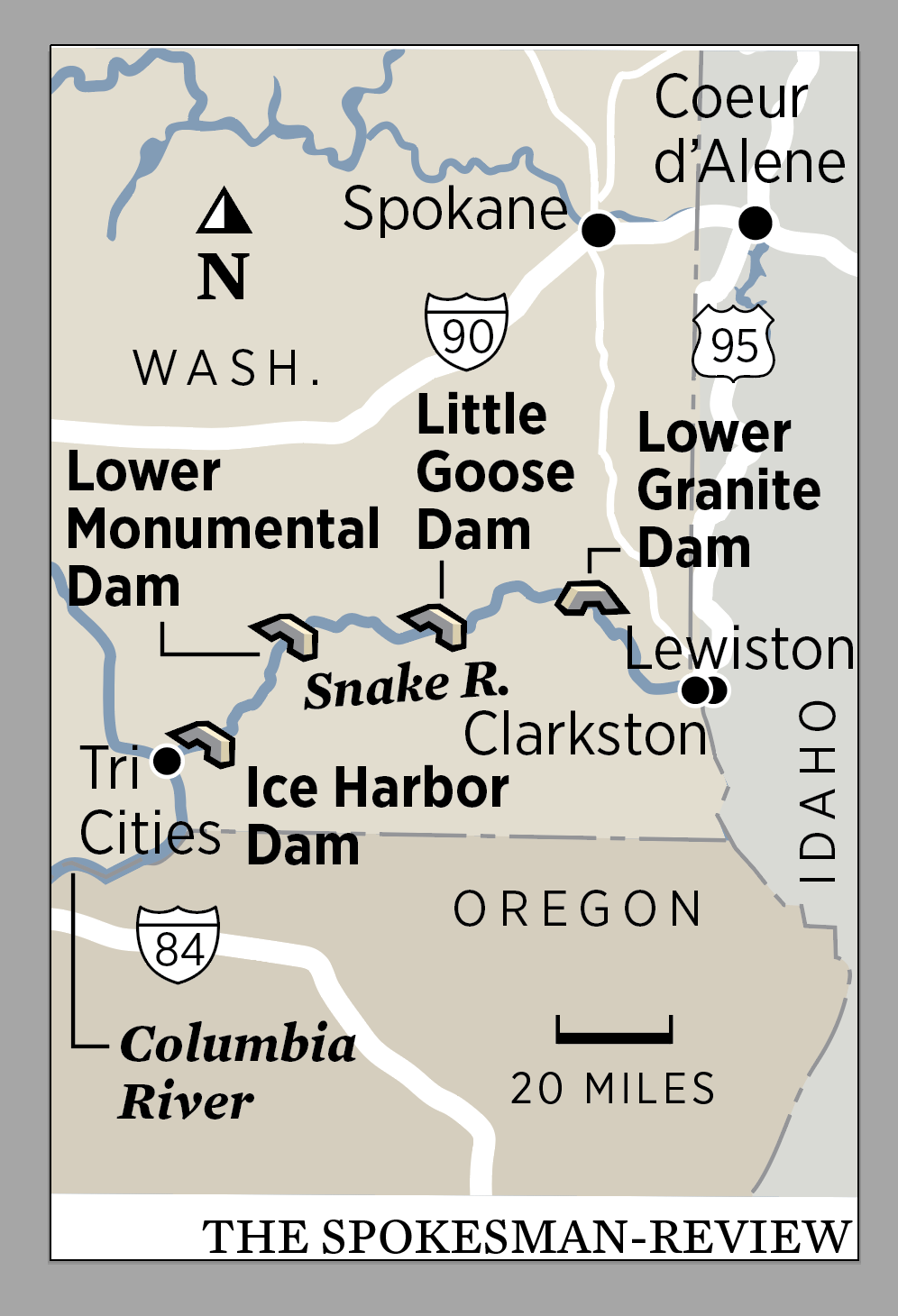
WASHINGTON – Fifty years ago in June, elected officials gathered in Lewiston to celebrate a remarkable feat: With the completion of the Lower Snake River dams, a $1 billion project had effectively turned the Inland Northwest town into a seaport some 300 miles from the Pacific coast.
“This is in every sense a historic occasion,” Gov. Robert Straub of Oregon said at the dedication ceremony for the Little Goose Dam on June 19, 1975. “For more than 100 years, slack water from the Pacific Ocean to Lewiston has been a dream.”
In Lewiston a day later, Gov. Cecil Andrus of Idaho was less sanguine, even as he hailed the “magnificent system” the federal government had just completed.
“The cost of this system has been horrendous in money spent and the cost to natural resources,” The Spokesman-Review reported Andrus saying at the time. “We did not realize all the ramifications this system would have. But we shouldn’t wring our hands. These problems are solvable.”
When the chief of the Army Corps of Engineers chided the Idaho governor at an event the next day, saying Andrus “didn’t seem to realize that we have fish ladders on the dams,” Sen. Frank Church of Idaho replied, “We do know of the fish ladders, and we know of their deficiencies.”
Since the four Lower Snake River dams were completed, the economic benefits they provide have been in tension with their impact on the salmon and steelhead that hatch above the dams and must return there from the ocean to spawn before they die. After the Biden administration and Northwest Democrats took tentative steps toward the potential of breaching the dams in hopes of restoring dwindling salmon runs, President Donald Trump’s return to the White House seems to have foreclosed that possibility – at least for now.
On June 12, a week before the 50th anniversary of the dams’ dedication, Trump announced his administration would withdraw from a Biden-era agreement with four Northwest tribes, conservation groups and the states of Washington and Oregon. Half a century after Sen. Warren Magnuson, a Washington Democrat, recalled how plans to develop the Snake and Columbia rivers were once denounced as “socialist schemes,” most Northwest Republicans have taken up defending the dams as a signature cause, while some of the region’s Democrats have hinted at being open to breaching them and replacing the benefits they provide.
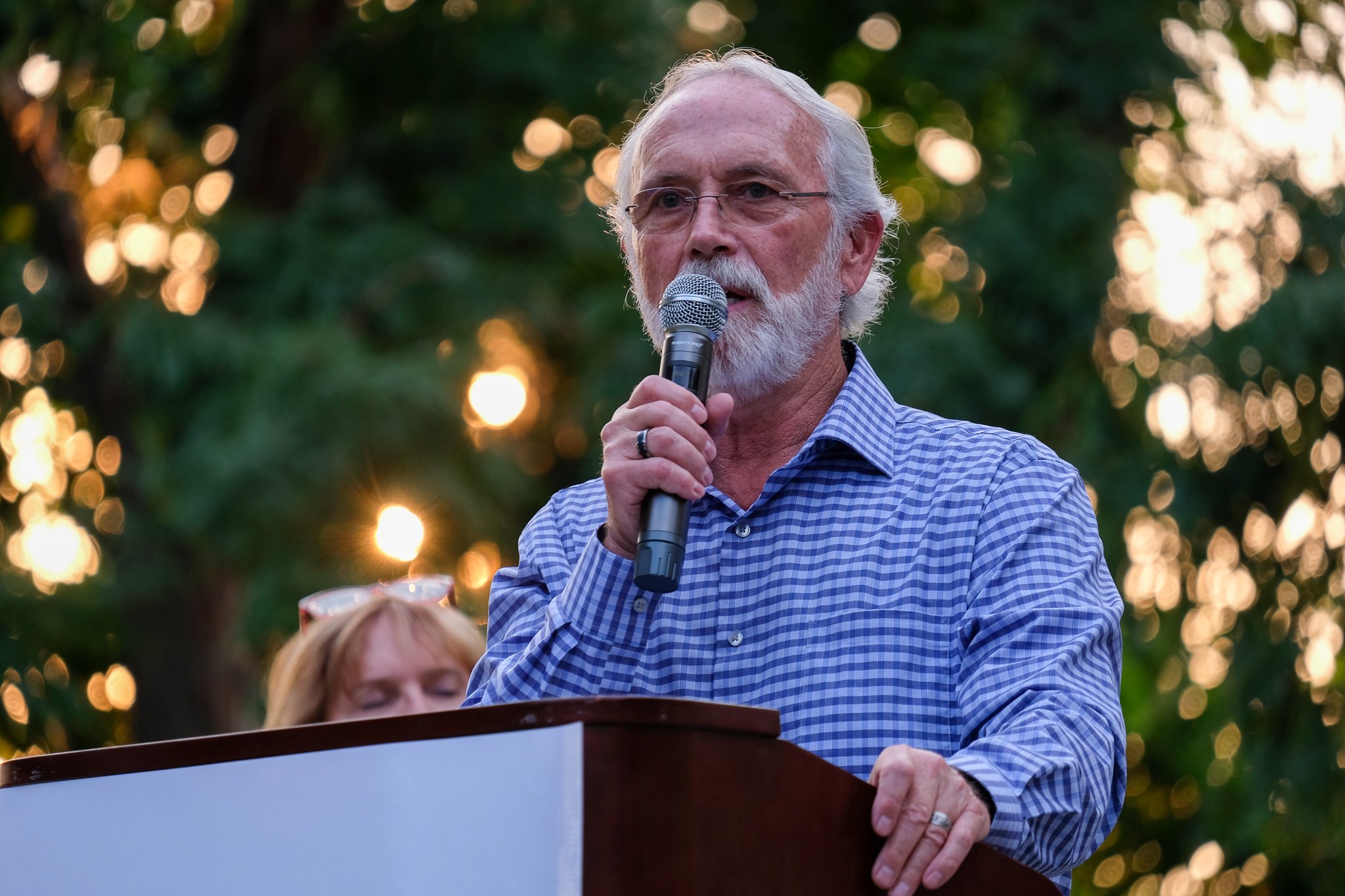
“We’re blessed, unlike anywhere else in the country,” Rep. Dan Newhouse, R-Sunnyside, said of the energy the dams provide. “It just makes sense for us to utilize the hydroelectric system.”
In addition to the power generated by the river flowing through turbines, the dams help irrigate arid farmland and turn the Snake and Columbia rivers into a series of pools that let barges move vast amounts of cargo between Lewiston and the Pacific more cheaply than by road or rail.
Sitting in his office at the U.S. Capitol on June 27, Newhouse said hydropower must be a major part of the United States’ energy future, even as the Trump administration pushes to increase the country’s production of – and reliance on – oil, gas and coal. Unlike Trump, who frequently rails against “ugly” wind turbines, the GOP congressman said wind and solar projects have a place in the nation’s energy mix, but only “where it makes sense.”
Newhouse represents a heavily agricultural swath of central Washington that includes the Yakama Reservation and the western half of the Colville Reservation. He said the end of the federal government’s $1 billion pledge to restore salmon habitat, invest in tribal energy projects and study the possibility of dam breaching represents an opportunity to move past the fight over the Snake River dams and work together on other efforts to increase salmon populations, such as habitat restoration and culling sea lions, whose population has exploded in recent decades, and other predators.
“We’re wasting time – the salmon are imminently in danger – on this whole breaching fight,” Newhouse said. “And what we should be doing is putting our time and resources into things that will actually help.”
Chairman Shannon Wheeler of the Nez Perce Tribe, which ceded millions of acres of land to the federal government in an 1855 treaty in exchange for the guaranteed right to fish in all their “usual and accustomed” places, said the Trump administration’s withdrawal from the Resilient Columbia Basin Agreement hasn’t changed the reality facing salmon and steelhead in the Snake River. The Nez Perce were one of four tribal parties to the agreement, along with the Yakama Nation, the Confederated Tribes of the Warm Springs and the Confederated Tribes of the Umatilla Reservation.
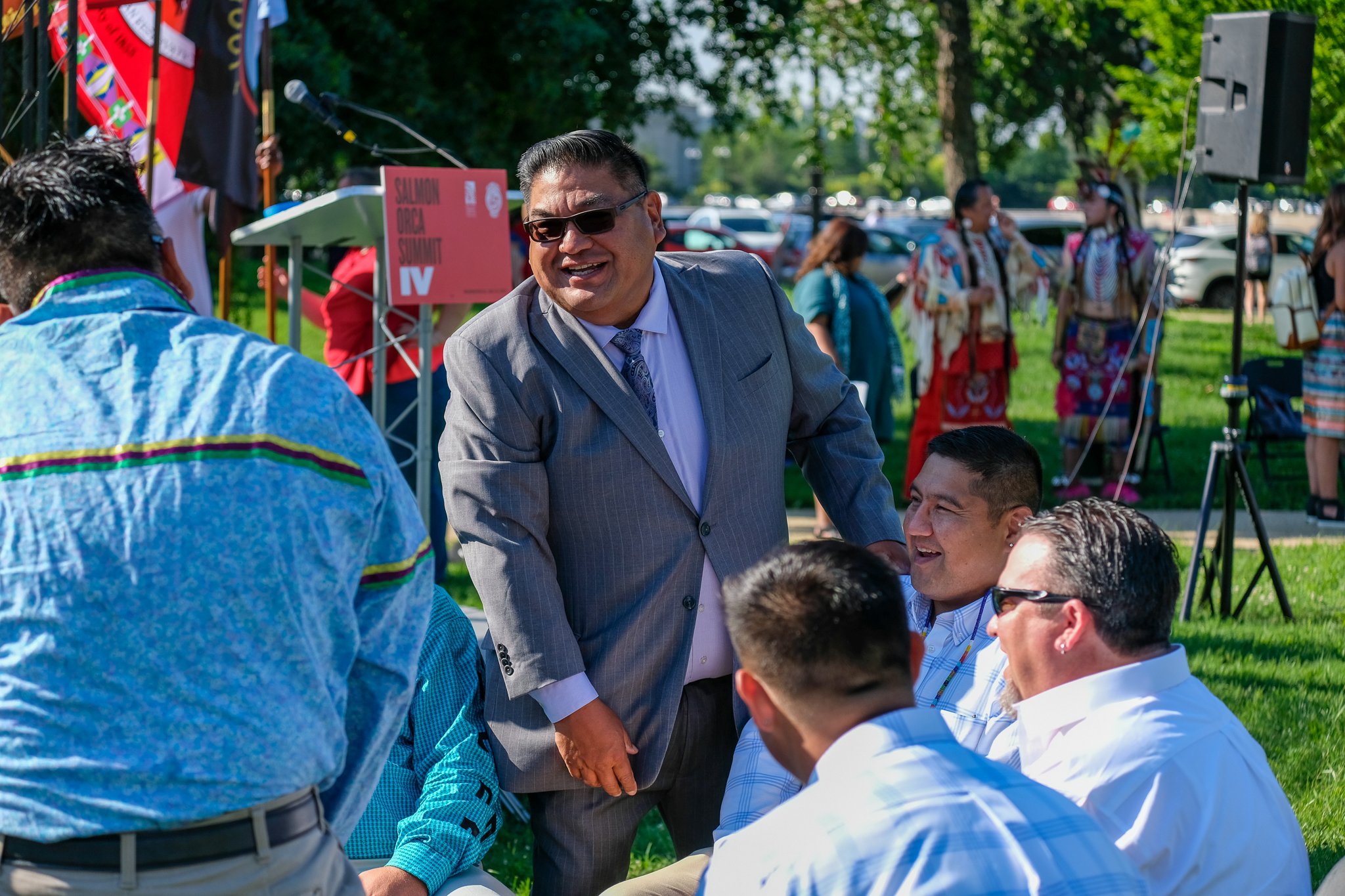
“The truth of it is the status of the fish hasn’t changed,” he said, adding that decades of habitat restoration work and improved fish passage technology at the dams haven’t restored the populations to levels that can be de-listed under the Endangered Species Act.
“They’re nowhere near healthy, harvestable, abundant numbers, and they’re definitely not even close to the historical numbers that returned to the Native waters here,” Wheeler said. “And so the plan was always to advance the Pacific Northwest in the services that were provided by the four Lower Snake River dams, and if we could replace those services while recovering the species, that was the portion that we, as a tribe, were rolling the dice on.”
That plan, which the Nez Perce and other tribes developed along with Rep. Mike Simpson of Idaho, the sole Republican to back dam breaching, involves replacing the benefits the dams provide by developing new energy generation and storage capacity, alternative modes of transportation for the goods that travel up and down the river and modified irrigation techniques to draw water from the river after its natural flow is restored.
“All of these things would have happened prior to breaching the four Lower Snake River dams,” Wheeler said. “Advancing the Pacific Northwest into a better, stronger, smarter place was exactly what we were all doing.”
Proponents of the dams argue that growing energy needs mean hydropower still will be an important part of the country’s energy infrastructure even if other sources, such as wind and solar power, are expanded. Wheeler emphasized that while those are projections about the future, the data collected by the tribe’s fishery scientists that show dangerously low numbers of fish returning to spawn are current and urgent.
“There’s only one way that these fish are going to recover,” Wheeler said, “and that’s with the breaching of the four Lower Snake River dams.”
Newhouse welcomed the Trump administration’s withdrawal from the agreement with tribes, states and conservation groups, which he said was the product of a flawed process that excluded public utility districts and other proponents of the dams. Those in favor of the agreement point out that it arose out of litigation that didn’t involve those parties, so they weren’t involved to begin with.
“Nobody wants to see salmon go away,” the congressman said, but he felt that the outcome of the negotiations between Democratic government officials and advocates of dam breaching was predetermined. “If you go into a negotiation with anybody and you already know that the deck is stacked against you, that it’s already determined that those dams are coming out, it kind of lessens the productive outcome that’s possible.”
Newhouse said he would do everything he can to help the Trump administration understand the importance of letting salmon thrive.
“That’s got to be part of our obligation,” he said. “If we’re going to keep the dams – if that’s going to be the privilege that we get – then the responsibility that we have is to do all we can on behalf of the salmon and the people that depend on them.”
The congressman, who sits on the House Appropriations Committee, said in the June 27 interview that he didn’t realize the Trump administration had axed a $500 million fish passage project at Howard Hanson Dam on the Green River east of Tacoma. But in a statement on Friday, Newhouse called that project “a great example of ways we need to support salmon populations in the Pacific Northwest.”
“I supported this project throughout the Fiscal Year 2025 appropriations process,” Newhouse said, adding that although the funding wasn’t included in the short-term bill that is currently funding the government after Trump sank a bipartisan appropriations bill in December, “I will continue to support fish passage efforts and ensure dams and salmon continue to coexist.”
The congressman cited that fish passage project and an effort this year to remove a fish-killing causeway at Bateman Island where the Yakima River meets the Columbia River – “unless Trump pulls that money, too” – as examples of the kind of work that can help restore salmon if the region can move past the dam-breaching fight.
Newhouse drew the president’s ire when he was one of just 10 Republicans who voted to impeach Trump for inciting the Capitol riot in January 2021, but he has recently been a reliable vote for the White House’s priorities in Congress and said he has a good relationship with Energy Secretary Chris Wright, whom he described as a smart and open-minded ally on hydropower issues. The lawmaker said he disagrees with the idea that the dams and healthy fish populations are mutually exclusive.
“I’m determined to prove that the dams and the salmon can coexist,” Newhouse said. “We’ve got more work to do, absolutely, but I think it’s absolutely worth it for us to redirect our energy and our resources so that we can have both, long term.”
Newhouse, who grew up near the Yakama Reservation, said he respects the cultural significance of salmon to the tribes but sees the benefits of the dams as too valuable to tear them out.
“As a state, as a region, as a nation – we need to have some of the things that the dams provide us, too,” he said. “It’s not an easy equation to solve, but it’s one that we have to.”
Wheeler said the Nez Perce are willing to work with the federal government, as long as it abides by the treaty it signed with the tribe, as Article 6 of the U.S. Constitution requires, and understands the tribe’s need to preserve their way of life.
“I believe that they honor tribal nations,” he said, “and they understand that treaty rights are the supreme law of the land, and we’re all subject to the Constitution and the rule of law.”