
‘That city deserves a team’: Former Sonics star Dale Ellis weighs in on NBA expansion, modern basketball
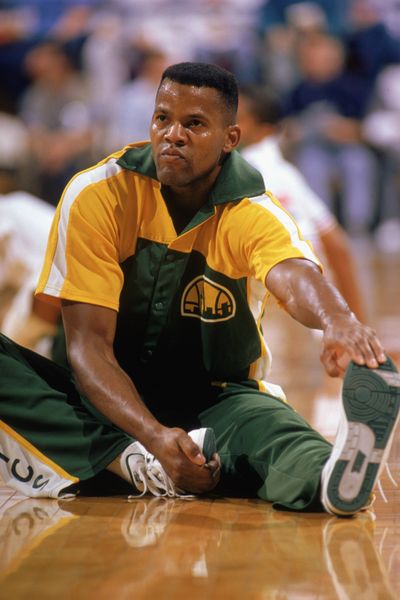
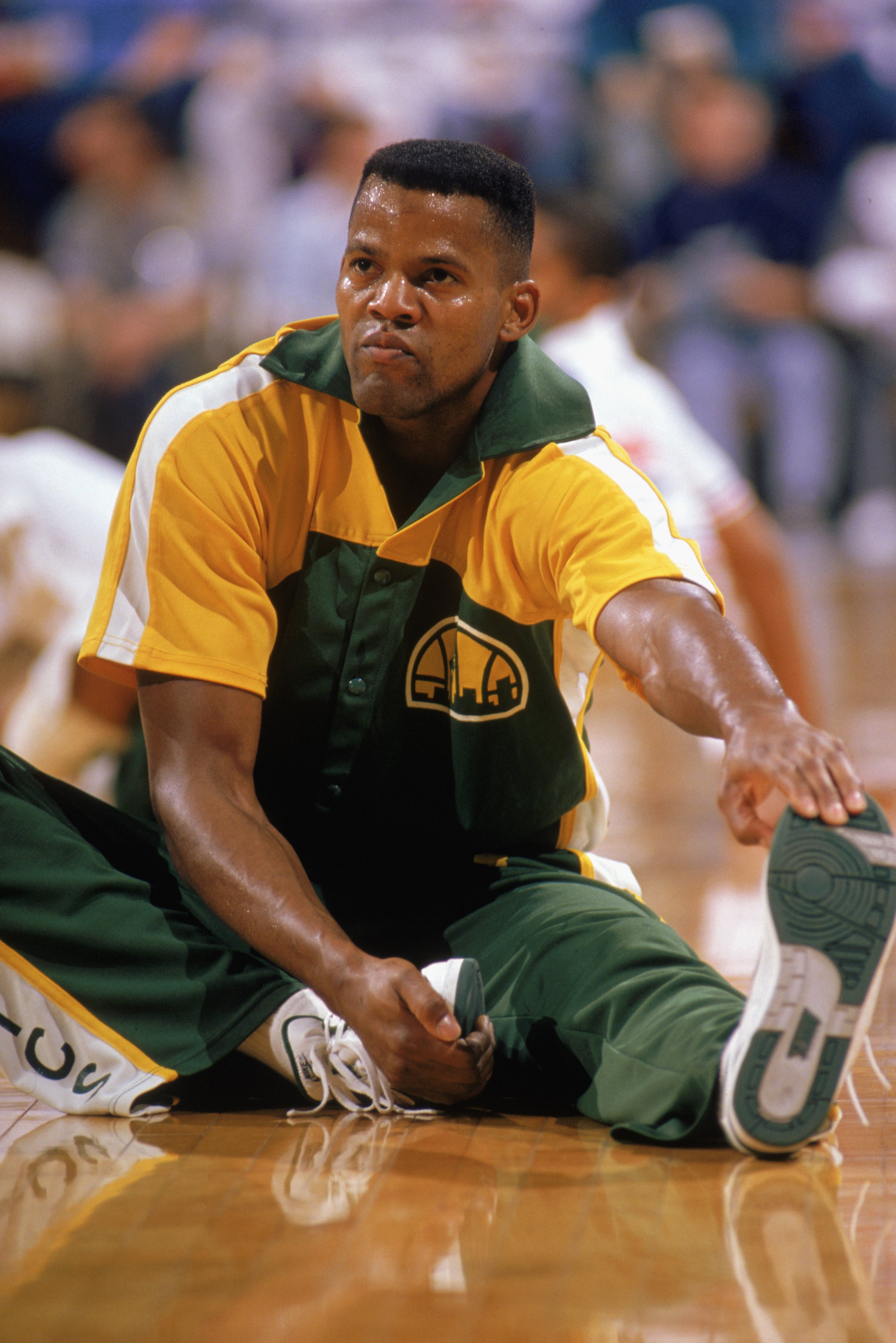
Nearly 20 years after the Supersonics left Seattle to become the Oklahoma City Thunder, the NBA is still mulling expansion, with Seattle a long-rumored suitor for a new team.
The latest development came last Tuesday, when NBA Commissioner Adam Silver said much of the same at the league’s board of governors meeting in Las Vegas.
“A couple of committees were authorized to start an in-depth analysis with no timeline set on when or if the board of governors would proceed,” Silver said.
The wait goes on, but the passionate basketball fans of the Pacific Northwest remain. Few know better than former All-Star Sonics guard Dale Ellis, who now serves as president of the Atlanta chapter of the National Basketball Retired Players Association.
“The Sonics should never have left, and we all know that,” Ellis said. “That city deserves a team. They are the greatest fans in the country.”
And while those fans wait, they watched their former franchise raise a banner in Oklahoma City last month. Ellis scoffed at the idea anyone in the region would have been pulling for the Thunder.
“I just cannot believe that a Seattle fan would become an Oklahoma City fan. It’s hard for me to imagine that,” Ellis said.
Ellis never caught on after being drafted by the Dallas Mavericks in 1983, failing to average double-digit scoring during his three seasons there. He was traded to the Sonics following the 1986 season, joining a team that he describes as “a group of unselfish ballplayers.” Ellis said his teammates would occasionally pass up shots in order to create more shot opportunities for him.
Ellis turned the page to enjoy “the most memorable period of his career,” in Seattle, turning into a prolific scorer. His progression from 1986 to 1987 was the biggest increase in points per game in league history, earning him the Most Improved Player award. He averaged 24.6 points per game from 1986 to 1990 during his first stint in Seattle.
The Sonics eliminated the Mavericks in the first round of the 1987 postseason, just one year after Ellis was traded, which he says was very exciting. He looks back on his time in Seattle fondly and still expresses interest in becoming involved in an administrative role if the NBA were to ever return to Seattle.
“It’s been 25 years or more, and there’s still all this excitement about the Sonics coming back. That should tell you everything,” Ellis said. “Hopefully, they’ll make that announcement very soon. That would be a great hit for the NBA. I would love to be involved in some type of way.”
In 1989, Ellis was a starter during the longest game in the history of the shot clock era, which lasted for five overtime periods. The Bucks beat the Sonics 155-154, and despite the loss, Ellis said it was the best game of his career, comparing it to childhood pickup games.
While the art of shooting has evolved rapidly in the 21st century, Ellis was one of the early innovators who dominated the league using the catch-and-shoot play style. He had the second-most three-pointers in league history at the time of his retirement and shot over 40% from beyond the arc throughout his 17-year career.
Since most of the best 3-point threats debuted after Ellis’ retirement, he is one of many elite shooters from past generations who get disregarded during debates about the all-time great shooters.
“My era absolutely doesn’t get respect as the greatest shooters,” Ellis said. “It’s always what’s in front of you right now.”
Ellis said the active player who reminds him most of himself is Washington State great Klay Thompson. He also referenced pickup-style basketball when asked about his thoughts on the current state of the NBA.
“The modern NBA is the ultimate pickup game, despite the fact that they don’t play physical basketball anymore,” Ellis said. “Put the physicality back in the game and stop making it so easy for these guys to play the game. I miss the physicality part. When I played, the game was simple, inside, and out.”
Additionally, Ellis said he would have been afforded the spacing of modern offenses.
“The game is a lot easier now than when I played it,” Ellis said. “There’s no telling what I would do in the game today because guys can’t touch you.”
Ellis believes that he is the greatest shooter to ever play the game, a mindset that he says is crucial for athletes to have.
“If you’re on an NBA bench, you have what it takes, and your goal should be to be one of the best players of all time,” Ellis said. “Set your goals as high as possible so that even if you fall short, you find something in between that’s really nice.”
After his retirement in 2000, Ellis moved to Atlanta to take care of his mother. He has served as the president of the Atlanta chapter of the Retired Players Association for 15 years. This will be his final year as the president, as he focuses more seriously on the athletic career of his 14-year-old son, DJ.
“He wants to play. He’s only played for two years, but I want to give him all I have to offer,” Ellis said.