
Then and Now: Brownie Baking Company
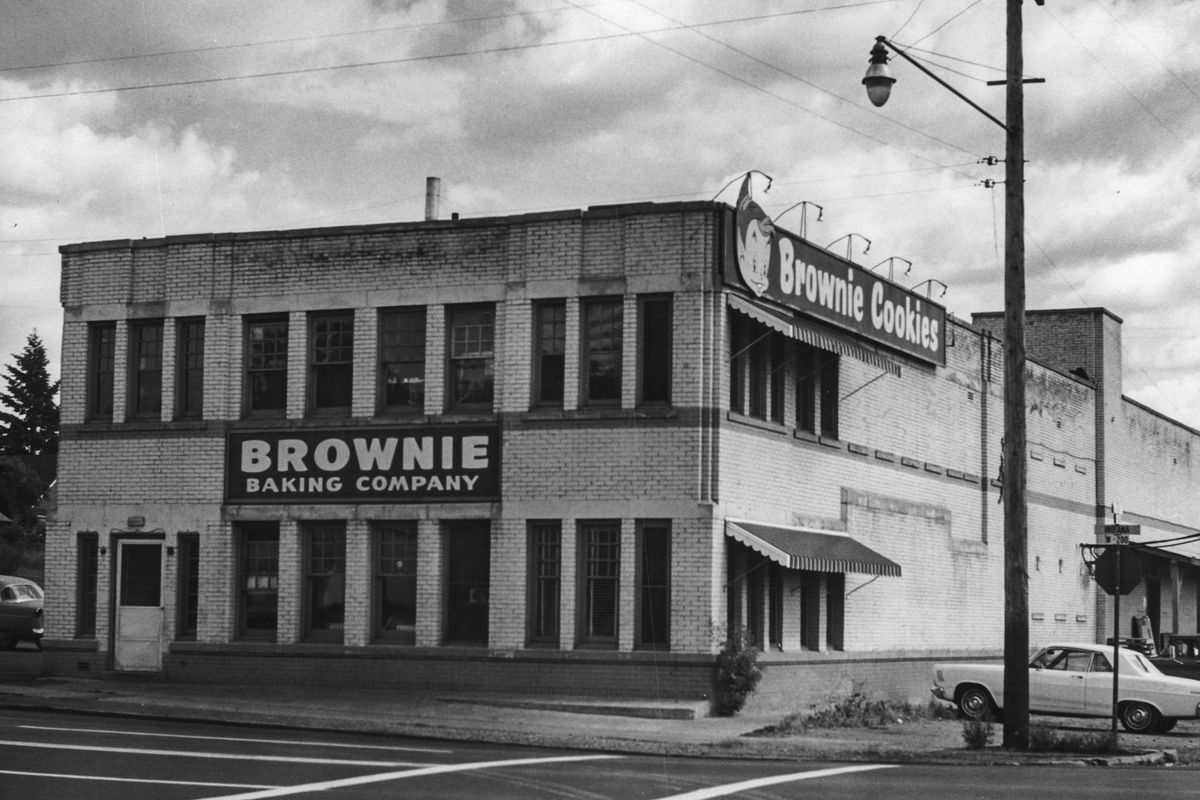
The brick commercial building at West Indiana Avenue and North Calispel Street was constructed around 1910 and first occupied by the Washington State College veterinary science program. That program closed because of budget cuts in 1923.
Around 1927, the Brownie Baking Company was started there by the partnership of Warner E. Bevins, Harry A. Bender and Daniel W. Patrick, all of whom worked in the commercial baking industry. Bevins moved from Seattle in 1913 and was a former manager at the Pacific Coast Biscuit Company. Bender also worked for Pacific Coast and the Washington Cracker Company while in management at Brownie.
The company expanded the building in 1934. Bevins died of a heart attack that year at the age of 51.
The company would become the largest locally owned cookie and cracker bakery in Spokane. Production grew to 500,000 cookies per day with 40 different varieties using a workforce of more than 50 people. Brownie also baked many Girl Scout cookies, reaching 300,000 boxes in 1967, while fulfilling orders from California to Alaska.
Bender died in 1939.
Patrick, the last living founder, sold the company to Martin R. Blum and Carl C. Pence in 1946. The new owners were part of Silver Loaf Baking, one of the larger bread producers in Spokane.
The company went through several strikes and labor negotiations with bakery unions in the 1950s.
Brownie was bought out by United States Baking Co. in 1967 for $53,000. U.S. Baking had been started by Adolphus Green, who would eventually bring hundreds of bakeries into his companies, many under the brand of Nabisco.
In 1968, the new owners moved the plant from Indiana Avenue to the Spokane Industrial Park, adding new equipment to increase production, but then shut down the Spokane plant in 1969, sending production to their bakery in Missouri.
Bixby Machine Tool & Supply occupied the former bakery through the 1970s and 1980s, selling drill presses, lathes and vises. The business stayed until around 1988, while renting space to other businesses.
Later, the building was used by Lloyd’s appliance repair, Cat’s Eye Gallery and others before becoming the home of Paradise Fibers, a store for knitters, weavers and spinners, starting around 2011.