
Spokane Falls attracted people, and eventually a city
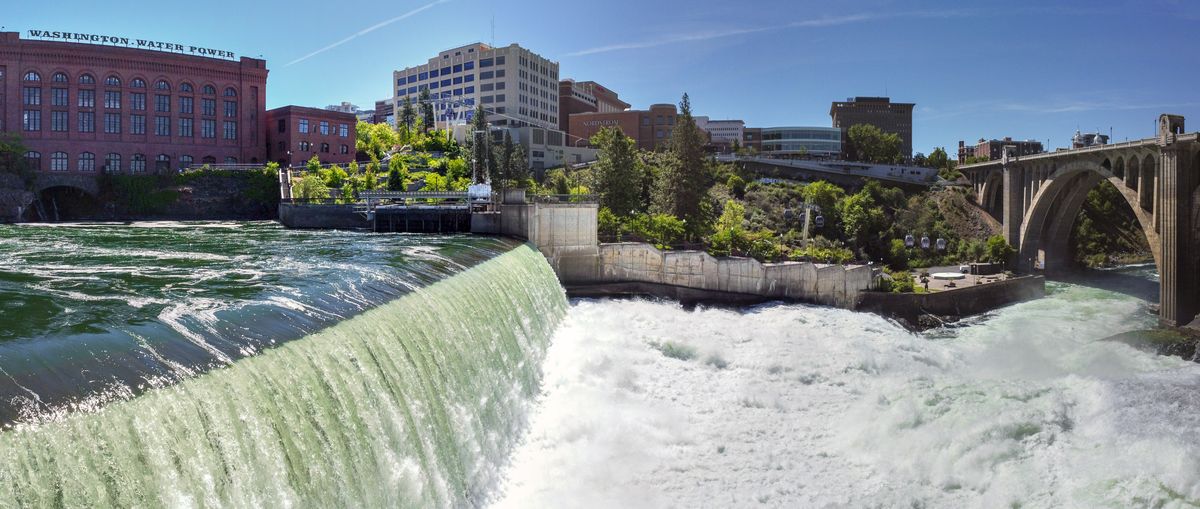
Spokane is one of the few lucky cities to have waterfalls in its midst.
They don’t have the raw power of say, Niagara Falls, but catch them in the spring and they have an awe-inspiring force. In the fall, when the flow is gentler, they have a different kind of beauty.
Before Europeans arrived, Indigenous people “appreciated the falls for their abundant salmon runs,” as J. William T. Youngs wrote in “The Fair and the Falls.”
Even then, Spokane was, in a sense, “urban,” said former Spokane Riverkeeper Jerry White in a 2018 interview.
“It probably started 8,000 or 9,000 years ago. The falls are a really great place to set up fish traps and provide a lot of sustenance for Native American people, whether that’s Kettle Falls, Celilo or Spokane Falls,” he said. “For that reason, they were the center and there was kind of an urban core here for thousands of years.”
Robert “Pard” Strahorn was hired in 1877 by Union Pacific to scout sites for a railway. His trek brought him to Spokane, joined by his wife, Carrie, who wrote about the trip in her book, “Fifteen Thousand Miles by Stage,” according to a previous Spokesman-Review article.
“As we stood on the banks of the beautiful river and saw its wonderful falls with the magnificent valley, its rich bunchgrass carpet then yellow as gold in its autumn garb, and recalled the vast grainland empire stretching to the southeast and southwest, the wonderful mines opening up nearby on the east, the ample forests, and the possibilities for power, the majesty of the situation made Pard declare that ‘here will be the greatest inland city of the whole Northwest,’ ” she wrote.