
Newman Lake fire district requesting voters renew EMS levy
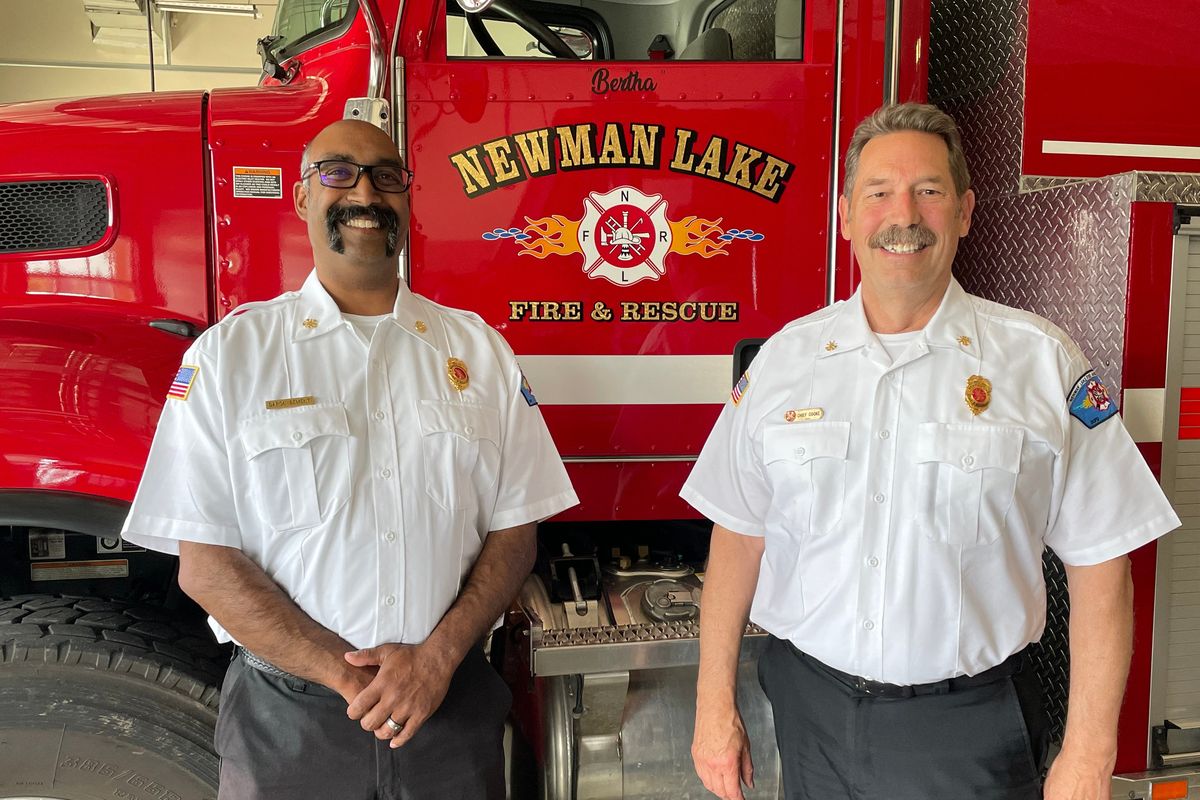
Spokane County Fire District 13 is asking voters to sustain medical response services by renewing a levy on the August ballot.
The levy, which renews once every six years, will be on the Aug. 5 ballot. The district covers 23 square miles surrounding Newman Lake.
The mostly volunteer fire department relies entirely on taxpayer funding, and with its operations sustained fully by two levies, a fire tax levy which passed last year, and this EMS levy which is renewed every six years.
“Those funds help keep things like our essential cardiac monitors in service and help make sure that we have EMS equipment on our apparatus,” says fire Chief Daron Bement. “You know, it sounds funny, but (it) pays for our Band -Aids and bandages and medications. All those funds come out of that EMS levy. So we’d really have to make cuts in other areas if we didn’t pass our EMS Levy to continue those services.”
If approved the new EMS levy would cost 50 cents per $1,000 of assessed property value, costing the owner of a $400,000 property $200 a year. The EMS levy currently generates about $230,000 of the district’s $772,000 budget.
“ We have some specialized units that have been funded through the levy and we continue to use some of those funds to make sure that they’re ready to go, such as our utility vehicles, ” Bemet said. He noted the district has two utility task vehicles – off-road vehicles that can reach more remote parts of the district.
In addition to funding essential equipment, the levy covers staffing as well. A recent part-time training officer position was brought into place as a result of last year’s successful passage of the fire tax, and will only stay in place if the EMS levy is renewed.
“EMS funds that can be spent from the EMS levy have to go only to EMS operations,” Bemet said. “They can fund personnel, and in this case, it will fund the majority of that training officer salary.” As a result of that, the training officer position has only been brought on for a singular year.
The department has four full-time positions: the chief, a captain, a training officer and one administrative job.
Bemet acknowledged he has some concerns about the timing of the levy, since voters in the district passed the fire levy last year after multiple rejections.
“It just so happened that the process for the general levy took so long that now we’re up against the time frame where we have to ask you to renew our EMS Levy,” he said. “We don’t want voters to think we’re coming to them every year asking for money.”
Bemet still is optimistic that voters will renew the levy.
“ Our citizens have, since 1988 successfully renewed our EMS levy every six years,” Bemet said. “I am very optimistic and hopeful that the community does support us, and it was really never a question of nonsupport with general Levy. I think there was just a lot of miscommunication, and there were some folks that thought we were asking for too much with the general levy when we started out.”
District voters approved the fire levy last summer. Voters earlier rejected proposed rates of $1.54 per $1,000 of property value.
“The first decrease was to $1.40 that was also voted down to $1.30, and then with a lot of community involvement and feedback, we compromised at $1.10 per $1000,” Bemet said. “And that came from community meetings and having the community give their input.”
In addition to lowering the tax, the approved levy was changed to a four-year tax instead of six.
With the passage of the levy, Bemet notes many improvements within the district as a result of the levy.
“We’ve been able to do things like reduce our response time by actually more than a minute,” Bemet said.
In 2024, the “out-the-door time was three minutes, almost on the dot, and we’ve improved that down to one minute and 58 seconds,” Bemet said.
This was partly due to the re-establishment of the resident program, which allows residents to work toward gaining more experience as firefighters, and gain certain certifications.
Bemet noted that the department maintained the Washington Surveying and Rating Bureau protection class of six. The department risked losing that protection class and potentially dropping to a class of eight last year, which could have sparked increased homeowners insurance rates.
“I think the biggest thing is reminding folks that we are 100% tax supported and we appreciate the opportunity to serve our community and we want to continue to give them that highest quality service that we can,” Bemet said.