
Then and Now: Auditorium Theater
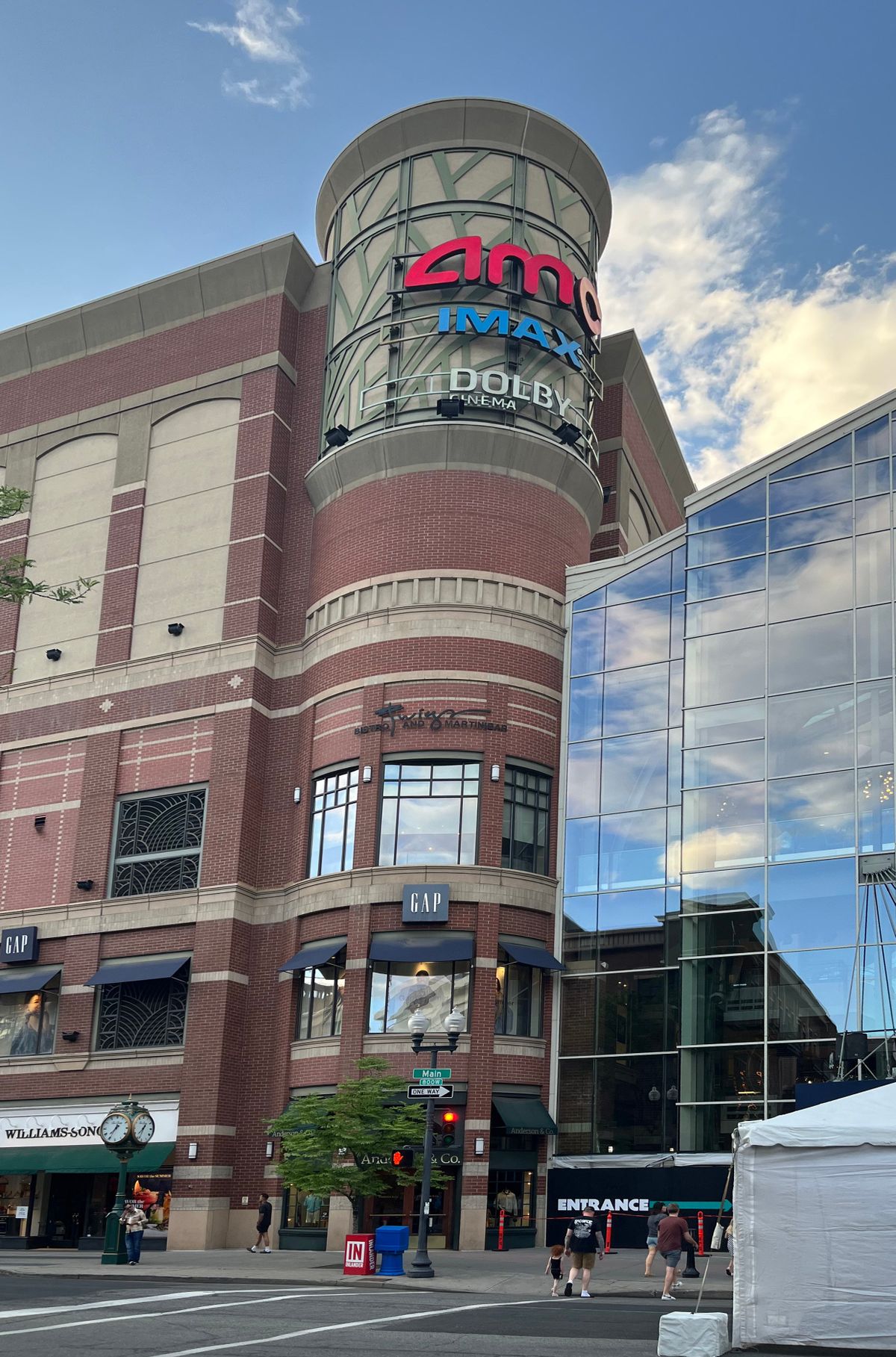
Two of Spokane’s wealthiest pioneer businessmen built one of Spokane’s beautiful buildings, shortly before the building helped topple their business empires.
Business partners Anthony McCue Cannon and John J. Browne built the Auditorium Theater in 1890, the year after the massive downtown fire of 1889. The two had come to Spokane in 1878, when there were only about 50 people living here. The building combined a massive stage in an elegant theater that would seat 1,750, where the owners hoped to draw audiences with the finest comedy, drama and music that Spokane could attract.
The owners hired Harry C. Hayward as manager of the theater, sending him to New York and other entertainment centers to book plays, musicals, operas, orchestras and dance bands. Along with high culture, vaudeville entertainment of comedians, musicians, singers and novelty acts also gained a following, albeit lowbrow in comparison.
One of Hayward’s challenges in booking large traveling groups was to arrange train travel for each group taking into account each group’s schedule. Although Spokane was on multiple transcontinental rail routes, it was still hard to get a theater troupe across long distances, especially the long ride from Chicago to Spokane, which could take more than three days of nonstop travel, limiting performance opportunities and a company’s profit. Hayward was an actor who came to Spokane in 1882 to perform, but had transitioned to managing the city’s greatest theatrical venue.
Cannon and Browne’s financial empire was damaged by the Financial Panic of 1893, which threatened the national economy with a major depression. Browne stayed in Spokane to manage his debt, while Cannon lost most of his assets, including his home, businesses and real estate to the bank. He left town and died in 1895 in a hotel in New York City.
Browne, who had laid out Browne’s Addition, donated Coeur d’Alene Park and started a newspaper, died in 1912.
By 1897, the Auditorium belonged to the Northwestern and Pacific Hypotheekbank, a Dutch investment bank that had financed much of Spokane’s rebuilding after the fire. It continued to bring in live entertainment, but by 1920, movies were becoming more popular and were cheaper to show.
In 1933, the bank cleared tenants from the building and it was demolished in early 1934.