
Ammi Midstokke: The wisdom of the albatross
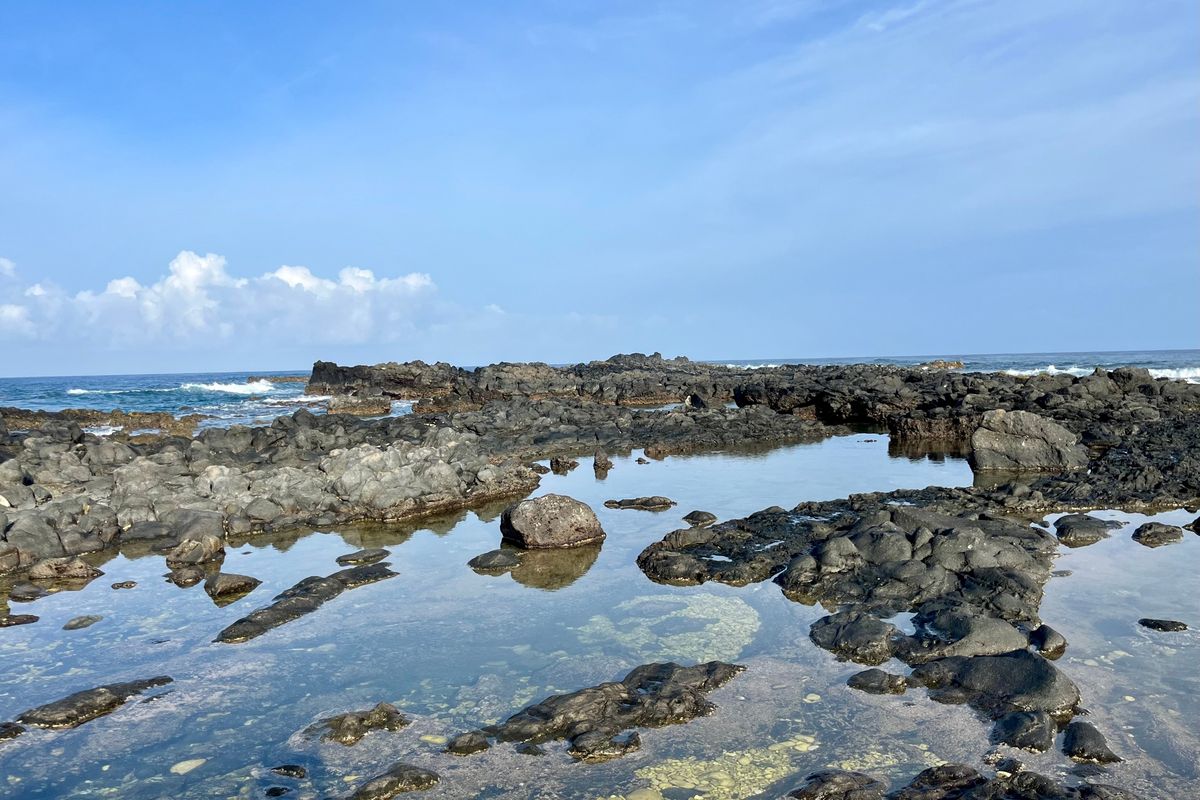
On the northwestern edge of the island of Oahu, a dirt road meanders along the coast like a ribbon of red soil and rock, dipping toward the ocean, spreading out like a fine net of trail between the rubbery alien flora of the island.
Great purple flowers and flowers that look like starfish and flowers that vine their way between other flowers and flowers that smell like warm honey and yellow flowers and white flowers and flowers emerging 12 feet high from towering stalks of seemingly other plants altogether create the watercolor shades of green that stretch from seashore to skyline.
The ocean bash-bangs-booms against the rocks in great frothy displays of spray that reflect the morning sun, a tossing of glitter toward the land. Occasionally, a seal glistens round and soft atop a black stone. From the milky horizon where sea fades and sky begins, the black lines of distant wings can be seen approaching. They are broad, magnificent in their sure float and playful dance with the far-off waves, mimicking the roll of water as if flying over a changing landscape.
This particular tip of the island is called Ka’ena Point. In Hawaiian mythology, when bodies have died, their souls wander to the point, pick their way across the stones to meet the tide, and follow it out to the afterlife. If this is true, the albatross must be their guides, for they nest here behind the protected gate of a predator wall, where they raise their young and hope they are among the varied statistics of survivors.
Someone decided humans are not predators and allowed them through the gates, despite the fact that we are the most responsible for their near extinction. For generations, they have been hunted for sport or stupidity, or their eggs and young consumed by our house mice and feral cats, or their bodies trapped by longline fishing, or their guts filled with plastic waste.
So it might seem presumptuous that we’ve made a veritable petting zoo for them at the end of an occupied island and allowed ourselves permission to penetrate the wall. The albatross there tolerate us because they have no choice or don’t know better.
There is the propensity to celebrate such acts of conservation, to understand that to make these birds accessible to myriad tourists that flipflop their way to the end of the road is to maybe raise awareness or a few dollars for the cause. If there is anything conservationists understand, it’s the reality that we humans only care to conserve the things we can see or touch or own or have rights to.
Maybe this is why Hawaii is such a blatant example of our failures: In such a small area of land directly dependent on ecological balance for its livelihood, the decimation of it is rapidly felt by those who live there. But not by those who don’t. We arrive with our plastic bottles of “reef safe” sunscreen and complain heartily about tourism tax even as we demand the amenities of convenience everywhere we go.
We want beaches and palm trees and ocean views and skydiving and whale watching and gelato and sushi and no less than five bikini stores per block, but please do not sully our holiday with tales of massacre, land theft or housing crises (for the hotel is not even wholly booked), and also keep the addicted, the vocal, the venomous away from our slice of paradise for we like to keep our perspective as small as the umbrella in our drinks.
The Hawaiian word for those of European descent is “haole,” coming from “ha” for breath and “ole” for without. It is said that the old way of greeting was to bring faces together, to breathe into and out of one another’s mouths. Apparently, we did not respond well to this intimate form of greeting, nor to the lack of willingness the natives demonstrated when we brought ships ashore in waves and waves and waves to breathe into the bellies of our boats the riches of the land and left only the regurgitated detritus of our greed behind, but no life-giving breath. Haole.
In the work of historian Charles Kenn, he attempts to define the word as a reference to “one that is void of the life element because of inattention to natural laws which make for the goodness in man.”
As language activist Haunani-Kay Trask famously stated of the word, “It’s not pejorative – it’s descriptive.”
What would the albatross say of us if we could hear their language? What do they call us with their coos and cries?
They speak in dance, taught through a tongue of generations, practiced for years before they begin to search for a mate. The bird people say the dances are complex, nuanced and individual – that the uniqueness and length of these demonstrations of preening and plucking and sky calling and beak chattering and ground patting are how the great birds differentiate themselves, find each other in a crowd, revere one white-bodied, full-beaked fowl more than another.
When was the last time we held in reverence the small differences of another? When we preserved for the sake of preservation without needing a stake in it?
There is a famous Laysan albatross named Wisdom. At 73, she hatched yet another chick this winter, making her a solitary force in the regeneration of this species despite the many times she’s lost her mate to humanity or the vast oceans upon which they lived.
She has flown more than 3 million miles, 120 times around the earth, but we don’t have loyalty benefit programs for that or we’d have given her a human-free island by now.
The albatross just get tiny slivers of shoreline surrounded by proud fences and the snip-snap of our close-up cameras. As for the islanders, they don’t even get the fences.
Ammi Midstokke can be contacted at ammim@spokesman.com