
The Cadillac Celestiq drives much better than it looks
Now is not an auspicious time to be hawking a new, expensive electric vehicle.
Inconsistent charging networks and weird politics around some of EV’s biggest boosters have slowed already tepid consumer demand, while state and federal governments have eliminated some of the financial incentives that once softened the blow of the EV price premium. On Thursday, the U.S. House voted to repeal a federal waiver allowing California to ban gas-powered vehicles by 2035. President Trump’s tariffs on autos, parts and raw materials have wreaked such havoc among all car companies – including those based in the U.S. – that many of them won’t predict earnings this year.
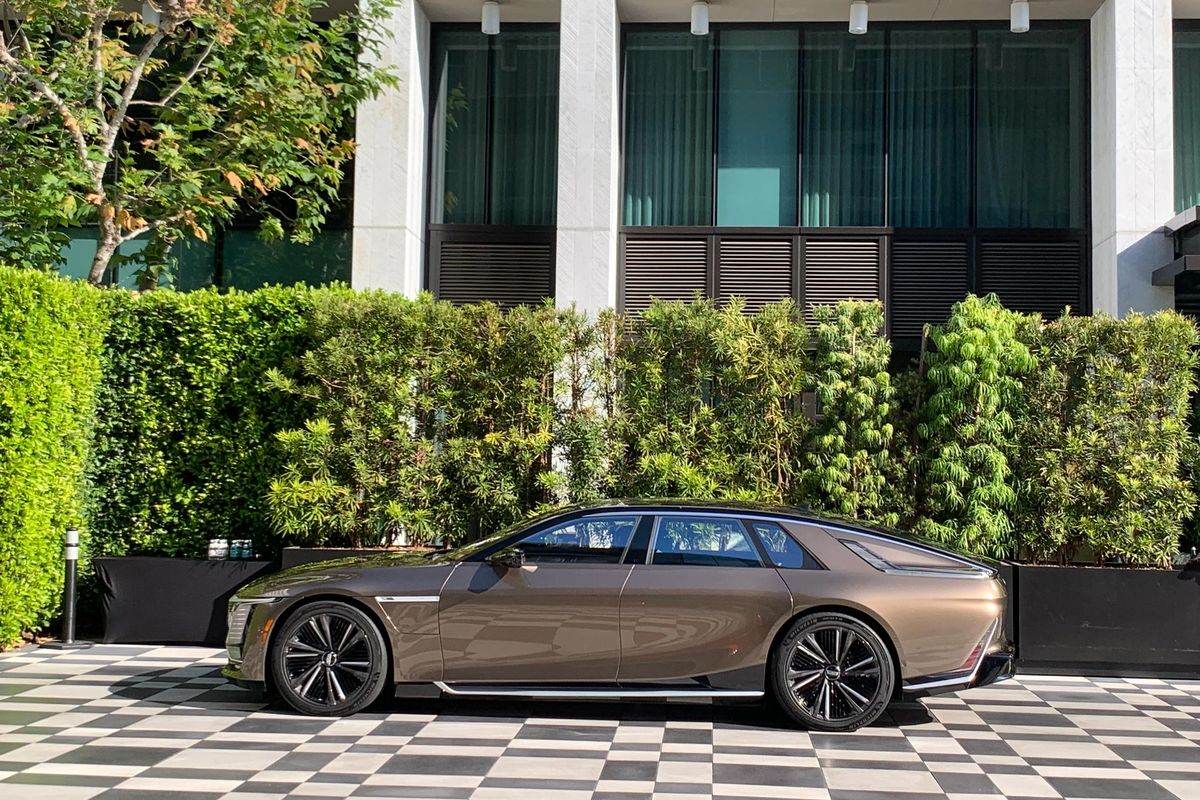
Cadillac, meanwhile, is pressing forward with a critical launch. It’s risky, considering the times and the many millions of dollars and considerable effort required to bring any new vehicle to market, especially one charged with changing the public’s perception of the entire brand. The badge that once set the world standard for opulence only to wallow for decades as a second choice for suburban retirees has decided now’s the time to start selling a $360,000 electric car that’s as long as an Escalade and as stylistically polarizing as a Cybertruck. It’s called the Cadillac Celestiq.
I drove one recently for a day in Los Angeles and rode in its capacious back seat on a separate evening. With an arresting presence and customization options as individual as fingerprints, it represents what Cadillac executives say they want to be again: unapologetic, and at the top.
Optics and the economy being what they are, I suspect that the wealthy hoards are unlikely to crave such a strong flavor in their garage at the moment, but I respect the effort. It reminds me of that old Latin chestnut Fortes fortuna iuvat. Fortune favors the brave.
Cadillac will keep production to just 25 for 2025, and it’s already sold most of those. The car is a symbolic stake in the ground for a bigger pivot within the company. Hey, you have to start somewhere, and this is as good a place as any.
The essentials
The Celestiq is an 18.1-foot-long four-seater with 23-inch wheels as big as those typically found on SUVs. A fastback-style glass roof (that is, a single uninterrupted slope) that spans the length of the vehicle allows sunlight to drench the cabin. A 55-inch display screen reaches pillar to pillar across a shallow dashboard with a front ledge that avails even more space between those in the front seats and the windshield. The rear seats recline a little; a big flat luggage shelf sits behind them.
Power comes from a 111-kWh battery and a two-motor, all-wheel-drive system that provides 655 horsepower and 646 pound-feet of torque. Estimated driving range is 303 miles on a full charge. On a DC fast charging system, it’ll gain 75 miles of range in 10 minutes; a charge to 80% will take roughly 40 minutes.
Each Celestiq is hand-built in Warren, Michigan, with color and trim options including walnut and ash woods, mats made from eucalyptus, and a shiny hard material made from recycled paper. For those keeping score, roughly 80% of components in the Celestiq comply with the United States-Mexico-Canada trade agreement, with “the lion’s share” of that 80% sourced in the U.S., a spokesperson says.
During a faux spec session one evening with the Celestiq designers in Beverly Hills, California, I selected a deep oak green with a leather interior the color of a Hermès saddle and accents done in open-pore rosewood. I was aiming for the feel of the Porsche 928s and Citroen SMs that would have dotted Paris in the late 1970s, since the elongated shape of the Celestiq is somewhat reminiscent of their form. The final result, rendered in digital form, looked superb.
Customer deliveries of the Celestiq will start by the middle of 2025, a spokesperson says.
The good
Cadillac’s engineers boldly urged me to take the car up Angles Crest for a few hours on my test drive. Angeles Crest Highway is a world-class driving road and an efficiency nightmare: It’s chock full of curves, with 3,500 feet of elevation gain and lead foot Subaru owners hyped up on gasoline fumes gunning to pass anyone slowing their roll. An early Porsche Taycan I took up there years ago had dropped more than half its battery life after just 26 miles up the hill.
But I was pleasantly surprised at how well the Celestiq held its charge, retaining nearly 75% of battery by the time I hit my turnaround after around 30 miles of aggressive driving.
I was even happier with how planted it stayed when I whipped past views of Hoyt Mountain and San Gabriel Peak.
God bless the folks who perfected the active rear steering and roll control that kept the car nimble, despite its length; electric power steering and newly developed front and rear suspension isolators kept everything feeling calm without resorting to just numbing it all out.
I felt connected to the road, with the steering wheel, seatbacks and tires informing me of every driving detail as I climbed higher toward Wrightwood.
Zero to 60 mph in the Celestiq is 3.7 seconds – not blinding acceleration, but it was more than enough to satisfy my competitive nature with those Subaru fellas. (Top speed is a disappointing 126 mph. No further comment, your honor.)
I found the turning radius to be delightful on the side streets of West Hollywood where I drove for a morning coffee, and under the shady oaks of Pasadena, where I parked on the street for lunch. Even navigating the graffitied halls of the Arts District downtown were easy to work through – including an errant U-turn! – as the afternoon sun dropped low. Bottom line? Experienced from behind the steering wheel, the Celestiq is simultaneously fun and peaceful. I actually preferred driving it myself to riding in the back.
The bad
The styling here is challenging. It’s not as odd as it looks in photos, but it’s tough to understand because it’s tricky to categorize. Want to call it a hatchback? Go right ahead. Much of my resistance was assuaged when I allowed myself to think of the Celestiq as a station wagon. When framed that way, it dons a certain appeal.
Still, it’s not for the faint of heart. If you’re considering one of your own, proceed carefully as you choose your colors: The Agent Orange (my words, not theirs) paint job on the launch vehicle did it no favors as a first impression; that garish hue is more fitting for a Dodge Charger, not something Cadillac is trying to persuade us is an object of art and grace. And black just makes it look like a hearse.
Beware significant rear blind spots while driving and the front door that closes automatically – it shuts when you put your right foot on the brake, even if your left foot and the leg attached to it are still outside the car. I learned that from experience. Ouch.
The single worst thing about the Celestiq is the one you’ll see and feel the most: the key. Made out of plastic, covered in a thick leather sheath held together by industrial-looking contrast stitching, it was completely out of context compared with the rest of the car. I am dumbfounded that Cadillac would spend years developing a vehicle meant to attract Rolls-Royce owners but spend apparently zero time developing the most important detail: a fob that matches that effort. It’s like putting on couture, jewels, hair and makeup for the Met Gala but then donning a pair of old tennis shoes you found in a cardboard box in the back of your garage.
If you remember one thing
Keep an open mind: In a decent color, this could be your new favorite station wagon.