
Curtis Yarvin helped inspire DOGE. Now he scorns it.
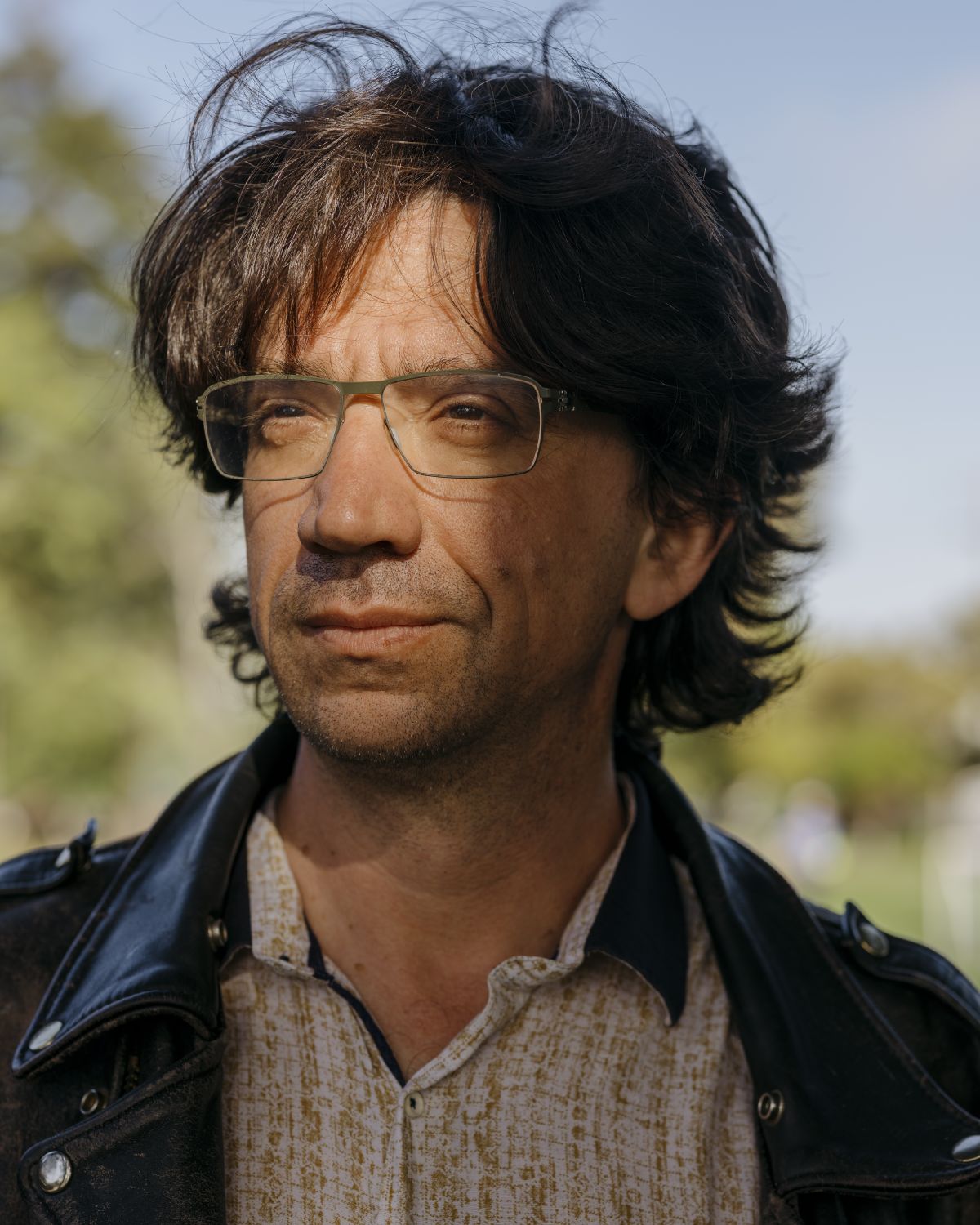
Before gutting the federal workforce became Elon Musk’s job, it was Curtis Yarvin’s dream.
Yarvin – a Silicon Valley blogger and software developer who argues for replacing American democracy with a dictatorship – spent years outlining an assault on what he calls “the cathedral” of elite power and consensus. Long before the U.S. DOGE Service launched in January, Yarvin coined his own four-letter acronym for bureaucracy-slashing: RAGE, or “Retire All Government Employees.”
Although he says he has never met Musk, Yarvin is a powerful influence among those carrying out DOGE’s radical cost-cutting agenda, two advisers to the effort said. One, who spoke on the condition of anonymity because he was not authorized to describe the group’s work, said Yarvin had offered “the most crisp articulation” of what DOGE, which stands for Department of Government Efficiency, is trying to achieve.
“There’s this alliance of the media, of universities, of government,” the DOGE adviser said. “These people are capturing the government and using it for their own ends and for their own power. And that’s very scary to us. You want to lessen the power of the cathedral.”
It’s not every day a neo-monarchist’s Substack helps shape disruptive federal policies. But Yarvin, 51, isn’t celebrating. In fact, in several recent interviews with the Washington Post, he offered a surprisingly harsh assessment of DOGE, comparing it to an orchestra of chimpanzees trying to perform Wagner. He also said the group’s attitude toward federal workers resembles that of a brash but insecure man who repels potential sexual partners.
“In the worst aspects of DOGE, there’s this aspect of the incel who gets mad at the girl who won’t sleep with him,” Yarvin said, using the term for so-called involuntary celibates. “That’s not a powerful attitude.”
The mixing of high and low analogies is characteristic of Yarvin, whose wildly discursive blog posts – which on a given day might analyze American politics with reference to Shakespeare, Stalin and “The Adventures of Buckaroo Banzai Across the 8th Dimension” – have become required reading for the extremely online right. Among the better-known members of his audience are Vice President JD Vance and pro-Trump Silicon Valley investors Marc Andreessen and Peter Thiel.
Even in a political culture habituated to extremes, Yarvin plants his flag on the fringe. He has written that the late South African anti-apartheid leader Nelson Mandela was a terrorist comparable to the Norwegian mass murderer Anders Breivik, admiringly described President Franklin D. Roosevelt as a more effective autocrat than Hitler and argued for replacing the existing global order with thousands of “sovereign and independent mini-countries, each governed by its own joint-stock corporation without regard to the residents’ opinions.”
That such a provocative figure should deem the early activity of the second Trump administration too, well, provocative is among the many unpredictable developments since the president assumed office less than four months ago. Despite his informal role as secular prophet to DOGE and some Trump administration policymakers, Yarvin asserts that Musk and President Donald Trump are needlessly harming and antagonizing government experts whose support they should be seeking.
“It’s very shortsighted behavior from the standpoint of building capital, or building power,” Yarvin said. “They’re really acting on a seat-of-the-pants basis.”
Yarvin’s DOGE disillusionment is somewhat surreal, almost as if Marx had lived long enough to troll the Bolsheviks for misreading “Das Kapital.” It is also, perhaps, an object lesson in the dangers of translating the often outlandish digital discourse that has shaped the American far right into real-world policies that have scaled back scientific research, jeopardized some lifesaving foreign aid programs and risked hobbling government services with mass firings.
The White House declined to comment. Musk didn’t respond to a request for comment.
Joshua Tait, a historian of conservatism who has written about Yarvin, said it was surprising but not necessarily out of character that Silicon Valley’s neo-monarchist muse has mixed feelings about the implementation of his ideas. Despite his jarringly bleak view of democracy, Yarvin has always had an unexpectedly optimistic vision of what government could achieve, Tait said.
“I wonder if he has that utopian mindset that makes him clash with the ‘just own the libs’ ethos of some of DOGE – which is not to say that he didn’t spend a lot of time owning the libs,” Tait said.
Still, Yarvin’s ambivalence “doesn’t always feel intellectually coherent,” Tait said. And as DOGE winds down its work – leaving behind a mangled but still defiant federal workforce and savings far short of the $2 trillion promised – Yarvin bears at least some responsibility, Tait argued.
“I think he does own DOGE, regardless of what he says,” Tait said. “It would have been created, probably, regardless. But he spent a good chunk of time creating a justifying framework for it.”
Inside the cathedral
As Yarvin tells it, his childhood almost eerily reflected the left-leaning, elite circles he now condemns.
His father, who he says was raised by communists, retired as a senior official in the U.S. Foreign Service. The young Yarvin spent years living abroad, eventually transferring from a British-run academy in Cyprus to a high school in Maryland. A math prodigy, he skipped three grades and graduated from Brown University at age 18 in 1992.
Yarvin briefly enrolled in a doctoral program in computer science at the University of California at Berkeley, before dropping out to join a tech company. He created a computing platform, Urbit, in 2002, but did not find the vocation that would earn him a devoted following until 2007, when he launched the blog Unqualified Reservations.
Writing under the pseudonym Mencius Moldbug, a play on “goldbug” and a Confucian philosopher of the Zhou dynasty, Yarvin gradually constructed a radical critique of liberal democracy. Drawing on the scientist Richard Dawkins’ concept of “memes” – ideas that compete and replicate themselves through natural selection, just as genes do, without regard to their underlying truth – Yarvin argued that the egalitarian rhetoric of the left masked self-serving ideals whose true function was to expand elites’ power.
The network that nurtures these concepts – the news media, universities and similar sources of supposed expertise – make up Yarvin’s “cathedral.” American leaders had become dangerously reliant on such institutions, he argued, diluting responsibility for the government’s diminishing performance. The antidote, in his view, was a system that would not “leak” power but concentrate it as much as possible – ideally in a single person.
“The problem of choosing the ‘benevolent dictator,’ making sure he or she stays ‘benevolent,’ and replacing her or him with an equally benevolent successor, is not an impossible and unimaginable paradox,” Yarvin wrote. “It is an engineering problem.”
Interspersed with these musings were inflammatory attacks on “cathedral” orthodoxy, notably on the subject of race. Yarvin wrote recurrently about crime committed by racial minorities, and he objected to government and business programs intended to elevate the status of African Americans. When “applied to populations with recent hunter-gatherer ancestry and no great reputation for sturdy moral fiber,” he wrote in 2009, such initiatives were “a recipe for the production of absolute human garbage.”
Yarvin told the Post that he still believes “tremendous inborn differences (exist) between people” and “between groups of people” and that progressive policies have not helped most Black Americans thrive. He said he would choose his words on racial dynamics more carefully today, and that his 2009 remark about minorities’ moral fiber was intended to have an intentionally archaic and “self-parodic” tone.
“I would definitely phrase it differently, because there’s a kind of tongue-in-cheek there that gets lost,” said Yarvin, who today writes under his own name on a blog called “Gray Mirror of the Nihilist Prince.”
Outcry over Yarvin’s writings on race and politics got him booted from a tech conference where he was slated to appear in 2015 and led some speakers and sponsors to pull out of another conference the following year. Scholars have also criticized his arguments, saying he misrepresents the historical record to celebrate forms of government that were considered deeply oppressive by those who lived under them.
But his ideas have simultaneously found favor with powerful people.
In emails to the right-wing provocateur Milo Yiannopoulos that were published by BuzzFeed News, Yarvin said he watched the 2016 election at the home of Thiel, one of the few figures in the tech world to back Trump’s first presidential campaign. Yarvin wrote that he had been “coaching Thiel,” whom he described as “fully enlightened.”
Thiel’s venture capital firm invested $250,000 in Tlon, a start-up Yarvin created to build out his computing platform, Yarvin said. A representative for the firm, Founders Fund, declined to comment. Thiel did not respond to requests for comment.
Other early investors included the founding engineer of Skype, Jaan Tallinn, and the venture capital firm controlled by Andreessen, who has described Yarvin as a friend and has cited his ideas, according to the investment database PitchBook. Long a political moderate, Andreessen has become a Trump donor and informal adviser over the past year, and he helped recruit staff for DOGE, according to two people familiar with the group’s formation, who spoke on the condition of anonymity in order to describe it.
Two of Thiel’s politically ambitious protégés also embraced Yarvin’s thinking. Yarvin said he met Vance and Blake Masters – who ran unsuccessfully for the U.S. Senate in Arizona at the same time Vance ran and won in Ohio – before they entered politics, at social gatherings when they were Thiel’s employees. Both men cited Yarvin during their campaigns, specifically referring to RAGE, his proposal for dismantling the federal bureaucracy.
“There’s this guy, Curtis Yarvin, who’s written about some of these things,” Vance said on a right-wing podcast in 2021. He went on to offer his advice to a then-hypothetical President Trump in his second term: “Fire every single mid-level bureaucrat, every civil servant in the administrative state, and replace them with our people. And when the courts – ’cause you will get taken to court – and when the courts stop you, stand before the country, like Andrew Jackson did, and say, ‘The chief justice has made his ruling. Now let him enforce it.’ ”
‘Yarvin is the brain’
Yarvin has often seemed ambivalent about the spread of his ideas, expressing skepticism that a remaking of American government was feasible under Washington’s political constraints.
The first Trump administration, he has written, took only “small, performative steps” to restore a sufficiently powerful chief executive. Even after Trump won a second term, Yarvin initially sounded dour notes, saying shortly before Trump was sworn in that he would probably not attend the inauguration.
By Jan. 20, he had apparently changed his mind. Over inauguration weekend, Yarvin swapped out his hallmark leather jacket and cowboy boots for a tux, attending several exclusive parties in Washington and holding court at Butterworth’s, a Capitol Hill bar that has become the favorite haunt of young MAGA climbers. One night he was spotted in the bar’s basement with Grimes, the pop musician who is the mother of three of Musk’s children.
Yarvin said he briefly spoke to Vance at another party at Thiel’s mansion in northwest Washington. He told Politico that he also had lunch with Michael Anton, a senior State Department official.
Shortly after returning to California, he wrote approvingly of the administration’s first days – characterized by pardons for the Jan. 6 rioters and a flurry of provocative executive orders – in a Substack post titled “The Pleasure of Error.”
“After a week, I think it’s clear that Donald Trump was not engaging in hyperbole when he told the libs: ‘we will do things to you that have never been done before,’ ” Yarvin wrote.
Musk had at this point embarked on his own mission, sending loyalists to tear through government agencies, hoover up citizens’ data, slash programs and force thousands from their jobs. The billionaire has taken such a forceful approach, according to people who know him, because he believes the government is deeply broken.
Musk installed himself in the Eisenhower Executive Office Building adjacent to the White House, his 4-year-old son and his video-gaming computer in tow, exhibiting a vision of executive power that looked to be straight out of Yarvin’s playbook.
The resemblance was no accident, according to the two people who have advised DOGE and are familiar with its leaders’ thinking.
“It’s an open secret that everyone in policymaking roles has read Yarvin,” one of them said. “They were able to take the Curtis theory and use it to empower people on the ground to actually do stuff – even if they can’t admit it publicly.”
Yarvin is not directly advising DOGE, but he is an intellectual beacon for the effort, and his writings have encouraged some of Musk’s lieutenants to view their efforts to slash billions from the federal budget as part of a grander ideological project, the people said.
“It’s not like Marc Andreessen and (tech mogul and Trump cryptocurrency czar) David Sacks and Elon and JD and Trump are all sitting at the dinner table at Mar-a-Lago planning DOGE and in a lightbulb moment, they were like, ‘Let’s just instantiate the ideas of Curtis Yarvin,’ ” one person added. “It’s more like, Yarvin is the brain.”
Emerson T. Brooking, an expert in online extremism at the Digital Forensic Research Lab of the Atlantic Council, said Yarvin’s popularity among DOGE lieutenants shows the extent to which far-right Silicon Valley ideology has escaped the digital spaces in which it was incubated.
“Yarvin escaped the fringe blogosphere because he wrapped deeply anti-American, totalitarian ideas in the language of U.S. start-up culture,” Brooking said. “And his writing is popular with DOGE employees today because they prefer to tell themselves that they are running a start-up, not dismantling a country.”
Yet as Yarvin watched DOGE try to implement some of his theories, he increasingly sought to reject either praise or blame for the results.
He said Musk’s efforts – which he described as simultaneously too aggressive and not aggressive enough – had strayed from his vision, hamstringing government agencies and alienating many federal employees (as well as the broader public) without delivering true transformation.
“It’s big enough to be disruptive,” Yarvin said. “But there isn’t really this sort of sense of a deep, constructive purpose behind it.”
He pointed to the administration’s handling of the National Science Foundation and National Institutes of Health, where funding freezes, widespread firings and alleged censorship of researchers has led to the departure of top scientists. While Yarvin is sharply critical of some parts of the federal government’s scientific agenda, he said it would be a better strategy to win the loyalty of skilled researchers by giving them more funding under a less onerous grant-writing process.
“There’s nothing that’s gained by alienating scientists,” Yarvin said. “Instead of fighting against these people because they’re an enemy class who votes for the Democrats, you (should be) saying, ‘Oooh, we have cookies for you.’ ”
The neo-reactionary dream
Musk has said he will soon step back from DOGE, which may not retain the spotlight or the power it has held in recent months. But Yarvin extends a similar critique to the broader Trump administration.
In a recent blog post he criticized the surprise detentions and deportations of foreign graduate students who expressed anti-Israel political views, saying that – “as a matter of objective, Machiavellian political science, without the slightest reference to whether it is good and/or evil” – the tactic would backfire.
“The narrative has no flavor unless some kind of right-wing villain shows up,” Yarvin wrote. “And because we never learn, we always do.”
Danielle Allen, a professor of political philosophy at Harvard University and democracy advocate, said it is hard to know what to make of Yarvin’s disavowals of Trump administration actions, in part because he is prone to inconsistent or contradictory statements.
“It’s unclear to me that he’s a reliable witness to his own views,” Allen said in an interview.
She believes there is “no question” that Yarvin’s work offers a blueprint for DOGE, and that any resulting problems should be chalked up to shortcomings in Yarvin’s theories, not their distortion in practice. One of the weaknesses of the autocratic style of government Yarvin has long advocated is that “ultimately it doesn’t function in the best interest of the people,” Allen said.
“That’s what we’re watching,” she said. “And so if he’s complaining about that, that’s odd.”
On a recent night, Allen appeared with Yarvin at the Harvard Faculty Club in Cambridge, Massachusetts, for a debate on the merits of democracy. The event was organized not by the university but by Passage Press, a boutique publishing house that publishes Yarvin’s books, as well as works by other reactionary authors.
The mood on the platform was tense, but civil. Though a half dozen police officers milled inside and outside the club’s Georgian revival brick facade, only a few of the expected anti-Yarvin protesters showed up, and none disrupted the standing-room-only talk.
Allen, while strongly denouncing Yarvin’s vision, acknowledged that America’s imperfect democracy needs renovating. Yarvin, for his part, allowed that there were “real kernels of corn” worth saving in what he described as the cathedral’s dung heap.
After Allen left, Yarvin took a position in the corner of the club’s lounge to joust with a few left-wing critics as a small crowd gathered to watch. His challengers pressed him on DOGE, saying the initiative was clearly inspired by the “neo-reactionary” movement Yarvin founded.
“I don’t see him thinking like me,” Yarvin said of Musk.
“He’s fulfilling the neo-reactionary dream,” a young man in the front line of Yarvin’s critics said.
“No, he’s not,” Yarvin said, a trace of exasperation in his voice.
“My answer,” Yarvin added, “is, in a way: I wish.”