
Spokane Public Library’s Eva Silverstone is named ‘Mover and Shaker’ by Library Journal
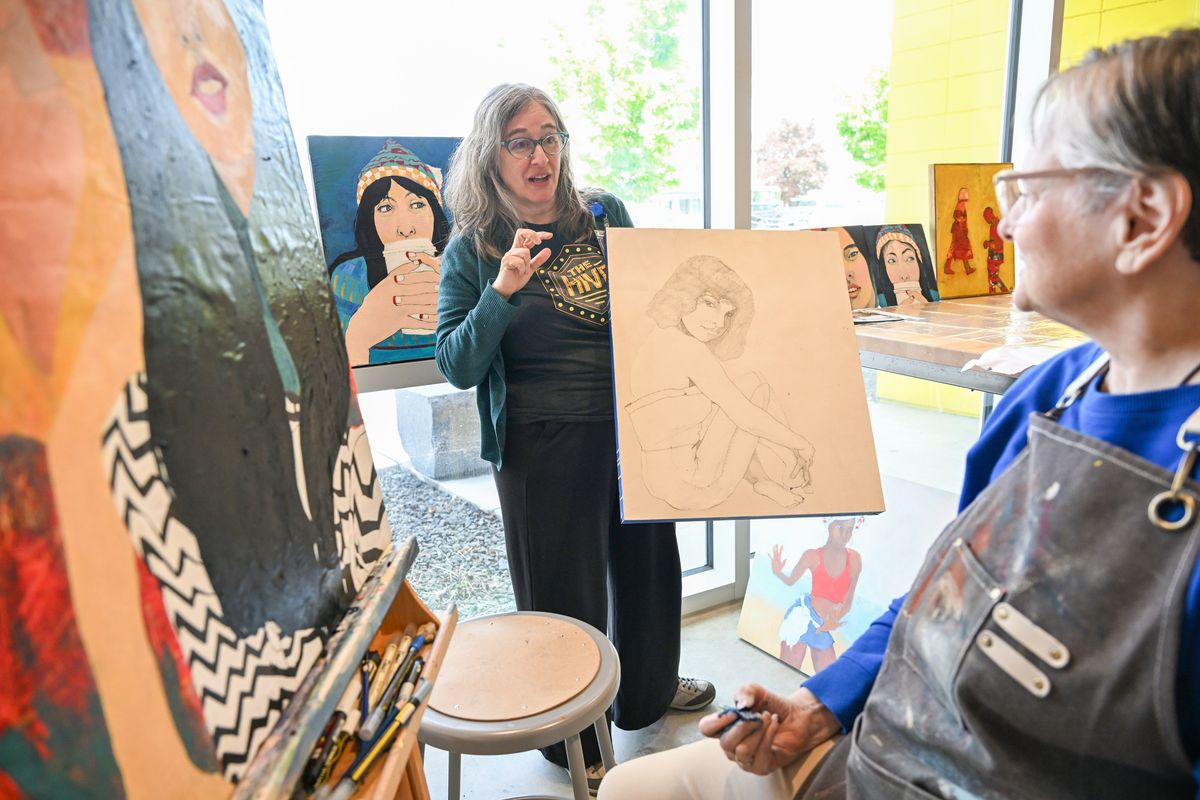
Ever since she can remember, Eva Silverstone has been a writer and a drawer.
“As a child, I wanted to write and illustrate children’s books,” she said.
She may not have achieved that childhood ambition, but through her work at Spokane Public Library, she’s cultivated space for over 50 individuals to draw, paint, sew, write and create.
Silverstone is the drive behind the Hive, a nontraditional library centered on arts education and free, public event spaces. It’s also home to the administrative offices for Spokane Virtual Learning and the Library’s Artists-In-Residence Program.
“It’s a pretty innovative partnership between the library and the school district,” said Silverstone, arts education specialist at Spokane Public Library. “Art makes a city a vibrant, attractive place to live.”
Recently, Library Journal, a trade magazine for librarians, honored her efforts by naming her as one of the publication’s “Movers and Shakers.”
The Hive’s history dates to 2018, when Spokane voters passed a combined library/school district bond.
Spokane Schools wanted to build a teacher training center. Because the space would sit unused when trainings weren’t in progress, Spokane Public Library suggested sharing the space and allowing the public to use the meeting rooms.
In August 2021, the Hive opened its doors, offering free space for artists to create and meeting rooms for the community.
“Eva has been the perfect person to bring the artist residency program at the Hive to life. She’s connected with the arts community, is passionate about making art accessible, and has a focus on the long-term growth of the arts in Spokane,” said Andrew Chanse, executive director of Spokane Public Library. “It’s a great reflection of her achievements to see her receive this national recognition. We’re grateful for her determination, passion and ongoing leadership of this program.”
Currently, the Hive hosts eight artists-in-residence, including several painters, a writer, and a creator of Native American beading and regalia. The four large studios are available to the artists 24/7.
As an artist , Silverstone understands how important it is to have space to create.
“When you work from home, your eyes have X-ray vision,” she said. “You can’t see the dishes that need to be done – the laundry that needs to be put away. When you’re here, you’re away from all that. You can give yourself permission to work.”
During their residencies, the artists can leave their work and supplies out.
“Their studios are their own – no one goes in without an invitation.”
The application period for the program opens in February-March each year. Residencies range from one month to six months.
“This time I had 49 applications,” Silverstone said.
Each artist has a glass display case outside their studio, so people can see what kind of project they’re creating.
“Many times, you only see art in its finished state, in galleries, but here you can see it in progress. It makes it more accessible.”
The Hive hosts open studio times most Wednesday afternoons.
Making art accessible motivates Silverstone.
“Art transcends language,” she said. “You don’t have to speak English to appreciate it.”
As part of the agreement, the artists teach one or more workshops depending on residency length. The workshops are free and open to the public.
“I love seeing what they do and create while they’re here,” Silverstone said. “I love getting to know them and helping them find opportunities and outlets for their creativity.”
She also enjoys seeing connections form between the artists.
“A lot of times, artists are kind of isolated.”
The Hive building also facilitates community engagement via three public meeting rooms.
“Once we had gym teachers, financial planners and bluegrass musicians in the same facility as artists!”
Silverstone hopes her recognition from Library Journal will inspire communities to think outside the box about art programming.
“I’m so proud that the Hive and Spokane Public Library are being recognized through my Mover and Shaker award,” she said.
“I’d love to see other communities take a page out of our book and see if they could replicate some aspects of this model.”