
Antler oddity: Kamiah man’s cactus bull elk becomes viral sensation
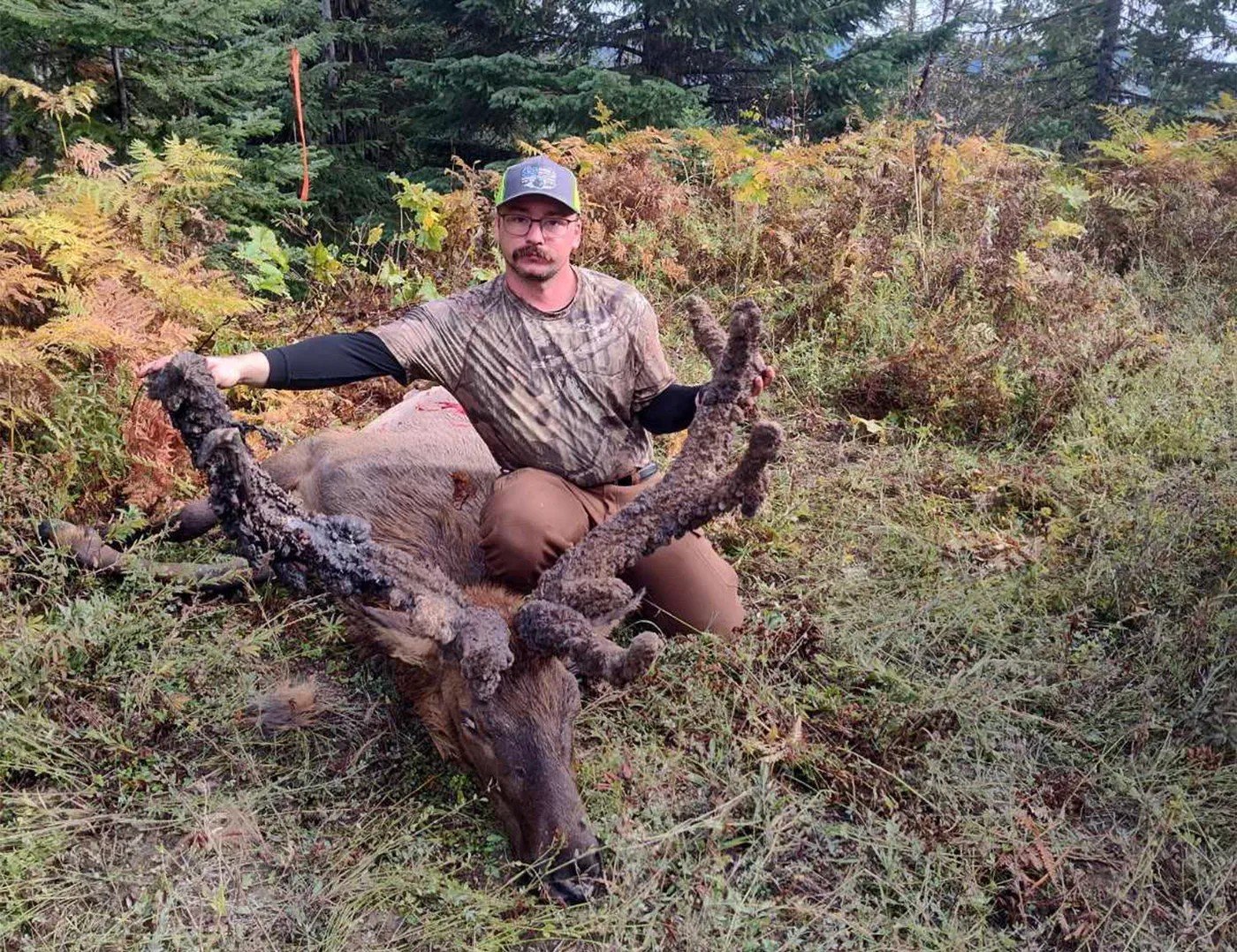
Nathan Kiele had never seen anything like it.
He was elk hunting in Idaho’s Unit 12 north of the Lochsa River when he encountered the bull on an old logging road.
“I saw that weird formation he had going on. My first thought was ‘that’s weird’ and then I was (like) ‘I guess an elk is an elk,’ ” he said. “I’m not a trophy hunter. I just hunt for the meat.”
With that, Kiele took a knee, aimed, squeezed the trigger and dropped the bull that had soft, otherworldly formations on its rack.
“All the material around his antlers was just like velvet. It felt like velvet and it looked like velvet,” he said. “Underneath it was antler but it was kind of like barnacles on a ship. Feeling it, it was all soft just like any other velvet elk would be.”
Kiele, of Kamiah, packed it out about 2 miles and took it to a local cooler. The odd antlers soon became the talk of the town. His mother, Tonya Kiele, posted a picture on Facebook where the strange bull again attracted notice. The image was shared and reposted. Comments poured in. Soon there was an Outdoor Life article crafted largely from the Facebook post and associated comments.
A different kind of bull
Deer and elk antlers are encased with a soft, skin-like material that is commonly referred to as velvet that is present from the time they start growing in the spring. But members of the cervidae family typically scrape off that soft tissue layer about August or so to expose hardened antlers.
To encounter an animal in the middle of October with antlers still in velvet is unusual but not unheard of.
“I’ve never seen an elk like that, only deer,” said Levi Beeler, owner of Clark’s Taxidermy, who is preparing a European mount of Kiele’s bull. “Here lately, we’ve got a fair amount of velvet deer – stag bucks that don’t shed their velvet.”
Antlers are one of the wonders of nature. They are bone in structure but grow incredibly fast – as much as an inch per day, said Marcie Logsdon, a veterinarian who works with wildlife at Washington State University.
“The way they are able to grow and shed antlers every single year is really astounding and pretty unique to the animal world,” she said of deer, elk and other cervids.
The process is dependent on a mix of hormones that respond to the annual cycle of available daylight. Logsdon said in the spring, as days begin to lengthen, hormones signal the body to begin growing antlers. While growing, antlers are living tissue with blood flow.
As the fall breeding period known as the rut approaches and days grow shorter, male elk, deer and moose begin producing more testosterone.
That causes the living tissue to die off and solidify, eventually forming hard antlers used in fights for dominance. As testosterone levels continue to dwindle into late fall and winter, the antlers eventually drop off.
“The hardening of antlers is really dependent on testosterone. If a buck or bull for some reason can’t produce enough testosterone, the body never gets the cue for the antlers to harden up,” said Logsdon.
Reasons can range from injuries to the testicles to viral infections that cause inflammation to vessels that provide blood to the reproductive organs. Illnesses like EHD and bluetongue can cause that type of swelling. While those diseases are more common in deer, Logsdon said elk can be affected. She noted there is sometimes a spike in the number of cactus bucks – the colloquial term for deer with such antlers – the year following outbreaks of EHD and bluetongue.
Beeler said that jibes with what he sees in his shop. As infections of EHD have become more routine, he regularly sees cactus bucks.
“We started seeing, not a lot, but a few every year of these bucks that don’t shed their velvet.”
Kiele didn’t notice an injury to the testicles of his elk, the first bull he has killed.
“I just noticed they were a lot smaller than they should have been,” he said.
The antlers from his bull are firm beneath the velvet. That differs from the velvet deer racks Beeler has worked on. They tend to be more sponge-like.
“I would say most of them are like the consistency of balsa wood compared to hard wood. It’s solid but there is blood up inside of them.”
He drilled into the bull’s horn to drain any blood present but found none.
“It was pretty solid. It’s an oddball for sure. Usually they are more porous.”
Beeler will use a chemical treatment to preserve the velvet.
Had they been softer and blood-filled, he would have had to freeze-dry the antlers.
Still, he will have to take more care than he would with a normal European mount – where the antlers and bleached skull are displayed.
The process typically involves boiling the skull with the antlers attached. But the steam from boiling would ruin the velvet. So Beeler will remove the antlers at the base, boil the skull and reattach them later.
Kiele is looking forward to the finished product but more excited that his freezer is full.
“There were a lot of comments on the Facebook post saying, ‘I wouldn’t eat that.’ But there is nothing wrong with the meat. That is what I care about mostly. The experience is fun and all but I am mainly in it for the meat.”