
Comedian Kristin Key makes shows a safe place to enjoy comedy
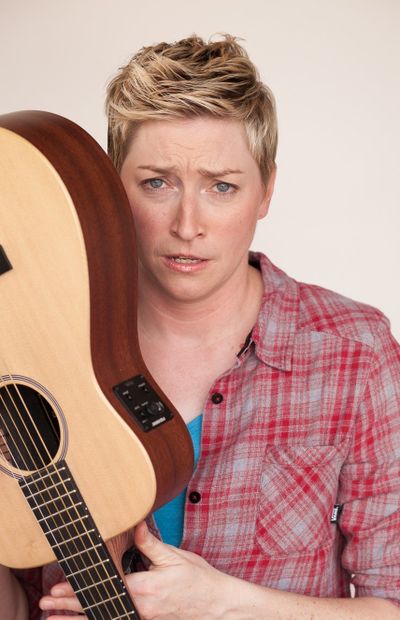
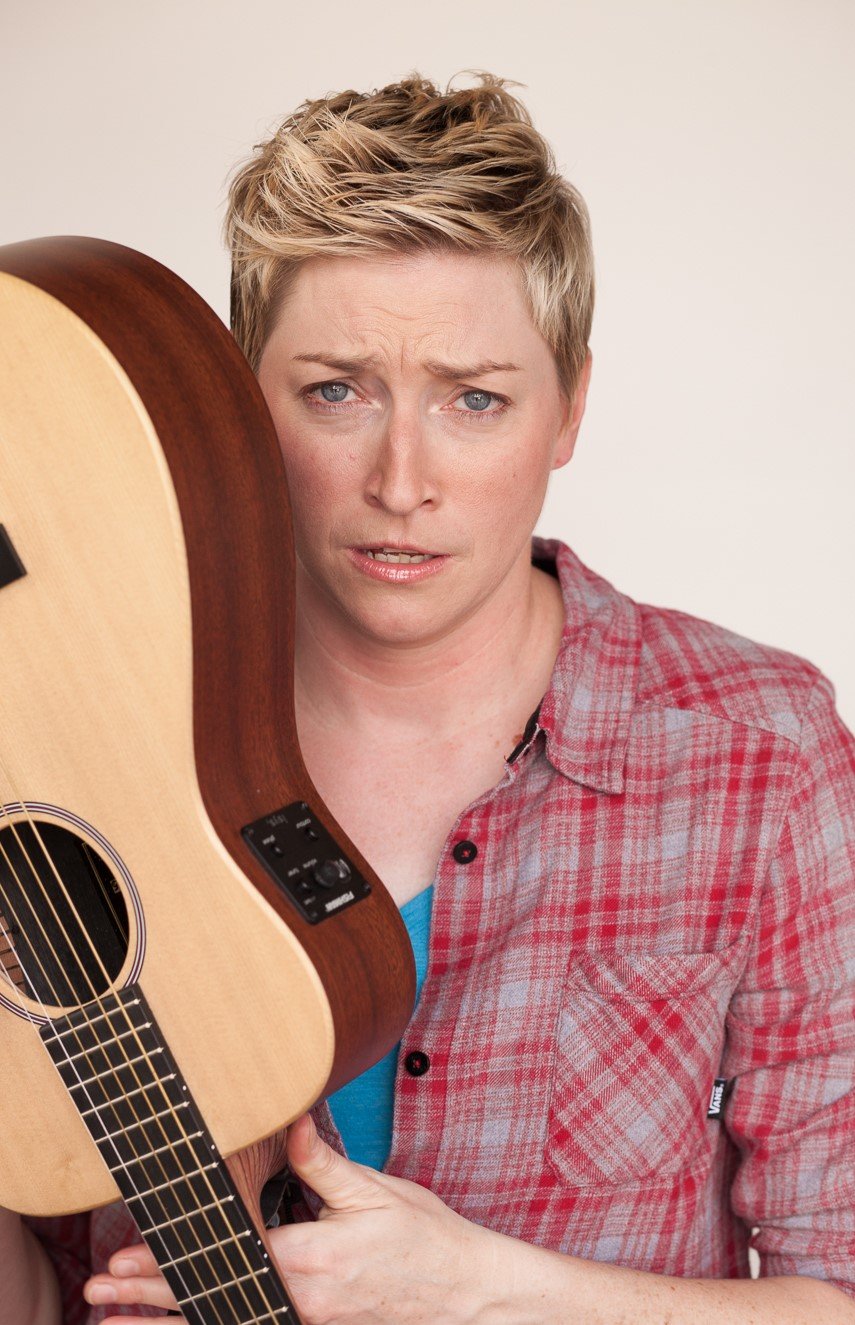
If you have ever tried, and failed, to stifle a laugh in church, comedian Kristin Key understands the struggle.
Growing up in a religious household, Key was almost always in church if she was not in school. She and her brother went to church twice on Sunday and once on Wednesday. They also participated in Bible Bowl and Vacation Bible School and attended church camp during the summer.
Plus, there always seemed to be a wedding or a funeral they had to attend.
“Anytime you’re in that serious of an environment, you’re going to be the one that cuts up because no one else is, and it’s boring and it’s serious and you’re kids, and so we got in trouble,” she said. “I got sent to the hall a lot. I was like ‘OK!’ It was boring. Your mom’s like ‘Stop it, we are at a funeral’ and you’re like ‘It’s not my uncle. What are you going to do?’ ”
That sense of humor, plus lots of time watching “An Evening at the Improv” with her dad and brother, followed Key throughout her adolescence and into early adulthood, where she was often making people laugh at parties while attending school to become a paramedic.
Key would get upset watching young comedians like Janeane Garofalo and Ray Romano perform on TV, imagining they made so much money for something she did for free in someone’s living room, so one night she asked the lead singer of a favorite band, Susan Gibson, for advice.
Looking back now, Key realizes it was a silly question to ask a musician, but she was excited that Gibson, who wrote and sold the song “Wide Open Spaces” to the (then-Dixie) Chicks, was a successful artist from her hometown.
Key told Gibson she wanted to be a comedian, and Gibson told her to talk to the bass player, Bobby, whose brother-in-law Kelly had recently opened a comedy club. Bobby connected the two, and Key was on stage the next week.
“Almost 26 years later, if I could tell any new comics or open micers, the way to get rid of your nerves is to prepare,” she said. “You can’t always prepare for the outcome. You don’t know what laughs you’re going to get, but have an idea of what you’re going to take up and the basic idea of how you’re going to deliver it. Then prepare for the unexpected.”
As her comedy career grew, Key began to add acoustic guitar to her set, sometimes playing a song but mostly strumming along to the joke. Key often does not know what jokes will be accompanied by music until she has tried them onstage a few times.
If a joke does not get the reaction she thinks it should, she might add a bit of music, because “they’ll laugh harder at a song.” She will also employ the guitar if she has made several jokes about the same topic so the audience does not get bored.
“We’re trying to fill an hour of their life, but you shouldn’t notice the time go by,” she said. “I should be able to have different topics, different ideas, different feelings, and we end the show, and then realize ‘An hour’s gone by?’ so sometimes it’ll be a prolonged chunk of spoken word that I’ve written and go ‘That’s too many words. I’ll put a song in the middle.’ ”
Key’s shows also often feature a Q&A section with the audience. More than your standard bit of crowdwork, Key gives audience members a chance to ask her anything they would like.
These sections began in early 2024 during Key’s “Lesbian Army” tour. Key came out to her family as a teen but, given her religious household, this revelation was not received well and she eventually took it back. She later came out again in 2015.
The “Lesbian Army” tour marked Key’s first time writing a queer-centered show, and she wanted an opportunity to interact with the audience. She also wanted a few clips she could post on social media to give people a sense of what the show was about.
When Key first began comedy, social media was not a thing (“I was on TV before Myspace,” she said, referring to her time on “Last Comic Standing.” Post-Myspace, Key also appeared on “Bring the Funny.”). Comedians would network with other comics and club owners and build a reputation by performing.
Now, comedians do not just write and perform jokes. After the show is over, Key said comedians have to take off that hat and put on a marketing one.
Social media, for all its fault, is a great tool for that. Key noticed that many comedians who did not adapt to social media during lockdown saw their post-pandemic careers get a little smaller while those who tried to take advantage of social media got a lot bigger.
Though it is not exactly what she envisioned doing all those years ago performing at early open mics, Key sees social media as an opportunity to be funny in different ways.
“With an open mind, there’s a lot of different ways to be creative and entertaining,” she said. “On social media, the things that we do not have in a live performance are the ability to edit a sketch or put out a two-camera video. It’s not live, so we do have a lot more opportunities like memes and parodies and all kinds of stuff. There’s so many different ways to make people laugh on the internet, as opposed to from stage to audience, just embracing that as a different medium for the artist.”
No matter the social media platform, Key sees them as a way to strengthen the community she builds during live shows. The connections she builds during the Q&A portions of her show, for example, continue as connections with fans who interact with her posts.
“Because of social media, it’s another wall that comes down, so there’s a lot more interaction and engagement,” she said.
For Key, that is really what it is all about. She wants fans to know that her shows are inclusive and a safe space to enjoy comedy. She said as a gay woman in 2025, it is hard not to stay on top of what’s happening in the news, but she has built a reputation for not going down the “worst case scenario” route.
Instead, her brand is more upbeat, optimistic and filled with hope. Even when the audience would like her to villainize someone, Key doesn’t take the bait.
“Typically, I’ll bring it up only in the guise of ‘But wouldn’t it be great if’ or ‘Perhaps, if we stick together, this could come’ or ‘Here’s a great idea or fantasy of if we were in charge,’ ” she said. “I try to always stay plugged into what’s going on in the world, but at least for my art form, never let it go the way of catastrophizing and Doomsday.”
Plus, Key remembers a time when queer people did not go to comedy shows because they were afraid to be the punchline.
But she also remembers how incredible it felt being on stage after having come out a second time at age 35, likening it to “The Matrix.” One moment she is clumsily running through the world, the next she is able to dodge bullets.
“Being comfortable in your skin on stage is the most freeing, wonderful experience in the world,” she said. “Now I can write jokes about anything. I can be transparent about anything I can. I don’t have to self-censor. I don’t have to worry how people are going to take things. I can literally be myself and focus on the comedy.”