
Knockout blow: 2015’s Windstorm devastated Spokane and changed how we look at big pines
Inland Northwest weather disasters, such as the Ice Storm of 1996 and “Snowpocalypse” of 2008, surprised the Spokane region when they hit.
But 10 years ago forecasters began warning folks that a big wind storm was headed Spokane’s way.
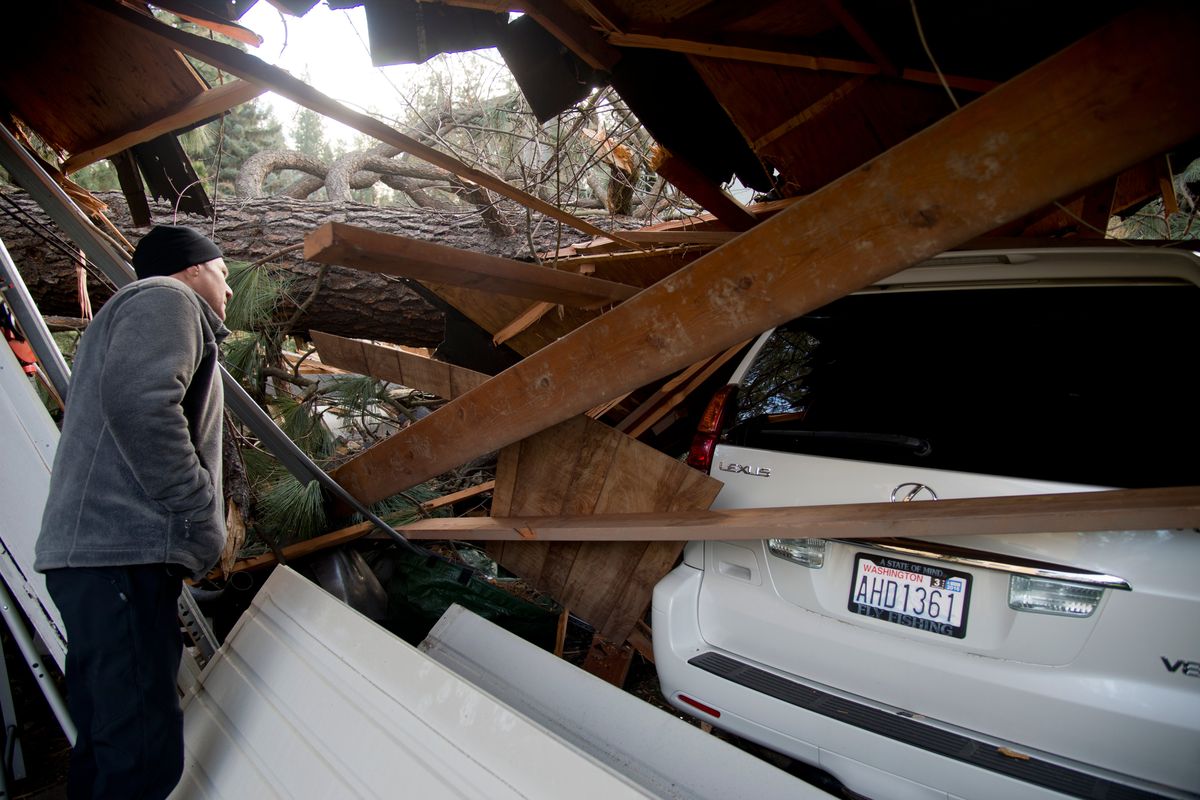
It hit with sledgehammer force on the afternoon of Nov. 17, 2015, about the time children were being let out of school. Frightened parents parked in pickup zones could only watch as winds gusting 71 mph toppled 1,900 trees inside the city limits of Spokane, many of them massive ponderosa pines that crashed into power lines and houses .
Thousands more were blown down in Spokane Valley and all across the region. The sustained power of the storm lasted hours into the dark, knocking out power to hundreds of thousands of customers. The storm and its aftermath led to five deaths, including two people who died of hypothermia as cold temperatures settled over the region and many people could not heat their homes.
“This event continued for hours,” said Todd Carter, a meteorologist with the National Weather Service, who was working that day . “We are talking about entire trees falling on houses, cars and power lines. It was a complete debilitation of the city.”
The storm knocked out power for 238,000 homes and businesses, including 180,000, or half, of all Avista Utilities customers.
“The hurricane-force wind gusts caused unprecedented damage to our electric infrastructure,” Avista spokesman David Vowels said. “It was the worst storm in Avista history. That particular storm presented some unique challenges given the widespread devastation.”
To give an understanding of what it meant, Spokane County received 256 emergency calls the day before the storm hit. On Nov. 17, 2015, it received 2,389 calls for help, said Carter, who reviewed notes from the day.
For 83% of the customers who lost power, electricity was not restored for at least five days. Spokane Public Schools didn’t reopen for two weeks.
“We had mutual aid crews come to help from as far away as Canada and Northern California,” Vowels said. “We created an additional new dispatch center to manage coordinating all the additional crews in the field. Crews worked around the clock for 10 days.”
While thunderstorm gusts had actually been recorded at higher speeds, such as a 77 mph recording in a 2005 storm, nothing else hit like the hourslong storm that day, Carter said.
Since it got dark before the storm ended, most residents did not understand the magnitude of what was happening other than losing power, until they ventured outside the next morning.
“Driving around the next day … through the South Hill seeing all the trees down was near apocalyptic,” Carter said. “At least you could drive on the roads. In Ice Storm, you could not. Well, you could try, but at your own peril.”
Ice Storm
The area’s previous benchmark for destruction prior to the big blow of 2015 hit nearly the same day some 19 years earlier.
On Nov. 18, 1996, a storm rolled into the region and dropped about 4 inches of snow.
But the next day, freezing rain began to fall and fall and fall. Spokane received about 1.24 inches of precipitation, mostly in the form of freezing rain, which inundated power lines under the weight of ice.
The resulting power outages set the previous record with more than 100,000 homes and businesses losing power in Spokane and Kootenai counties for up to two weeks. Four people died and thousands flocked to emergency shelters as downed trees blocked roadways and icicles hung from roof awnings and utility lines.
The other most recent storm, which did not have the same destructive impact as the Ice Storm or wind storm of 2015, was the “Snowpocalypse” on Dec. 17, 2008.
That storm dumped about 2 feet of snow within a 24-hour period. In one day, the region got as much snow as typically falls during the months of December and January.
The storm shut down businesses, government offices and schools and caused several buildings and roofs to collapse. The city declared a “condition red” snow emergency, which triggered around-the-clock plowing in what became the snowiest winter recorded in Spokane history.
But Carter, who has worked in the Spokane region for 30 years, said the wind storm was different: Meteorologists could see it coming.
The big blow
Computer forecasting models had detected the conditions that led to the destruction on Nov. 17, 2015.
As the storm approached the Pacific Coast, forecasters could see a classic pinwheel shape stretching for hundreds of miles in diameter.
Below the high winds, a low-pressure system developed off the British Columbia coast and tracked inland. But that wasn’t all. High winds cresting over the Cascades gained even more momentum as they crested the eastern slopes.
A fourth element was the kicker: Mild temperatures that day in the Columbia Basin allowed warm air to rise from the ground, creating a vacuum to draw the already ferocious winds swooping down from aloft.
“On the Saturday prior, we started talking about this,” Carter said of the storm that hit on a Tuesday. “We were giving warnings 72 hours in advance. That’s our record on that.”
After the first shoutouts on the Saturday before, the National Weather Service upgraded the message on Sunday to a watch, which means forecasters are fairly certain a storm could materialize.
Then on Monday, the day before the storm, forecasters upgraded it to a high-wind warning.
“We are basically saying it’s going to happen. We are expressing good confidence that a significant event is going to occur,” Carter said. “You need to take action.”
And then the winds hit, prompting city, county and national officials to issue a shelter-in-place radio warning. Carter said that is the first time he remembers that level of response.
In the aftermath, Vowels, of Avista, said utility crews received welcome help from volunteers. He noted that Avista customers could help in future disasters by updating their contact information at the Avista website.
“We had at least 50 employee volunteers … working with other city volunteers going door-to-door checking on vulnerable customers in neighborhoods without power,” he said. “Crews replaced hundreds of power poles and thousands of feet of wire during the restoration effort.”
The disaster could have been worse if not for the coordinated efforts of responders, he said.
“Mother Nature is unpredictable,” Vowels said. “We appreciate the community’s patience and support. The outpouring of support and kindness is really what made the difference.”