
This day in history: Prosecutors asked for redo of Liberty Lake sewer vote. Match company bought more timber land

From 1975: Election fraud!
That’s why Spokane County prosecutors asked the court to order a re-vote of the Liberty Lake Sewer District bond issue.
The prosecutors said an anti-bond-issue group used illegal campaign practices in advocating defeat of the bond, which failed by only 27 votes. The group never registered with the relevant authorities and failed to file financial disclosure documents. They also mailed out unsigned anti-bond letters.
The prosecutor’s civil suit said the group’s activities “probably affected” the outcome.
A new vote might not make much difference. Federal matching funds had already been revoked as soon as the first vote failed.
From 1925: The Diamond Match Co. bought 14,500 acres in the Upper Priest Lake region. This was front page news, underscoring the fact that matches were an enormous Inland Northwest industry.
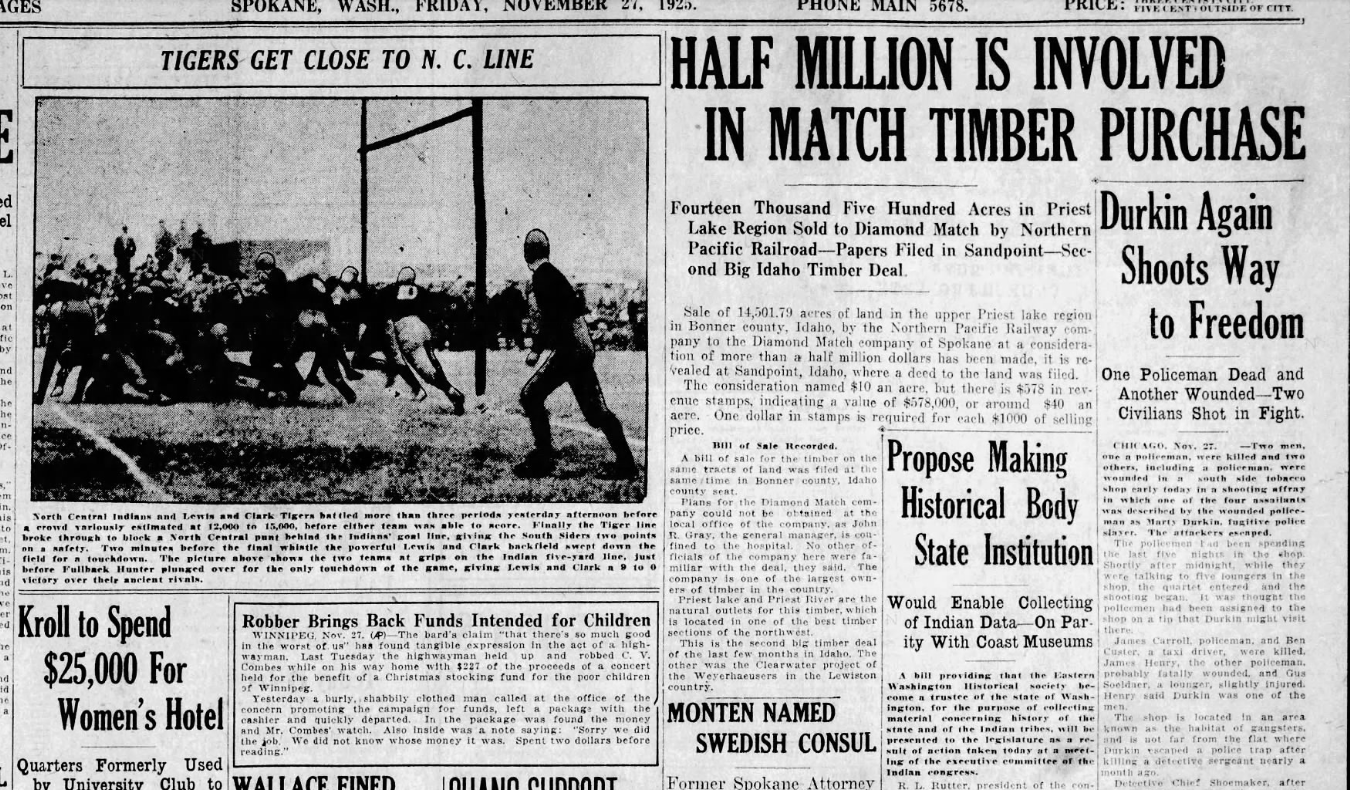
The reasons were twofold. First, nearly everyone in the country used matches every day to light their woodburning stoves and gas stoves,
Second, Western white pine was ideally suited to making matches. Some of the nation’s last significant white pine stands were along the Washington-Idaho border.
The Diamond Match Co. of Spokane was “one of the largest owners of timber in the country,” said the Spokane Chronicle.