
Ammi Midstokke: Solastalgia and the loss of now
I first heard the word solastalgia in a workshop with author Paul Bogard. He was referring to the loss of the night sky, its dilution at the mercy of street lights, flood lights, billboards, and a societal addiction for brightening the globe with nary a thought to the broader impact. Or even whether the globe needs to be lit up.
Solastalgia is grief at the loss, change, or destruction of an environment in which one is living or considers their home.
I hadn’t had a name for it, but I know the feeling well. What I am still trying to name is the -algia that describes an impending loss. The suffix comes from the Ancient Greek word for pain. Which is fitting because, as I walk a stretch of disappearing riverbank in Central Oregon, I feel something like an ancient pain. Perhaps it is from the ghosts of others who knew this place before the campgrounds, ATV tracks, and the obscenity of sprawling population.
In the early 1980s, my grandmother – a pioneer of polyester pantsuits and cowboy boot fashion – left her corporate job to build a house on the Deschutes River. It was on doctor’s orders after the veins of her legs had been stripped to replumb her heart, and she’d given up cholesterol for good. The latter left me with significant childhood exposure to Egg Beaters, margarine and the worst bran muffins ever baked.
But it also gave me childhood summers spent upon the banks of unnavigable bends of this mighty river, serenaded to sleep each night by the muted roar that thrummed into open windows. The river was a respected threat. We had once seen some beer-swilling fools miss the signs and come down it in inner tubes, and live. Others have not been so lucky.
As children, we knew where the safe places were: A small dammed eddy where polliwogs could be caught, a bend 1/2 mile past Granny’s house where the earth opened wide to yawn and the river returned to its slow amble past the leaning pines and across the high desert.
Back then, there were only a few houses in the neighborhood, secured by some surprise exception in the state lands surrounding the area. We knew everyone, and they knew us. Granny was part of the old guard there until she passed nearly two decades ago, and since then, the houses just get closer and closer. Proximity to each other being the price of proximity to the river.
The house Granny built now has wonky floors upstairs, like it might have a general tilt. The only people who go up there are my family and perhaps the occasional cleaner. My other grandmother is sequestered to the first floor due to being tethered to an oxygen machine that pumps and hums all day and night. Even that cannot drown out the sound of the river, though.
When the house was built, it was as though Victorian floral and white pine furniture had a love child. All carpets were blue, all wallpapers covered with silk blossoms, and all chairs thick and knotted. The many clocks chimed every 15 minutes, and we often had the honor of winding them. The cupboards were filled with luxuries we did not have at our house (caramel sauce, Nilla wafers) and I snuck out of my room at night to pilfer the pantry. I still do, though the shelves merely hold a few Korean-War-era canned goods and the chocolates that neighbors seem to bring every time they stop by.
A few of the neighbors do still stop by, but at 95, my sorta-grandmother is the last of the originals there: Once a secret society of women “roommates” with short haircuts and chainsaw knowledge, they’ve all passed on or moved to places where their love did not offend the nearby logging town.
While this place has never been my home, I grieve its change nonetheless. From the leaning second story to the emptied drawers to the clocks that have stopped their ticking, I cannot escape the tangible passing of time – even if the antique canned soups would try. From the houses now stacked upon each other to the leash rules on the trail to the spread of streets into once-wild places, I see an unstoppable future in which the haves feel inclined to post private property signs inches from public pathways just to discourage the have-nots.
I wonder if the First Peoples had a bunch of signs stapled to the massive trunks of now-blighted chestnuts, would we have turned our boats around?
Sorry folks, we didn’t see the signs.
I walk past the liar-sign and along the state land trails that once were neither government property nor the summer home border of a retiree blaming the homeless problem on laziness. As the day gives way to night in a softening of color that turns the foaming river into a ribbon of lace through a purple landscape, I look up through the giant picture windows. Everyone is just watching their televisions, ravenously consuming the latest catastrophe to place their chips on who will be blamed.
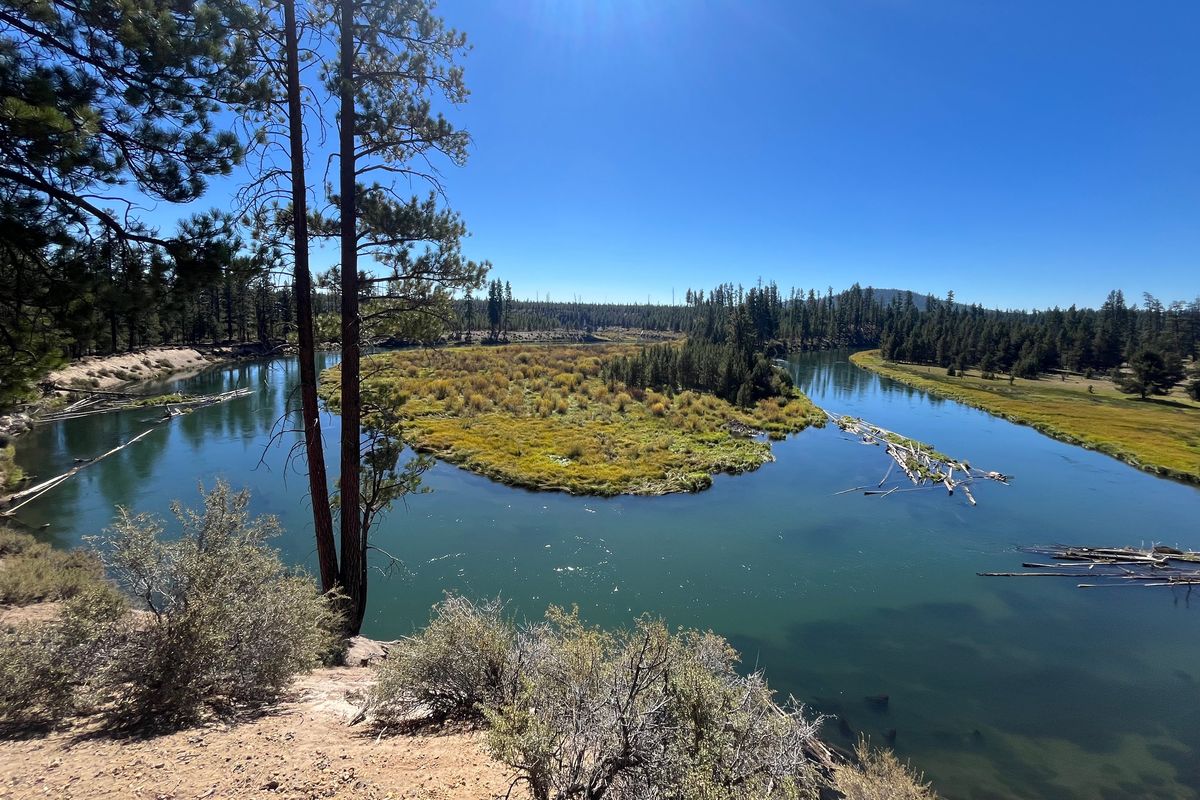
I leave the neighborhood behind and purify myself with the smell of pine and sand and sage. The river moves slower here, wraps itself around an iridescent green plain where young pines are lush from the moisture. In this autumnal season of scorched landscape, the river feeds the soil, then passes noiselessly by. The only movement on the water is a family of ducks.
As a child, I found a lost duckling here in the woods, chirping its panic from a woodpile. I carried it to my grandmother’s house and put bugs in a box with it and it followed me around all day. The next day, we filled our rubber rafts and drove upstream to the safe and slow waters, and brought the duckling along.
There was a grassy bend where we always saw mothers with their procession of babies, warned away from us with a mother’s tone that can be identified across all species. Just as we heard their first quacks, the duckling peeped with a sense of hysteric urgency, and we set it in the water. It scurry-swam to straight to them and joined the parade as they paddled into the reeds.
I cannot name the kind of ducks they are, but maybe it’s better not to know the name of a thing that will be someday be lost anyway.
Ammi Midstokke can be contacted at ammim@spokesman.com