
Reel Rundown: These Halloween films force viewers to face their inherent fears
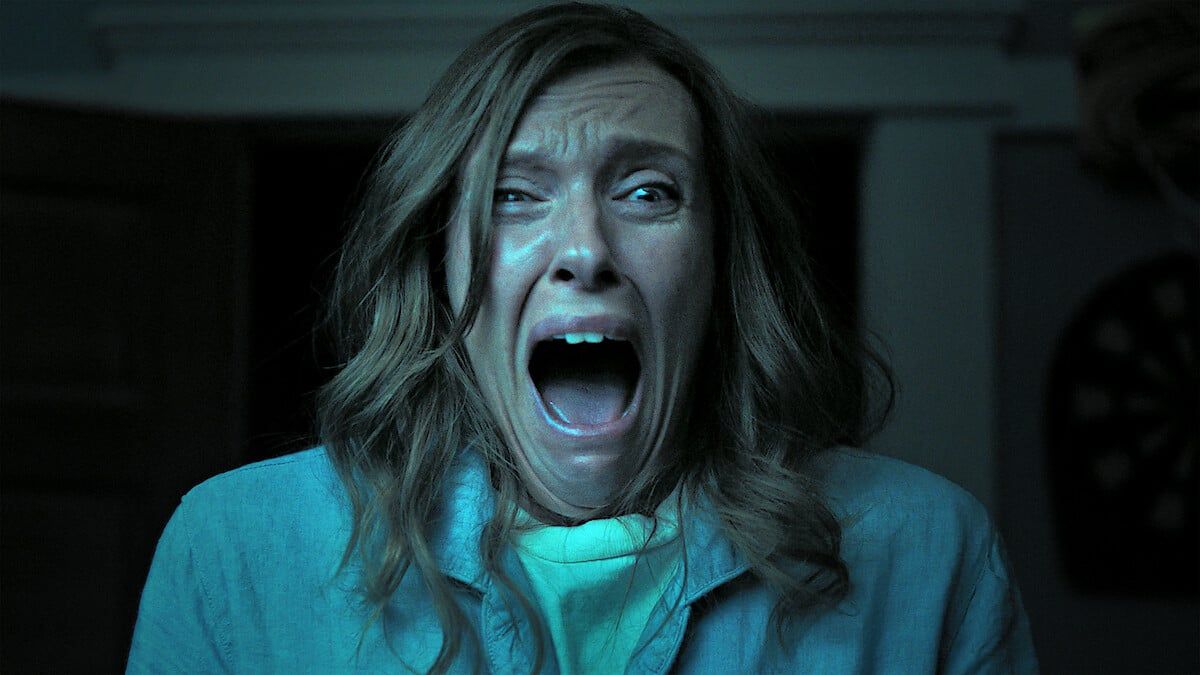
Everybody is frightened of something. Maybe it’s clowns or zombies, enclosed spaces or stern-faced mothers-in-law.
Or, for those of us who are inherently shy, any kind of forced intimacy.
For that latter problem, a few sessions of psychotherapy might help. For the rest of us, though, following the advice offered by any number of sages over the centuries might make better sense.
The advice? Face your fears in an effort to minimize them. Whether this works is an open question. But if you want to try it, one easy way to do so is to watch a movie.
And I’m talking specifically about watching scary movies, which is most appropriate to do during Halloween. You can do it even as costumed urchins scratch at your front door in the hope of snaring a Snickers bar … or two.
Not that scary movies always address the holiday directly. Yes, in 1978 John Carpenter released “Halloween,” arguably the best of what was to become a 13-film franchise. It made the specter of Michael Myers into the kind of spooky goblin that has haunted us for more than four decades now.
But, then, scary films come in all shapes and formats. Here, in no particular order, are just a few that, when I first saw them, freaked me out (all are streaming on various services).
“Audition” (1999): For anyone older who finds it difficult to attract a romantic partner, Japanese director Takashi Miike’s exploration of a widower’s attempt to do exactly that ends up being a total horror-show. When a man (Ryô Ishibashi) sets up a fake job audition as a way to find a girlfriend, the woman he entices Asami Yamazaki (played by Eihi Shiina) turns out to be his worst nightmare.
“The Vanishing” (1988): Though he softened his effect by later remaking his film for American audiences, French director George Sluizer’s original study of a man (Gene Bervoets) who attempts to find a woman (Johanna ter Steege) who mysteriously disappeared is a gut-cruncher. Bernard-Pierre Donnadieu stars as a mysterious guy who offers the man a chance to solve the mystery, which comes at a supremely frightening cost. Claustrophobes beware.
“A Nightmare on Elm Street” (1984): Like Carpenter’s “Halloween,” the first entry in any franchise is typically the best. And that’s true of this slasher flick by writer-director Wes Craven, the first of a nine-film franchise. Robert Englund as Freddy Krueger is the central murderous villain, and the first death of Tina (Amanda Wyss) is a true shocker.
“Ringu” (1998): No country does horror better than Japan, as this film by Hideo Nakata proves. The story, taken from a 1991 novel by Koji Suzuki, involves a videotape that, if watched, ends up dooming the watcher to a horrible death. The site of a bizarre creature crawling out of a well, and then out of a TV screen, is bound to make anyone’s skin crawl.
“Funny Games” (1997): While a lot of horror involves supernatural beings, sometimes the scariest films base themselves on a sense of harrowing reality. That’s the case in this offering by Austrian writer-director Michael Haneke. When a family arrives as their holiday destination, they are met by a seemingly innocuous pair of young men. Note: Beware strangers wearing white gloves.
“Eraserhead” (1977): When he died earlier this year, a number of stories celebrated the career of David Lynch. And while most mentioned the weird qualities of films such as “Blue Velvet” and “Mulholland Drive,” not to mention the television series “Twin Peaks,” nothing Lynch did was more strange – and soul-stirringly scary – as this surrealist meditation on desire.
“Manhunter” (1986): Five years before Anthony Hopkins won a Best Actor Oscar for portraying the psychopathic serial killer Hannibal Lecter in “Silence of the Lambs,” Brian Cox portrayed the character in Michael Mann’s “Manhunter.” As chilling as Cox is, the truly scary character is Tom Noonan whom director Mann cast as the “Tooth Fairy” killer, Francis Dolarhyde.
“28 Days Later” (2002): Until director Danny Boyle brought Alex Garland’s screenplay to the big screen, zombies had been portrayed mostly as bumbling creatures. Boyle and Garland saw them as flesh-eating beings who move greyhound fast. Cillian Murphy plays a guy who wakes from a coma and struggles to survive in a world dominated by murderously sleek cannibals.
“Hereditary” (2018): Writer-director Ari Aster specializes in psychological horror, especially when he can add in a few supernatural references. Here, Toni Collette stars as a woman who, haunted by the death of her mother, finds herself being manipulated by demonic forces that end up affecting her husband, son and daughter in ways that become progressively ghastly.
“The Blair Witch Project” (1999): One of the most effective examples of found-footage horror, this film written, directed and edited by Daniel Myrick and Eduardo Sánchez, follows three young documentary filmmaker as they try to make a documentary film about a mythical Blair Witch. If several of the earlier scenes aren’t eerie enough, the final shocking image certainly is.
“It Follows” (2014): One common horror-film theme is a warning about having sex. Writer-director David Robert Mitchell uses this theme to depict what happens to a young woman (Maika Monroe) who is cursed when she makes love with her boyfriend. She then finds herself pursued by a mysterious presence that, taking on a number of identities, seeks to kill her.
To finish, let me leave you with a word of warning: I’m not sure watching these movies have helped me get over any of my inherent fears.
But each of the experiences did thrill me. And I’m likely to watch one or the other again.
After all, isn’t the chance to entertain our fears the whole purpose of Halloween?