
‘You have a voice’: Spokane mom writes book on medical advocacy around daughter’s story
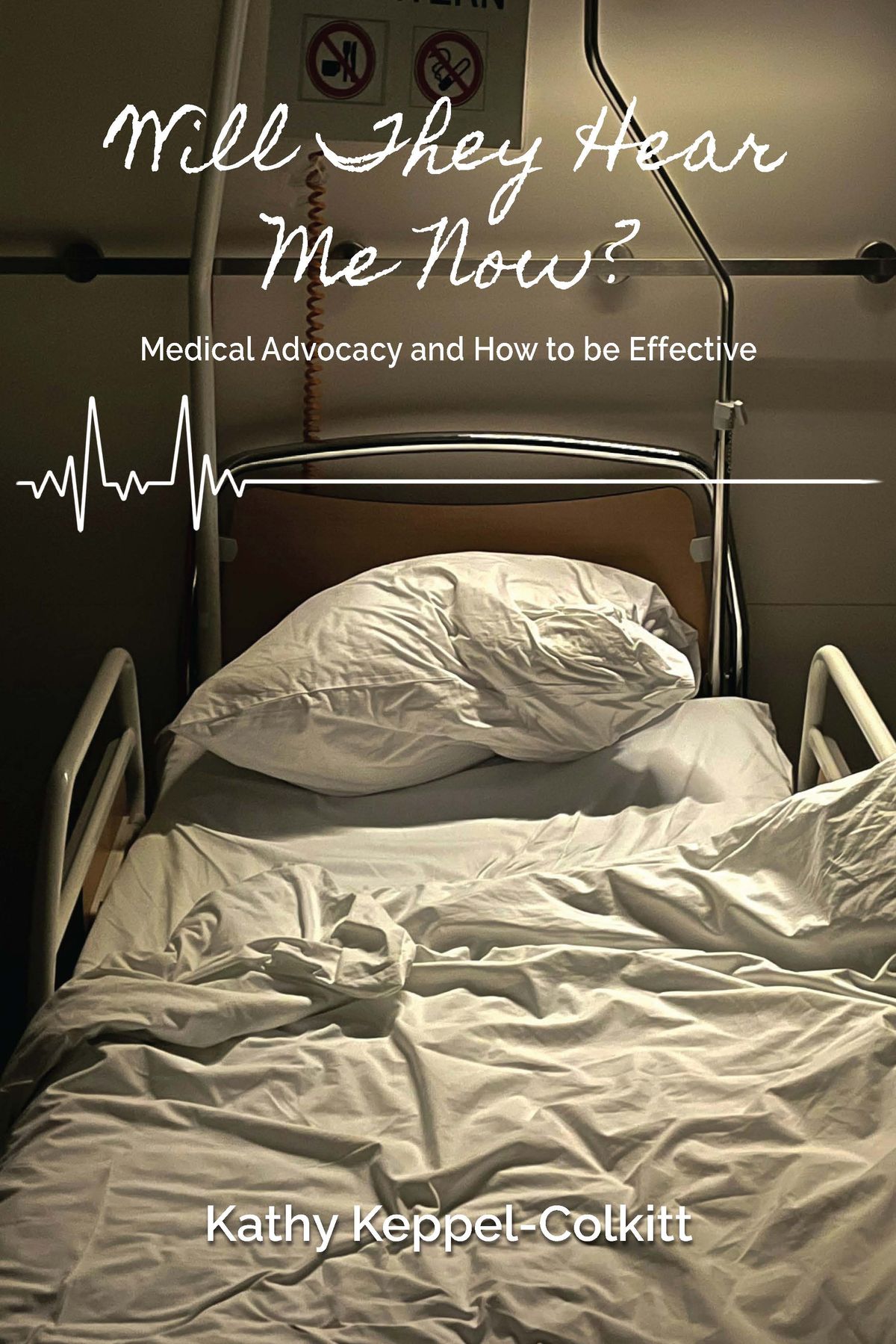
Kathy Keppel-Colkitt needed 15 years to write a book she now hopes will help people become effective medical advocates.
Self-published, “Will They Hear Me Now?” carries the story of her daughter, Brandi Colkitt, who at age 26 had debilitating pain in her brain’s frontal lobe. A Child Protective Services social worker, Colkitt got too sick to work and needed her mother’s support.
The two women navigated frequent Spokane doctor and hospital visits that began in fall 2008 and continued until Colkitt’s death June 18, 2009.
“In the first four months, we kept going to the ER because of the pain, and with no resolve,” Keppel-Colkitt said. Her daughter was given a few shots for pain, after a doctor mistakenly thought she had trigeminal neuralgia, a chronic pain condition that affects the trigeminal nerve.
“There was no one believing her, no one wanting to do diagnostics, only a MRI that was negative, and then a spinal tap because they thought maybe MS. It really was a lose-lose situation for her.”
As her daughter’s power of attorney, Keppel-Colkitt asked tough questions. But Colkitt suffered under accusations of “med-seeking” and missteps, said Keppel-Colkitt, who after unsuccessful ER visits called into a health insurance company to gain support for hospital diagnostic testing.
With that push, Colkitt was diagnosed with Stage 2 Hodgkins-lymphoma. Keppel-Colkitt said the condition carried a high treatment success rate.
However, her daughter died four months later, and cancer wasn’t the cause.
Rather, Colkitt had an allergic reaction – called bleomycin toxicity – to one of the chemotherapy medicines that compromised her lungs, which Keppel-Colkitt said could have been caught earlier with an X-ray. One doctor initially dismissed Colkitt’s coughing and complaints of breathing difficulty, and attributed them to anxiety, she said.
Her daughter ended up intubated, with her organs failing, until the decision to take her off the ventilator.
After years of reflection, Keppel-Colkitt said her book shares that story but also the advocacy lessons learned.
She uses pseudonyms to describe the doctors and health institutions. Medical providers never discussed the possibility of death when her daughter rapidly declined, to allow more meaningful talks, she said.
Keppel-Colkitt said the book includes tips like the patient’s right to call for a medical conference of all doctors involved, seeking a social worker’s help and how a medical advocate needs to ask one friend or family member to be a liaison to help with the advocate’s needs.
The liaison acts as the advocate’s sole contact person, while checking in that the advocate has food and water.
“I was the advocate for my daughter but what an advocate needs, which I didn’t realize until I wrote the book, is a liaison,” she said. “An advocate needs somebody who can do things for her or delegate things so the advocate can focus just on the person.”
The author recently released a guidebook, “My Effective Advocacy Toolbox,” about 10 advocacy roles that range from financial or legal conflicts to military or sports difficulties. She has a third book in to works diving deeper in defining those subjects, scheduled to be out this fall.
The book “Will They Hear Me Now?” is $24.99 on Amazon or from the BMC Enterprise nonprofit website, a foundation to help and mentor people for advocacy roles.
Keppel-Colkitt, a mortgage lender, lives with her husband Keith Colkitt in the Cheney area. Colkitt was Keppel-Colkitt’s only biological child, but Keith adopted her at nearly age 3. The couple adopted another daughter in 2009 after she had lived with the family for nine years.
The author started the book soon after Colkitt’s death but had to put it aside. More progress happened about five years later, but the push came when she stayed with friends in Montana in December 2023 and worked consistently for two weeks in their basement.
What helped were her regular notes she kept and calendar dates for her daughter’s appointments.
“When I looked at the calendar and the notes, everything flooded forward. I had written a lot of short notes, so everything came back instantly. I want this book to be of value to people on how you can be an advocate.”
Keppel-Colkitt said she hopes for two goals with the book, to help people realize you never know when a crisis will occur and to prepare with tools to make others’ lives easier. “It’s better to do this when you’re not in crisis.”
Her second hope is to help medical systems understand the consumer’s perspective better and make changes, including listening to patients and advocates, she said.
“There has to be a better way to treat people; there has to be,” she said.
And she’s had time to reflect on suggestions to keep a strong voice in advocating for your loved one.
“The whole back section has pointers, perhaps things people didn’t know they could do, like have a case conference, like call the insurance company, like refuse to take them home from the ER when you have questions.
“You have a voice. This book, I think, helps you understand you have a voice and hopefully it guides you on how you can use your voice.”