
West coast states form vaccine recommendation alliance amid CDC instability
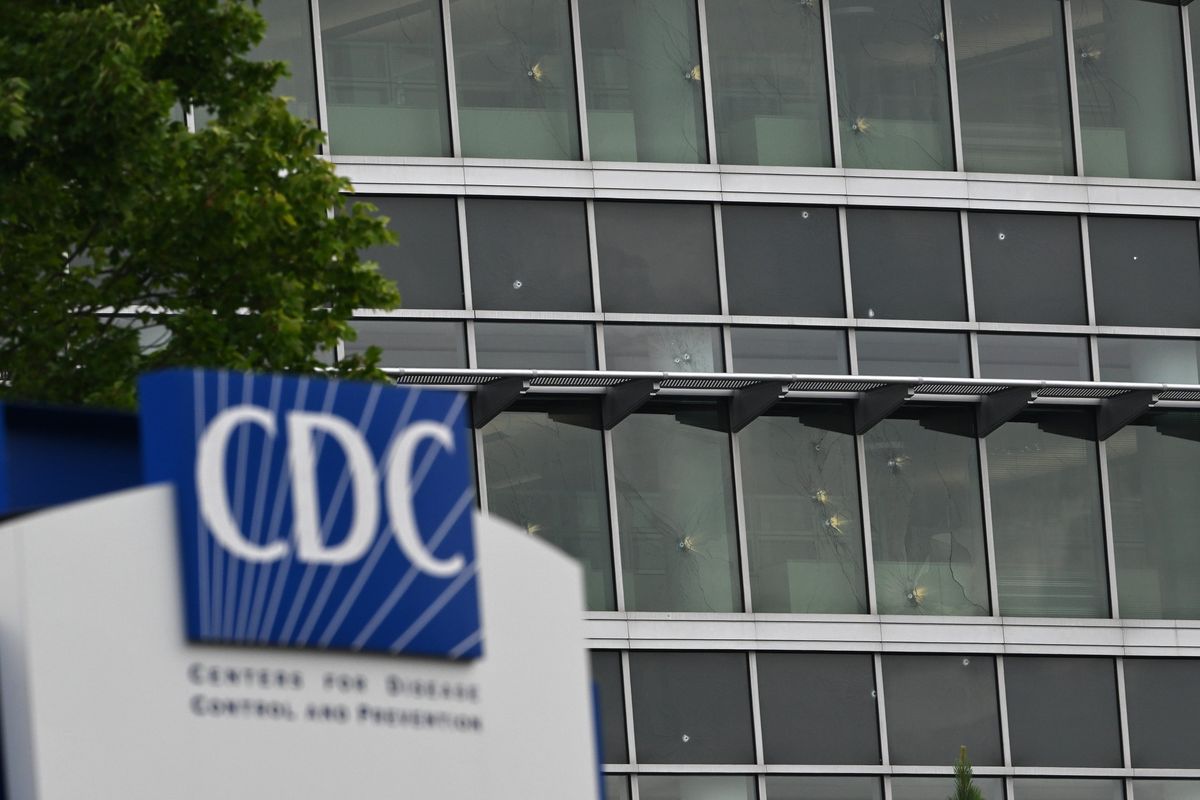
Washington will join California and Oregon as part of a West Coast coalition to make their own vaccine recommendations rather than rely on guidance from the Centers for Disease Control and Prevention.
Washington Health Secretary Dennis Worsham said the move follows turmoil at the CDC, which he said has made decisions since the beginning of the Trump administration “based on political views” rather than an “attention to science.”
Worsham described the new West Coast Health Alliance as a “shadow network” filling the role the CDC has played in the past.
“This is about aligning ourselves where the science is strongest – trying to quiet the noise so people know where to go and what to do,” he said.
The three states acting in one voice hope to achieve more credibility with the public. Vaccine recommendations the states share will be partly based on those of the American Academy of Pediatrics and the American College of Obstetrics and Gynecology. Both have recommended the COVID-19 vaccine more broadly than currently recommended at the federal level.
While beginning with vaccines, the alliance will also consider broader public health recommendations, Worsham added.
“The CDC has become a political tool that increasingly peddles ideology instead of science, ideology that will lead to severe health consequences. California, Oregon, and Washington will not allow the people of our states to be put at risk,” reads a joint statement from the states’ Democratic governors.
The move comes as a direct response to the firing of the CDC director and other top officials by the Trump administration last weekend.
The firings were a “direct assault on the health and safety of the American people” Washington Gov. Bob Ferguson said in a statement announcing the alliance.
The unprecedented firings were also criticized by seven former CDC directors in a New York Times editorial. They described what has been done to the CDC in recent months as “unlike anything ever seen at the agency” and a threat to public health across the country.
According to the editorial, Monarez refused to “rubber-stamp” U.S. Secretary of Health Robert F. Kennedy Jr.’s dangerous and unfounded vaccine recommendations.”
“None of us would have agreed to the secretary’s demands, and we applaud Dr. Monarez for standing up for the agency and the health of our communities,” reads the editorial of CDC directors ranging back to 1977.
Monarez was specifically fired after she refused accept whatever recommendations were made by the Advisory Committee on Immunization Policy.
Traditionally nonpartisan, the committee had been made of independent experts who create the CDC’s vaccine recommendations for physicians across the country to follow. In June, Kennedy replaced all 17 members of the committee with new members, many of whom have been critical of vaccine recommendations or usage.
John Lynch, associate medical director at Harborview Medical Center in Seattle, called Monarez’s firing the culmination of the “greatest threat to the CDC” in his lifetime.
“Everything going on there makes me feel like confusion is the goal. To make barriers to care is the goal,” he said. “This agency is being annihilated in front of our eyes for reasons that I honestly can’t comprehend.”
It’s too early to know how the changes at the CDC will affect local public health. Spokane Regional Health District spokesperson Kelli Hawkins said the “discourse at the CDC” is “concerning to hear” but it is “too soon to speculate on how much of an effect this will have on our local public health efforts.”
Former SRHD administrative officer Torney Smith said the firings would “lead to death of many Americans.”
“They are only recommending boosters are given to kids with certain risk factors and adults over 65. That puts local providers in a bind who want to provide vaccination,” Smith said.
Lynch said the chaos was causing confusion for him and his colleagues as they prepare for the respiratory virus season.
In May the FDA announced healthy adults younger than 65 will no longer be eligible for the COVID-19 vaccine starting this fall. Typically the FDA merely states that a given vaccine is safe or unsafe and then the ACIP committee would make recommendations for the vaccine usage.
The newly reconstituted ACIP committee is set to meet Sept. 18 and 19 to provide recommendations for a host of annual vaccines, including COVID-19 and this year’s flu shot.
According to Lynch, vaccine recommendations for seasonal respiratory viruses typically come early in the summer so physicians know what to recommend to their patients at the beginning of fall.
“Every other year this information would have already been figured out before we moved to respiratory virus season. So there’s already a delay that has caused confusion for providers,” Lynch said.
With physicians and pharmacists confused, it will be much harder to clearly communicate to patients and the public when they should receive vaccines and if they will be able to at all.
“I’m afraid that this is going to create a lot of a lot less coverage here in Washington State,” he said.
He also noted that while physicians can prescribe vaccines “off-label” if there is no CDC recommendation, pharmacies cannot provide vaccines in that way and insurance may not cover the shots.
“Ultimately, most vaccines in the United States are administered by community pharmacists. For them this is creating a lot of confusion and unnecessary stress that’s going to lead to lower vaccine uptake and ultimately harm,” Lynch said.
Against the backdrop of the vaccine fight is the spread of measles across the country this year, including in Idaho and Washington.
The states within the West Coast alliance will issue a standing order through their respective state health officer to allow pharmacies to provide certain off-label vaccines, according to Worsham. So far this would only affect the COVID vaccine – allowing vaccine access for healthy adults under 65.
Insurance coverage for these off-label vaccines are a “little more complicated,” he added. According to the Health Secretary, the state may need to pass a new law in the next legislative session to ensure coverage of these vaccines.
As issues over vaccine safety and access has become a partisan issue, states are taking divergent paths in how best to recommend vaccine usage. Democratically-controlled states like those on the West Coast are moving to provide their own recommendations counter to that of the federal government.
Some Republican-led states are removing all vaccine recommendations and mandates. Florida announced Wednesday they will no longer require vaccination for schoolchildren in the state.
“Who am I to tell you what your child should put in their body?” asked Florida Surgeon General Joseph Ladapo. Every vaccine mandate is “wrong and drips with disdain and slavery.”
In making vaccine recommendations for Washington state, Worsham said he would focus only on “where the science is strongest.” But he admitted that recommendations they make may still appear political to some.
“It will be political because it’s the nature of what’s happening federally. I think all things around these topics are going to have a political band,” he said of the new alliance’s vaccine recommendations.
In an interview Wednesday, Senate Minority Leader John Braun, R-Centralia, said while he didn’t know many details about the health alliance, it seemed “like a bit of a smokescreen.”
“The challenges that normal people in Washington are having, right now, with health care have very little to do with the CDC,” Braun said. “They have to do with Department of Health mismanagement, Healthcare Authority mismanagement that’s affecting the delivery of health care and clarity on what health care is appropriate in our state.”
Braun added that “certainly the people of Washington would be better served” by focusing on improving state agencies.