
Roadless Rule repeal moves ahead; would affect 2M acres in Washington
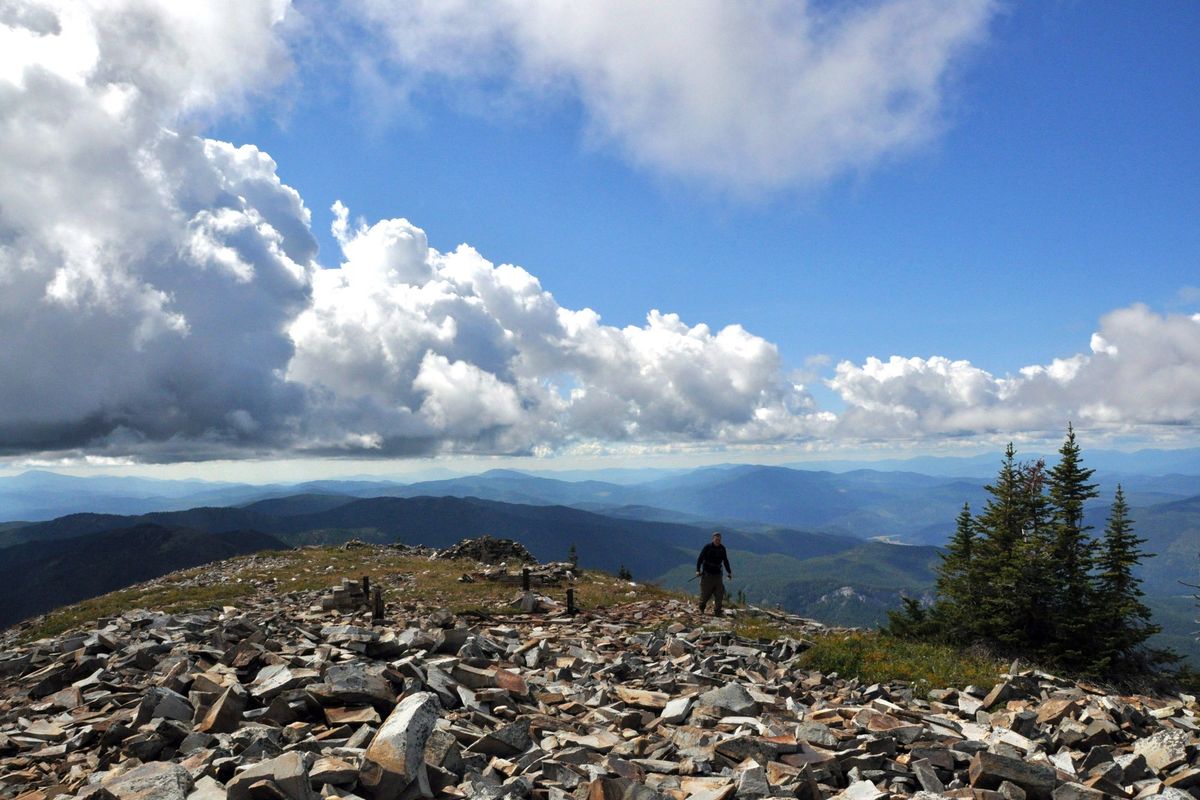
The future of more than 2 million acres of public land in Washington is up in the air as Trump Administration officials begin work on rescinding the 2001 Roadless Area Conservation Rule.
A notice published in the Federal Register in late August kicked off the formal process for rescinding the rule, which protects about 45 million acres of U.S. Forest Service land nationwide from roadbuilding and development. It arrived about two months after the administration first announced plans to rescind the rule.
In a news release before the notice was published, U.S. Secretary of Agriculture Brooke Rollins said it brings the country “one step closer to common sense management of our national forest lands.”
Hunters, anglers and conservationists are crying foul, worrying that the recission will open the door to roadbuilding and logging that will disrupt wildlife habitat and spoil some of the country’s wildest places.
Dave Werntz, senior director for science and conservation at Conservation Northwest, said the rule touches all four corners of Washington, and that it’s been a popular policy for the past quarter-century.
“It’s been an effective policy for protecting values that you find in roadless areas such as clean, cold water and wildlife habitat,” Werntz said. “It’s not a place that people are clamoring to see developed. It’s hard to see the logic behind this proposal.”
Timber industry representatives are dismissing conservation groups’ concerns as overblown and say removing the rule would help the Forest Service better manage its land.
Nick Smith, a spokesperson for the American Forest Resource Council, which supports removing the rule, said there are still many other federal laws and regulations that limit timber production and protect the environment, such as the Endangered Species Act and National Environmental Policy Act.
“It would be removing one layer on top of a very complex sort of web of environmental laws and regulations,” Nick Smith said. “We don’t think rescinding the roadless rule will result in the kind of unrestrained logging that environmental groups are claiming.”
Publishing the notice in the Federal Register marks the start of environmental analysis and rulemaking for the country’s inventoried roadless areas on Forest Service land. A public comment period is open until Sept. 19. A draft environmental impact statement is expected next spring, followed by a final decision in late 2026.
The rule was crafted under President Bill Clinton through a four-year process and finalized in 2001. It prohibited new roadbuilding on millions of acres of undeveloped Forest Service land that weren’t already protected as designated wilderness or another protected category.
Werntz said part of the rationale for the rule was that the agency already had too many miles of roads to maintain, and that developing the areas that were protected wasn’t worth the trouble.
“They are sort of the relic of history in that they’re either too expensive or too difficult to access, or the resources that are there aren’t valuable enough to justify it,” Werntz said.
The Trump Administration is proposing removing the rule as part of its focus on dumping what it sees as burdensome regulations. In the release announcing the publishing of the notice in the federal register, Forest Service Chief Tom Schultz said the rule has frustrated land managers since its inception and made for unhealthy forests.
“The forests we know are not the same as the forests of 2001,” Schultz said. “They are dangerously overstocked and increasingly threatened by drought, mortality, insect-borne disease, and wildfire.”
Conservationists dispute the idea that roadless areas face increased wildfire risk because of a lack of management. For one thing, some fuel reduction projects work does still take place in inventoried roadless areas. For another, those areas are generally further from people, meaning fires within their borders don’t present as high a public safety risk.
They also argue that while roads could give firefighters easier access to remote areas, they can also lead to more human-caused fire starts. A study published by the Wilderness Society found that, from 1992 to 2024, wildfires were more often started near roads than in designated wilderness areas or inventoried roadless areas.
“Our results suggest that building roads into roadless areas is likely to result in more fires,” the study reads. “These fires will, on average, be smaller than fires farther from roads, but there will be more of them, and some of them will grow to become large fires.”
Most of the 44.7 million acres of roadless areas covered by the rule are in the West, according to the notice in the Federal Register.
Washington has 2.015 million acres of inventoried roadless areas. They cover popular hiking and climbing areas in the Cascades, such as the Liberty Bell and Maple Pass.
In Northeastern Washington, roadless protections cover land on the outskirts of the Salmo-Priest Wilderness and Abercrombie and Hooknose mountains just northwest of Metaline Falls.
They also protect the Kettle Crest. Adam Gebauer, the public lands program director for The Lands Council, said roadless lands in the Kettles preserve important travel corridors for wildlife migrating between mountain ranges.
“It’s got some pretty unique habitat being between the Cascades and the Rockies,” he said. “It’s a connector both east to west and north to south.”
Oregon has nearly 2 million acres of inventoried roadless areas protected by the rule. Montana has nearly 6.4 million.
Exempt from this debate are 9.3 million acres in Idaho, where a state-specific rule was approved by federal officials in 2008.
Brad Smith, conservation director for the Idaho Conservation League, said local opposition to the original roadless rule led to a petition for a state specific rule. That process started in 2006.
The resulting rule included a range of designations for roadless land in Idaho, including designations that were more restrictive than the 2001 rule and designations that allowed more development.
“It was a compromise,” Brad Smith said, adding that it seemed to help end the timber wars in Idaho.
Federal officials aren’t looking at the Idaho rule during this process, nor are they looking at the other state-specific rule in Colorado. But Brad Smith is still concerned that those rules could be next, and that repealing the 2001 rule could disrupt the relative peace achieved between conservationists and the timber industry since the timber wars of the 1980s and 1990s.
“I do worry that rolling back the 2001 rule in other states will have consequences not just for the environment, but I think there’s a real potential for the administration to reignite the timber wars,” he said.
He said the roadless rule assured conservationists that “the best of the best” of Forest Service lands would have protections from logging.
“If you take back those assurances,” he said, “then the gloves come off I think.”