
Then and Now: Indian Village at the Interstate Fair
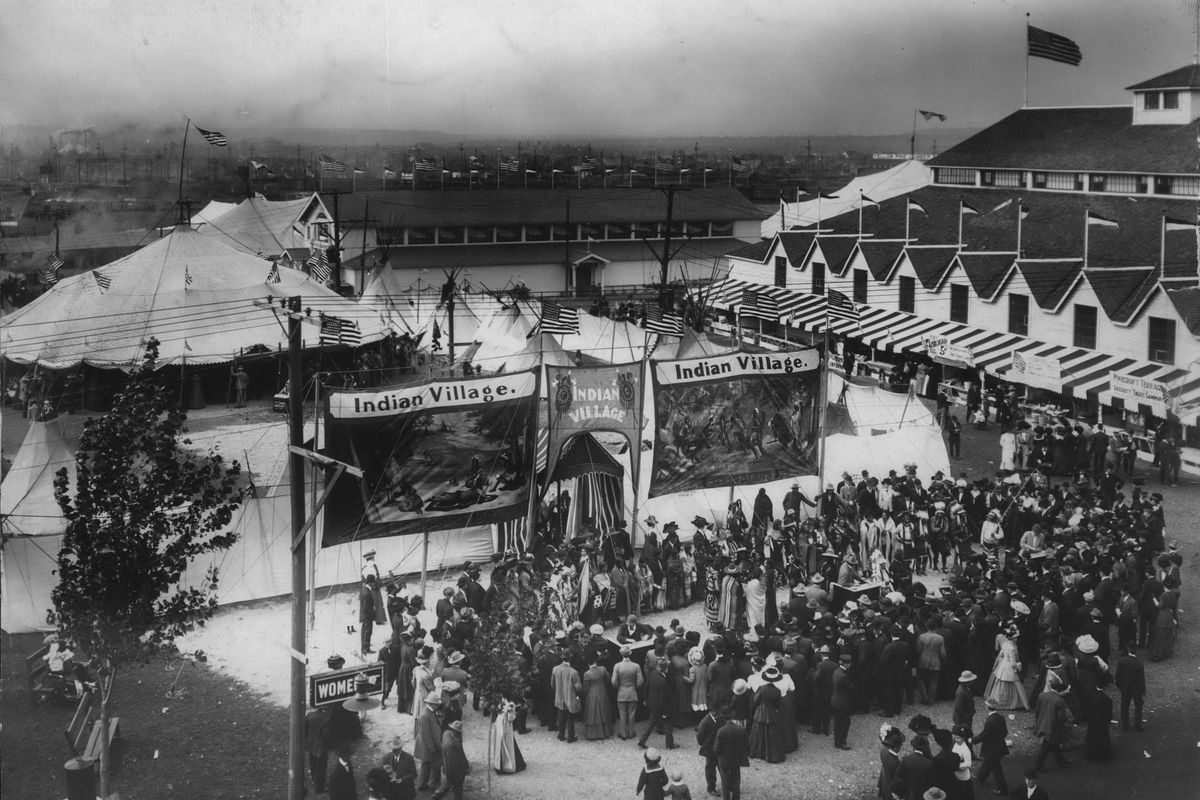
The earliest Spokane fairs, often focused on horse racing, started in 1886 in the area of Corbin Park. In 1901, the fair moved to East Spokane, near Sprague and Altamont, where it was first called the Spokane Interstate Fair.
Starting around 1905 and continuing through the 1930s, the Spokane Interstate Fair each fall included an annual display called the Indian Village, where Native Americans from around the region would camp at the fairgrounds. The presentation was a glimpse into the lifestyle and traditions of local tribes.
Fair organizers would hire up to 100 men and women from local tribes of the Spokane, Colville, Coeur d’Alene, Kootenai, Nez Perce, Kalispel and other groups from farther away to create the display by bringing tepees, regalia and camping equipment. In 1917, the village of 50-100 expanded to 300 people from 10 different tribes on Indian Day at the fair.
Arriving groups would parade down Sprague Avenue to the fairgrounds at Altamont Street.
Throughout the fair, tribal members performed dances, singing and drumming, demonstrated traditional skills, competed in horse races, held sporting events, played stick games, demonstrated ceremonies and sold handmade crafts to fair visitors.
Though the fair always showcased technological advances in cars, home appliances and aviation, Spokane newspapers said the village was among the most popular attractions at the fair.
In 1920, 13 Native Americans were cited for gambling with dice and cards at the fair. After demonstrating the simple games for the judge and prosecutor, the offenders were given suspended sentences and told they could continue “so long as they didn’t gamble with white men.”
Organizer Arthur Dexter, who hired the Native groups for many years, sometimes brought cowboy extras for a Wild West show that he said compared to Cheyenne, Wyoming, or Denver, Colorado. In 1906, Dexter hired Indigenous actors to put on the drama “In-we-ne-ha” in their language at a Spokane theater.
The fair died out in the early 1930s as the Great Depression wore on and the fairgrounds were sold to the city. Horse racing supporters turned the fairgrounds into Playfair horse track, which survived until 2001.
There were a few fairs in the late 1930s, but the county fairgrounds moved to its current location on Havana Street after World War II, and the fairs started up again in 1950.