
Faith and Values: The healing art of creativity
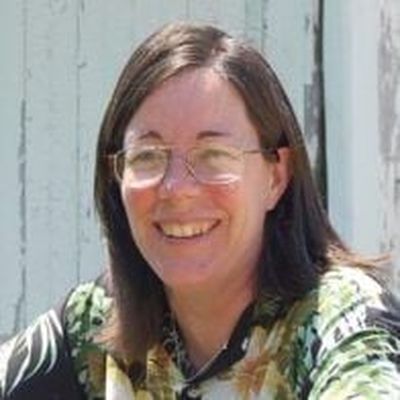
As someone who has spent more than 50 years pecking away at a keyboard – starting with a Smith-Corona manual typewriter, moving to an electric and, for the past few decades, computers – words are a huge part of my life.
A friend recently asked me, “What’s the first thing you think of when you wake up in the morning?”
My answer: “Writing.”
(Sometimes, my writing even wakes me up – or keeps me awake – through the night).
The very process of creating fictional characters, plots and dialogue for what are mostly mysteries is all-consuming for me. I achieve quite a “high” when paragraphs spill from my brain onto the screen, and when I see a story completed.
It’s an addiction for me.
As I’ve contemplated this over time, I’ve also realized all humans are addicted to something.
It could be as simple as reading the newspaper or watching the news on television, at a certain time each day. If circumstances prevent that from happening, an individual can feel a void within the self, a discomfort.
Another somewhat innocuous addiction could be acquiring shelves full of books that may never be read. The mere presence of hundreds of volumes offers a type of security against ignorance, or the impression that one is learned in a given subject. Someone I knew had this addiction and spent far beyond his means, winding up in considerable debt because of it.
Department stores cater to those with an addiction to nice clothes or designer labels. Now, I’m not implying that everyone who patronizes such establishments is addicted to clothes, but those who may have closets full of dresses or trousers only worn once – if at all – might want to reflect upon what purpose those racks of hangers serve.
Addictions like gambling, alcohol and drugs are seen as far more serious, but what is it about human beings that we seek any type of artificial means to feel good inside? What is missing from our lives that we are not content in our own skin, that we lack even a hint of balance that allows us to go about our daily routine without wishing we were somewhere else, or doing something different?
Perhaps it is the daily routine itself that drives addictive behaviors. While the advice, “Do what you love” when it comes to a career is often an unattainable goal, far too many people labor just for the paycheck, without feeling fulfilled or respected. It takes money to live, and what we need to do for money is frequently demeaning to the point of being soul-crushing.
Thus, we seek other ways to bolster self-esteem. Seeking out gossip about public personalities, for instance, may feed a person’s need to feel superior. Food addictions – eating too much or too little – may seem to alleviate the stress of being ignored in the workplace or having a less than healthy view of body image.
An addiction to creativity – painting, pottery, sculpting, composing – may allow the artist to express emotions that are otherwise bottled up inside .
Experts have already pointed out how the availability of mobile phones and other technology has spawned new types of addiction. By giving our attention to these screens, we don’t have to see the real world and its challenges for what they are and – with the proliferation of artificial intelligence – we can hide in a realm of fantasy to the point where it becomes almost impossible to distinguish the events of actual life from our dreams.
All human beings should take time and contemplate how they live and determine what particular addiction is being indulged. Just acknowledging the situation will help rectify the situation and steps can be taken to regulate the activity.
After all, being made in the image and likeness of God, each one of us is worthy of love and respect – including self-love and self-respect – and we should feel good about ourselves without the need for external validation.
We can get “high” on just being alive and being present in each moment of every day.
Julie A. Ferraro is director of communications at the Center for Benedictine Life at the Monastery of St. Gertrude, Cottonwood, Idaho.