
Cantwell, Northwest business owners denounce import taxes as Supreme Court prepares to consider Trump’s tariff authority

WASHINGTON – Sen. Maria Cantwell and small business owners from the Northwest spoke in front of the Supreme Court on Thursday to highlight how President Donald Trump’s signature trade policy has hurt their companies, as the justices set a date to hear arguments in November on the president’s authority to impose sweeping import taxes.
The Supreme Court announced Thursday it will consider two challenges to the legality of tariffs Trump has enacted on much of the world under the International Emergency Economic Powers Act, a law that had never before been used for such broad import duties. Standing between business owners from Wenatchee and Boise, Cantwell, D-Wash., said companies that rely on imported goods won’t be able to survive tariffs as high as 50% and can’t plan for the future amid the whiplash of frequently changing rates.
“Small businesses are paying the Trump tariff,” Cantwell said. “My colleagues on Capitol Hill need to heed this advice and do something to put Congress back in charge. If relief doesn’t come fast enough, millions of jobs will be lost and livelihoods will be decimated.”
The Constitution gives Congress authority over tariffs, but congressional Republicans have chosen not to use that power in deference to a president who has embraced import taxes as a do-it-all tool to collect revenue and gain leverage over allies and adversaries alike. Cantwell is the top Democrat on the Senate Commerce Committee and also sits on the Senate Finance Committee, which has jurisdiction over tariffs.
Travis McMaster, owner of Wenatchee-based travel gear company Cocoon, said he had shifted manufacturing of some of their sleeping bag liners from China to India to avoid higher rates on Chinese exports to the United States, only for Trump to raise the tariff rate on goods from India from 7% to 50% in August.
“I got three days’ notice that the tariffs will be more than the China tariffs,” McMaster said from the podium. “So here we are. Did the right thing, shifted out of China to a country where there was opportunity. We need to put a stop to this, these quick changes. Our business isn’t run on a whim, and our country shouldn’t either.”
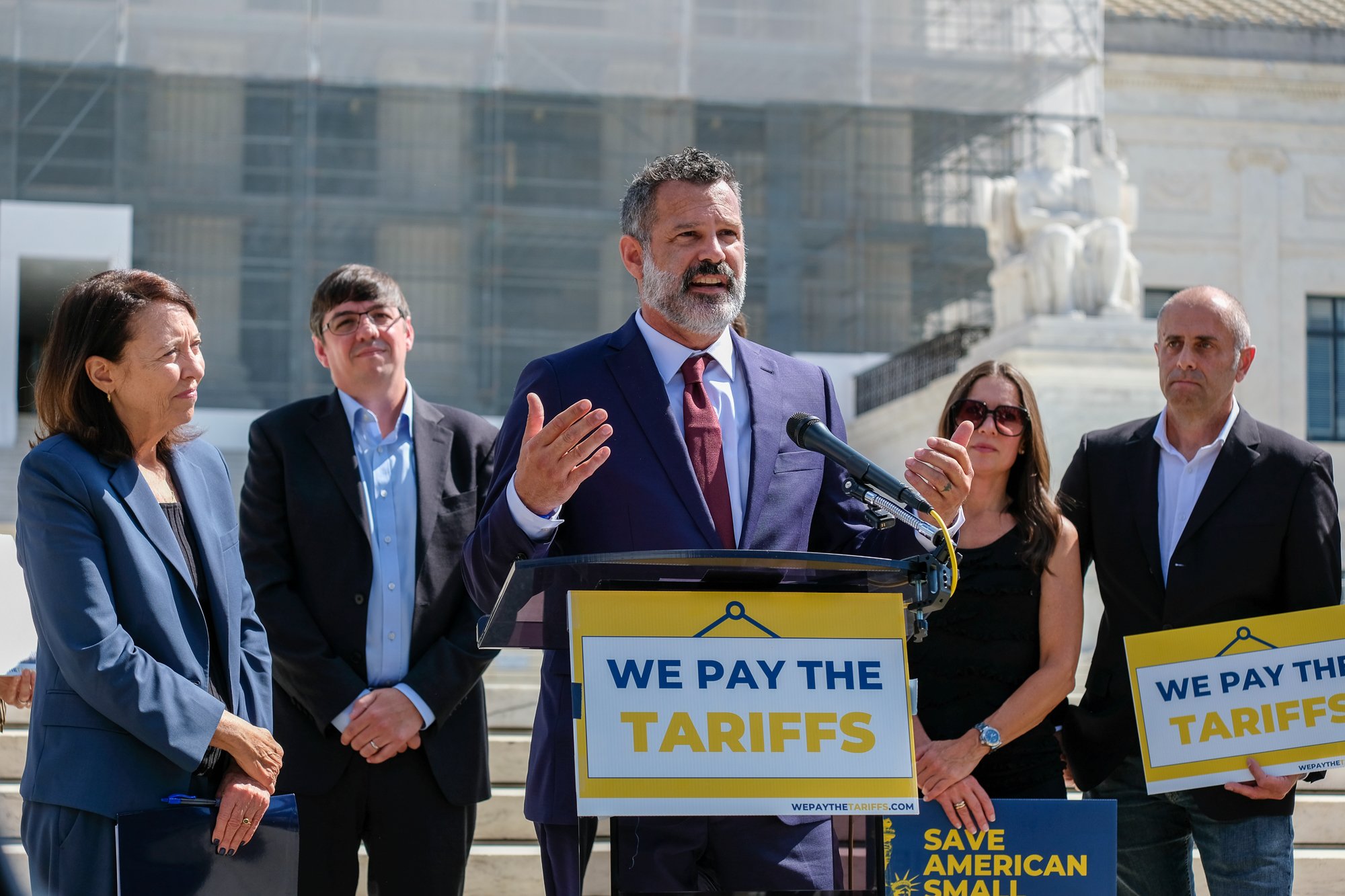
Michael Buechli and Laurie Sebestyen, owners of Boise-based Mike’s Organic Curry Love, were also among dozens of members of a coalition called We Pay the Tariffs who visited the Capitol to lobby lawmakers for lower rates. Buechli explained that since 2008, they have sourced ingredients from Thailand, which is now subject to a 19% tariff, for curries and other food products sold in stores across the United States.
“The grocery business is pretty tough without tariffs, and the tariffs that we have to pay now make it basically impossible to continue the business,” Buechli said. “I’ve had to stop ordering product from Thailand because I just can’t really afford the tariffs that are necessary, and also we wouldn’t make any profit. So our business is most likely going out of business, and that makes us sad.”
Sen. Mike Crapo, R-Idaho, chairs the Senate Finance Committee. While advocacy groups visiting the Capitol often meet with staff without lawmakers present, McMaster said he and other business owners had met personally with Crapo, whom he described as “a straight shooter.”
The Idaho senator told the group that if the Supreme Court blocks Trump’s ability to impose tariffs based on emergency powers, the president could simply invoke a different authority to do the same thing, McMaster recalled. The Wenatchee businessman said he took away the message that Crapo, even as chairman of the committee with jurisdiction over tariff policy, wouldn’t oppose Trump on his own.
“Everybody’s afraid to go against him,” McMaster said, referring to Trump. “There’s got to be a moment where they stick their heads out. It’s getting enough people to do it all at once.”
On Aug. 29, a federal appeals court struck down the tariffs Trump announced in April, on what he declared “Liberation Day” for the U.S. economy in response to what he sees as unfair trade relationships with other countries. That ruling doesn’t take effect until mid-October, and the administration appealed the decision to the Supreme Court, which agreed to hear the case on an expedited basis on Nov. 5.