
As Russia pummels Ukraine’s energy, Kyiv hits back at its oil refineries
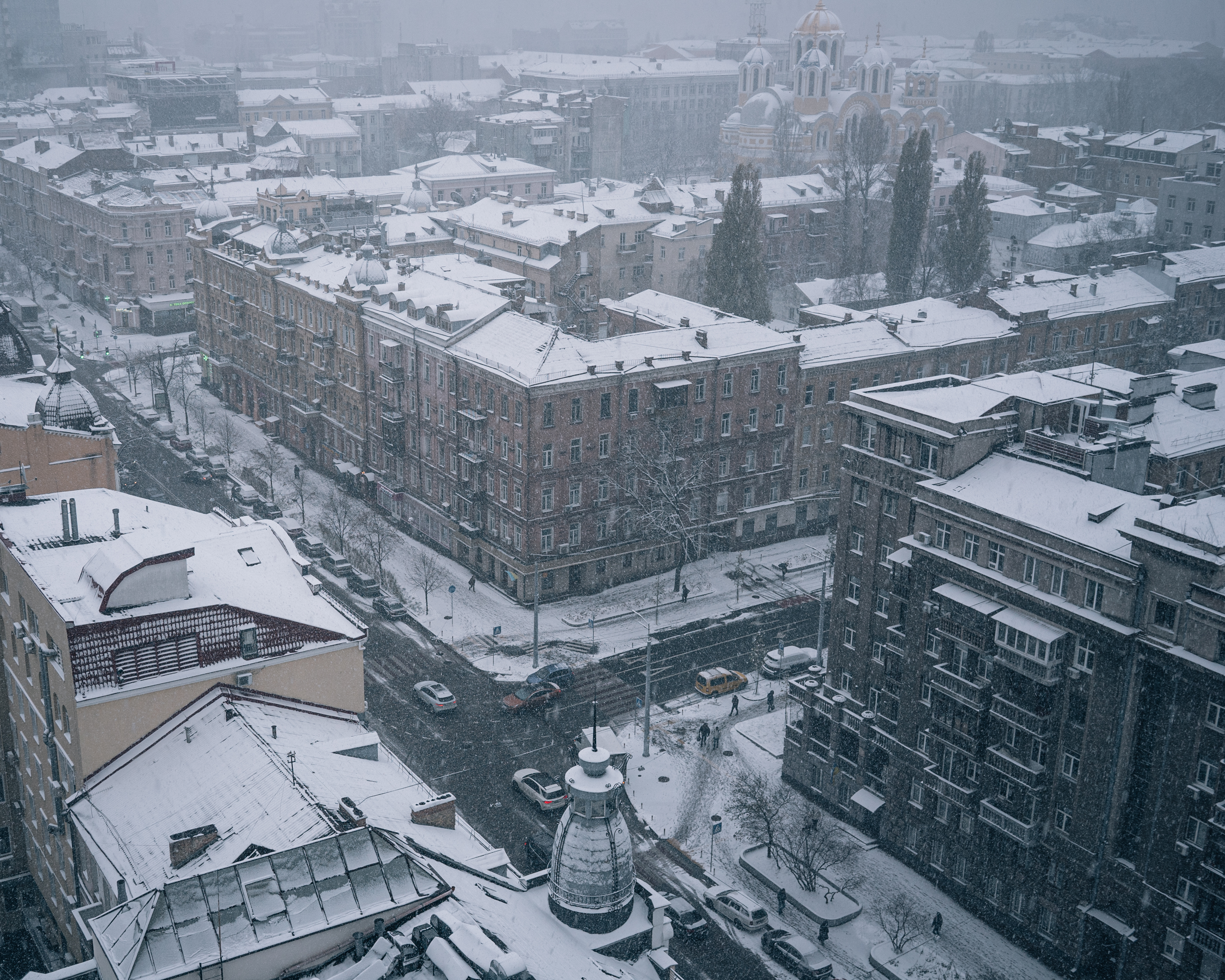
KYIV - Winter is fast approaching in Ukraine and with it comes the annual fear that Russian forces will hammer energy installations and plunge millions of Ukrainians into darkness and cold.
But in recent months, Ukrainians have been returning fire with their own swarms of drones, striking oil and gas infrastructure inside Russia and causing what Ukrainian officials say is extensive damage.
At the beginning of this year, Kyiv and Moscow agreed to a one-month “energy ceasefire” at President Donald Trump’s behest, from mid-March to mid-April. That, however, is now a distant memory, as Ukrainian and Russian forces vigorously target each other’s energy facilities.
On Thursday, Ukrainian drones struck the Gazprom Neftekhim Salavat oil refinery and petrochemical plant in Bashkortostan, central Russia. Ukraine’s security services said that drones hit the center of the plant, where a “strong fire” broke out. The local governor confirmed the attack but only said that damage was being assessed. The same day, Ukraine’s special forces said they hit one of the country’s largest refineries in Volgograd, southern Russia, halting work. The attack could not be independently confirmed.
Then, on Saturday, Ukrainian drones hit Russian refineries in Saratov and Novokuibyshevsk - with both attacks confirmed by the Russian Defense Ministry and regional authorities while local residents reported explosions and fires.
For their part, Russian forces, newly empowered with a seemingly endless supply of drones, are stepping up their strikes, including on Ukraine’s electrical grid, and, in a development that is causing concern among officials and experts, targeting the country’s gas installations, the backbone of Ukraine’s heating system.
Ukrainian officials say that they have enough gas reserves to make it through the winter - especially if it will be a mild one as the previous year - and sufficient experience from Russia’s earlier air campaigns ensure the country’s heating and electrical system continue to function.
But they are concerned that Russia’s airstrikes could eventually overwhelm Ukraine’s antiaircraft defenses, wreaking enough damage to hobble significant parts of the energy infrastructure. Russia is using hundreds of drones and dozens of missiles in its overnight attacks.
“Every day they target our facilities - the question is what facilities and the extent of the damage,” said Maxim Timchenko, CEO of DTEK, Ukraine’s largest private energy company.
“If Russians manage to launch 600, 700, 800 drones, then nobody can guarantee anything,” he said. “We all should be worried, but worried in a sensible way. Not panicking, not saying that it will be bad, not be overoptimistic. Just to do our job as we did it for three winters already.”
Meanwhile, Ukrainian authorities say they’ve been delivering a pounding to Russia’s refineries. In addition to the attacks on the Bashkortostan and Volgograd refineries, they said drones struck the Saratov oil refinery, which produces more than 20 oil products, in south central Russia on Sept. 16. This followed strikes on oil refineries near St. Petersburg in Russia’s northwest and Ufa in central Russia the previous weekend.
“The most effective sanctions - the ones that work the fastest - are the fires at Russia’s oil refineries, its terminals, oil depots,” Ukrainian President Volodymyr Zelensky said in his nightly video address on Sept. 14.
“To significantly restrict Russia’s oil industry is to significantly restrict the war,” he said, adding that an attack on Russia’s Primorsk oil terminal on the Baltic Sea on Sept. 12 had caused “substantial damage,” which was “tangible for the enemy.” Ukrainian assessments of the damage to Russian facilities could not be independently verified.
Citing industry officials in Russia, Reuters reported Tuesday that the country’s oil pipeline monopoly Transneft warned producers they might have to cut output due to the attacks - something immediately denied by Transneft.
Russian officials assert that Ukraine’s strikes haven’t had any effect on their oil and gas industry. In August, Kremlin spokesman Dmitry Peskov said that the Russian fuel market was “stable and the situation is under control.”
Sergey Vakulenko, an oil and gas expert at the Carnegie Russia Eurasia Center, said the Reuters report could well be correct, but it was difficult to assess the overall damage since refineries were being constantly repaired.
“The question is whether the Ukrainians would be able to maintain the tempo, the scope, the gravity,” he said. “If they can and if Russians aren’t able to step up their air defenses, the balance might not be in their favor.”
Russian gasoline prices have increased by more than 20 percent compared with this time last year, said Mykhailo Gonchar, president of the Center for Global Studies Strategy XXI in Kyiv, a think tank focusing on energy issues.
“We see the emergence of a fuel crisis in Russia, it’s not stopping,” he said. “The holidays are over, the farmers have collected their crops, and the fuel crisis continues. Therefore, yes, [the attacks] are effective [and] have influence.”
On Tuesday, the Washington-based Institute for the Study of War said that Ukraine’s campaign against Russian energy infrastructure, “particularly against oil refineries,” is affecting “Russia’s ability to finance its war in Ukraine and exacerbating chronic gasoline shortages in Russia and occupied Ukraine.”
Russian President Vladimir Putin said at the beginning of the month that Moscow’s strikes - despite long being a feature of the conflict - were a response to the new attacks on Russian energy facilities.
“We tolerated for a very long time while Ukrainian forces continuously attacked our energy facilities,” Putin said on the sidelines of China’s World War II victory celebrations in Beijing. “After that, we began to strike back. And we are responding, of course, seriously.”
On Wednesday, power was temporarily cut off in 45 settlements in Ukraine’s Kirovohrad region after an overnight drone attack. Earlier this month, 19 Russian drones struck the Trypilska thermal power plant outside of Kyiv. The plant was severely damaged by another strike in April 2024 and was being rebuilt. Serhiy Nahornyak, a member of parliament’s energy committee, said the latest strike “on the eve of winter” meant that restoration work there was “to no avail.”
The most vulnerable part of Ukraine’s whole energy system, however, is its gas infrastructure, said Victoria Voytsitska, former secretary of the Ukrainian parliament’s energy committee.
The difficulty, she said, is that the gas system consists of a number of different stages - production, processing, storage and then distribution - and these are all spread out and difficult to defend.
For example, she said, there are thousands of gas distribution centers all over Ukraine that supply gas to population centers.
“If you hit those, and Russians did manage to hit those in the past, then you can have a gas shortage, a cutoff, that goes to cities, towns, villages quite easily,” she said. “And building protection for such assets is billions of dollars, a lot of manpower and a lot time and we don’t have it. So we are not prepared.”
Sergii Koretskyi, CEO of Naftogaz, Ukraine’s state-owned oil and gas company, told The Washington Post that Russia’s strikes on Ukraine’s energy facilities started escalating in February, destroying some 42 percent of daily gas production over a two-month period. Then, over June and July, “oil refining was completely destroyed,” he said.
Some of this has been restored, but Koretskyi said they are bracing for a new round of attacks.
“Most likely, [Russia] will now massively attack energy assets before the heating season and winter,” he said. “This is terrorism, pure and simple.”
Koretskyi said he believed Moscow’s attacks on the country’s gas infrastructure were in retaliation for Ukraine cutting the flow of Russian gas through its pipelines on Jan. 1, after long-standing agreements expired. As a consequence, Ukraine must import close to 6 billion cubic meters of gas from abroad, the most in the country’s history, he added.
Koretskyi said that Ukraine has signed contracts that cover close to 95 percent of the country’s gas requirements when Ukraine’s centrally administered heating system is activated on Nov. 1. To finance the purchases, Naftogaz paid $1 billion from its own funds, with the European Bank for Reconstruction and Development, the Norwegian government and other institutions provided $1.5 billion in external financing.
These will suffice if the winter is mild, but if the temperature drops significantly, it won’t be enough, warned Gonchar, of the energy think tank. “Because no one ever knows. Will the winter be warm or cold?”