
Then and Now: Rathdrum
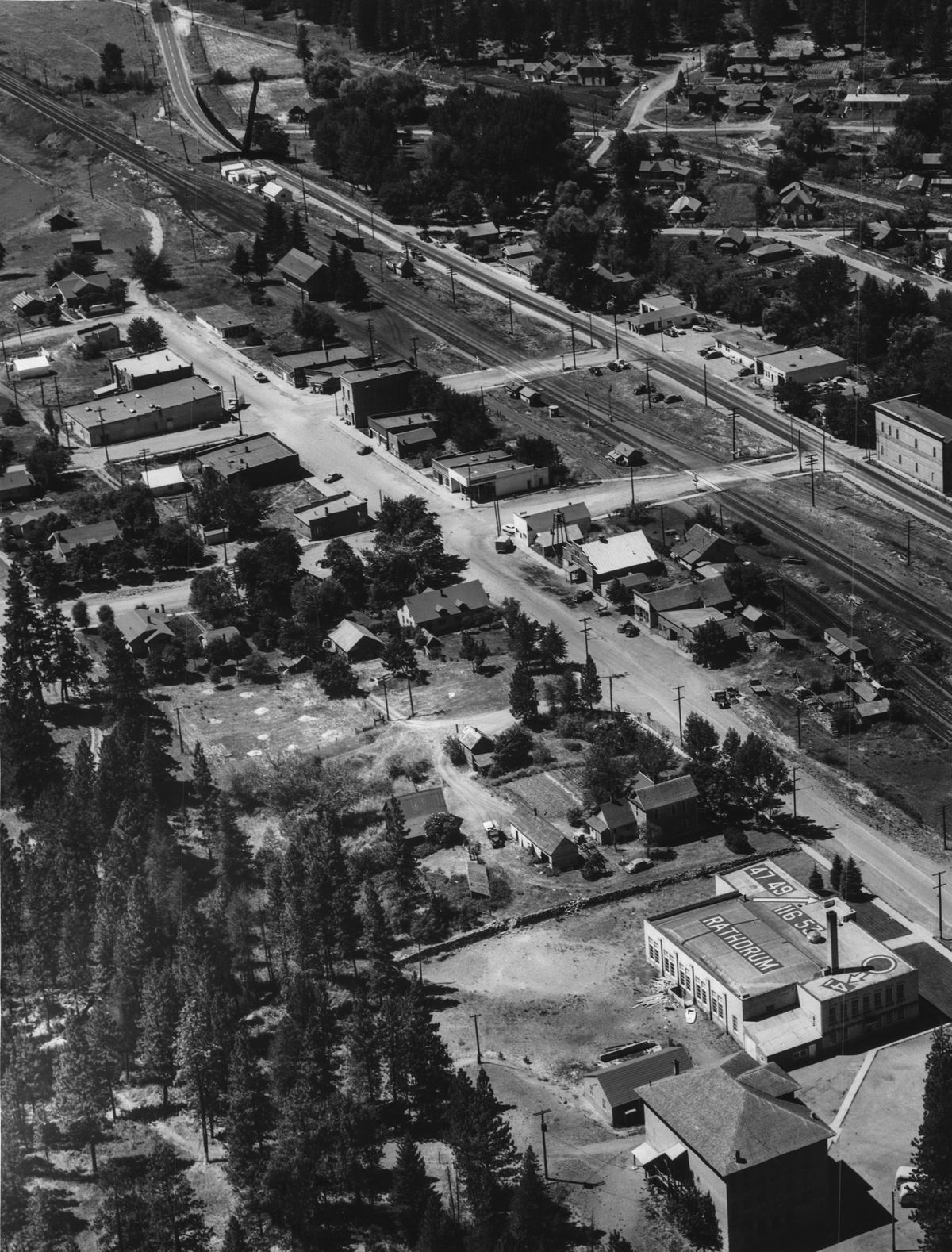
Rathdrum was an important part of the settlement of North Idaho.
Native tribes had lived in the Panhandle region for many generations hunting, fishing and gathering as they moved between villages, often beside lakes and rivers.
The future location of Rathdrum, on the edge of a featureless open plain, drew white settlers looking for land as early as 1861, a dozen years before Spokane was founded.
Kootenai County, named for a Native tribe, was created by the territorial Legislature in 1864, when there were less than 100 residents scattered across the prairie. As the only incorporated city in the county, Rathdrum became the county seat. Before that, a settlement on the Pend Oreille River near Laclede, Seneacquoteen, was a regional seat.
Rathdrum was first called Westwood, drawn from the name of rancher Charles Wesley Wood. But the post office found out that name was taken and prominent Spokane businessman Michael M. Cowley suggested the name of Rathdrum, the town in Ireland where he was born. The name was changed in 1881.
The Northern Pacific Railway made a transcontinental connection through town in 1882 and Rathdrum began rapid growth. The railroad and a gold rush in the nearby mountains brought people and businesses to the region through the 1880s and 1890s. For a few years, Rathdrum outgrew the new settlements at Spokane and nearby Coeur d’Alene, which grew around an army fort built in 1877.
Kootenai County built a brick jail building in 1892 to surround steel jail cells that were shipped from Montana.
Fort Coeur d’Alene, later named Fort Sherman, fell out of use during the Spanish-American War of 1898. The town of Coeur d’Alene, named after another tribe, grew rapidly with the railroad, mining and timber industries. Money flowed from the mines of the Silver Valley and timber mills were numerous.
Coeur d’Alene incorporated in 1906 and became the county seat in 1908.
Throughout the 20th century, Rathdrum Prairie farmers grew bluegrass seed, which was phased out to avoid the annual practice of field burning. Today, thousands of homes have replaced farms over the past 30 years.
The old jail in Rathdrum was nearly demolished, but the Rathdrum/Westwood Historical Society has restored it as a museum.