
A heavy coat in one classroom, a T-shirt in another: Riverside School District hopes levy will fix haphazard HVAC systems
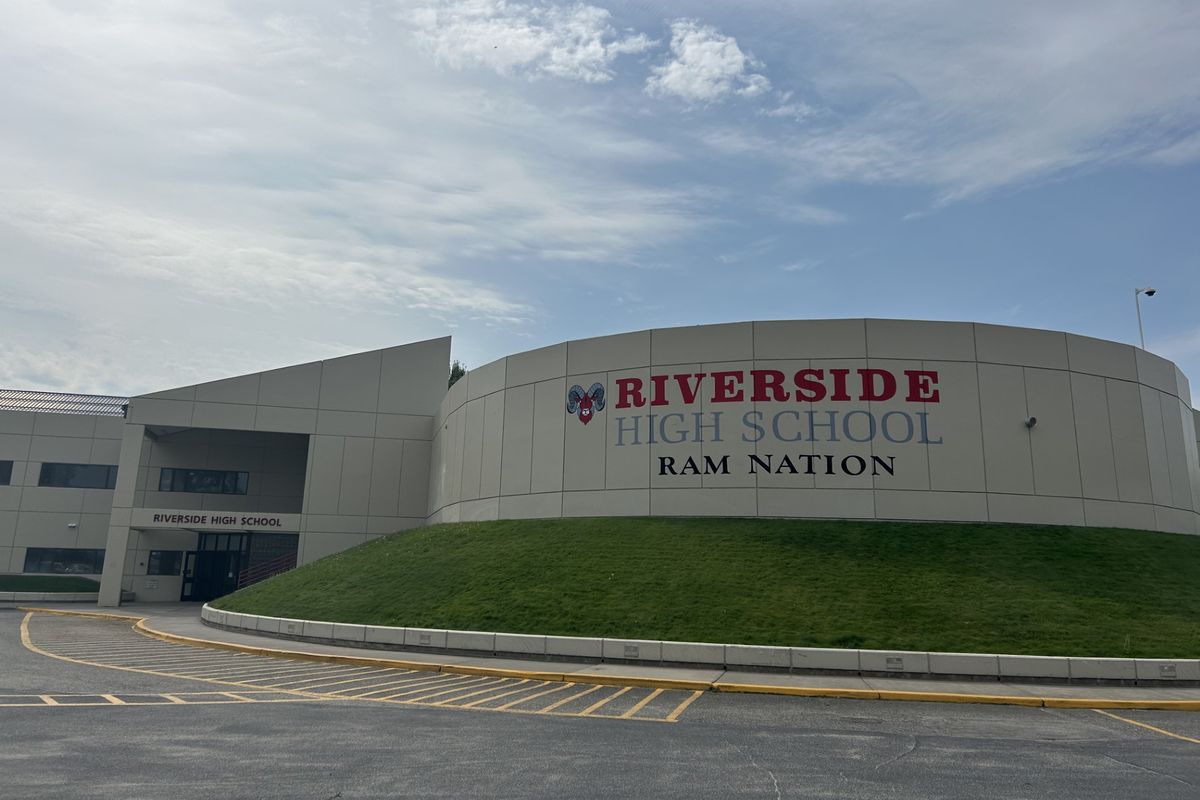
Residents of the Riverside School District will soon vote on a five-year, $18 million capital levy that centers around safety, security, technology and HVAC improvements.
Ken Russell, district superintendent , said the new capital levy on the ballot for Nov. 4 is designed to address only the most basic and urgent needs for Riverside schools.
Last year, voters rejected a 25-year, $73 million bond that would’ve funded major construction projects. That bond, which required a 60% supermajority to pass, included modernizations, upgrades and additions at every school in the district. The new capital levy, which requires a simple majority of 50% plus one to pass, would make the tax rate $1.45 per $1,000 of assessed property value compared to the proposed 2024 bond that would’ve been $2.05 per $1,000.
“We’re trying to do a great job of providing a high-quality education for our students, but we’re also trying to be really thoughtful and responsive to our voters, our taxpayers and our neighbors,” Russell said.
Russell said going from a 25-year, $73 million bond to a five-year, $18 million capital levy is like going from a home loan to a car loan. After deliberations with members of the community, Russell and others in the district believe that this year’s levy is a refined version of the old bond that focuses on the must-haves, rather than the nice-to-haves.
The big items are the heating and cooling systems across all the schools. A little over $16 million of the $18 million capital levy is dedicated to upgrades and replacing the aging HVAC systems. Russell said much of the HVAC equipment in the district is at least 30 years old, which makes finding parts and locating technicians to fix different aspects of the HVAC system a headache.
“This is a long-term issue that we’ve had,” Russell said, “And our maintenance team has really worked hard and done a great job of keeping it going and maintaining it, but we’re just to a point where we’re at the end of life in our systems.”
Tyler Rohrman is going into his fourth year as a teacher at Riverside High School. He teaches world history to sophomores, advises the leadership class and instructs a study skills class. In recent weeks, Rohrman has witnessed the effects the poor HVAC system has had on him and his students.
Rohrman said the Wednesday, Thursday and Friday following Labor Day were all half days because of the blistering heat inside of classrooms. Temperatures regularly reached upwards of 85 degrees across numerous classes. Rather unsurprisingly, Rohrman said that kind of heat makes teaching a difficult task.
Because of the half days his classes took, Rohrman’s been forced to tweak and condense lessons.
“It’s a distraction from learning,” Rohrman said. “As a teacher, I kind of think about Maslow’s hierarchy of needs. You think about having your basic needs met. And if your core body temperature is elevated all day and you’re trying to learn and you’re uncomfortable, I think it just makes it hard to be able to lock in or sit at the desk and absorb information and learn when your brain and your body is just kind of cooking.”
If the levy doesn’t pass, Rohrman said he definitely will be paying for an air conditioner for his classroom out of his own pocket. The stuffy and hot atmosphere that Rohrman’s students had to endure the week of Labor Day made students much quieter than they normally are, with vacant expressions plastered across many of their faces, some even reporting feeling lightheaded.
Stephanie Elie-Martin, a professor and evening business program director at Whitworth, is part of the facility advisory committee. That group toured different sites across the district and considered what projects were most necessary. Elie-Martin also has a senior at Riverside High School .
“It was really, really hot in there,” Elie-Martin said, explaining what her son told her. “I know teachers had fans. I know some had buckets of ice, doing everything they can. But I think it kind of hurts the kids’ hearts. Like, ‘Why can’t we have air conditioning?’”
Elie-Martin said one of the running jokes among her son and his friends revolves around layering up to go to class during the winter . Some classrooms are “T-shirt weather,” while other classrooms are so cold that students need to bring a heavy coat.
“They shouldn’t have to wear three layers of clothing in one classroom and then take off all three layers down to one layer in another classroom in the same building,” Russell said. “It’s not the way it should go. No, they should be learning. They should be able to learn at a high level, and part of that is having a safe and healthy learning environment.”
Elie-Martin stressed that she doesn’t like to pay taxes any more than the next person, but said it’s short-sighted to not want to support the school district. She toured various facilities within the district and learned from a couple of employees who work in maintenance just how complicated repairing certain elements of the outdated HVAC system can be.
The HVAC system has been a districtwide problem, Russell said, since before he first came to the district 10 years ago. If the levy passed, Russell said they would install a modernized HVAC system that should last for another 30 years.
While the vast majority of the money generated from the levy would be dedicated to revamping the HVAC system, about $1.25 million would go towards updating security and safety, such as cameras, automated doors and emergency communication systems, along with upgrades to the district’s technology infrastructure.
Through town halls, focus groups like the facility advisory committee , Russell is hopeful that this new, community-developed capital levy will be much more attractive to voters.
John Paul, who wrote the opposing view on the levy in the county voting guide, stressed that the levy would increase taxes. He pointed to other tax hikes enacted by the Legislature and other governments.
“Increasing state property taxes, increasing local school levies, fire district levies, increasing property values … these all combine to impact your semi-annual property tax bill and the viability to continue owning your home,” he wrote. “In a couple of years from now, the board will ask you to vote for another replacement levy. The district has also stated in their newsletters that the need for future local funding requests will be needed.”
Eric Rux is another community member who serves on the facility advisory committee. He worked as the information technology director for the school district for eight years, before leaving to work at a private IT consulting company. All three of his sons graduated from Riverside in 2014, 2016 and 2019, respectively.
He described the job of the facility action committee as finding “a way to fit a 10-pound gorilla into a 1-pound box.” Ultimately, Rux believes that members of the community worked well with the district to identify the key aspects, like the HVAC and security systems, that desperately need attention.
Rux, who graduated high school with 26 others in the small town of Wilbur, loves Riverside for its small-town feel. He supports the levy for a simple and resounding reason.
“Because someone did it for me,” Rux said. “If someone did it for me, it’s my obligation then to do it for the next generation.”