
This day in history: Kibbie Dome was preparing for first football game. S-R featured massive railroad shop

From 1975: A new era of University of Idaho football arrived with the inaugural game at the covered Kibbie Dome.
The facility opened in 1971, but it was an outdoor stadium for its first years. Now, the new Kibbie Dome was a “sparkling new facility” with one of the largest laminated wood domes ever raised.
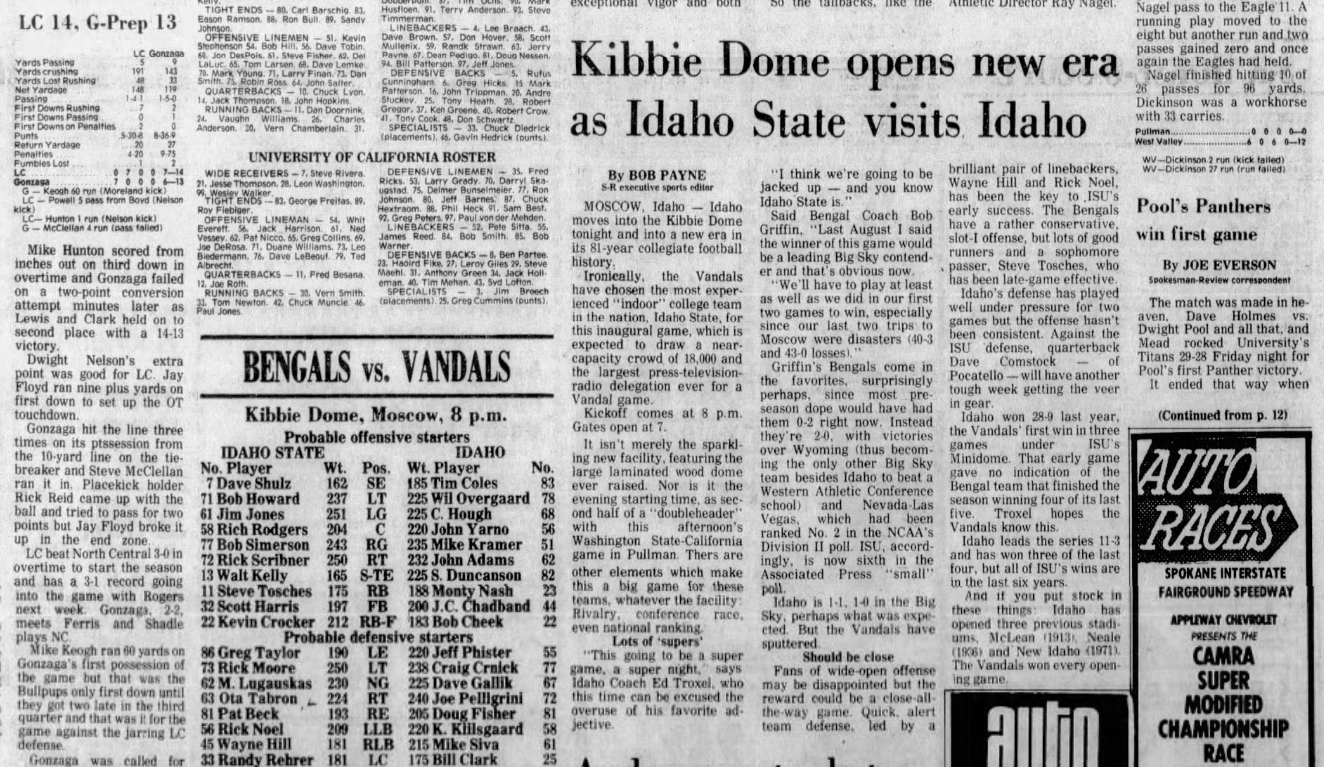
The University of Idaho was hosting Idaho State University in the inaugural game. The Spokesman-Review said a capacity crowd of 18,000 was expected – even though the official capacity of the Kibbie Dome was 16,000.
The S-R also said the game would host “the largest press-radio-television delegation ever for a Vandal game.”
From 1925: A Spokesman-Review reporter visited the gigantic Northern Pacific railway shop at Parkwater, just east of Spokane.
It employed about 600 men – and a few women as well.
“These women are engine wipers, a rather unusual job for them, but some went into it during the war when the men were drafted for war work and a few have remained seven years after the signing of the armistice,” said The Spokesman-Review.
The Parkwater facility was the repair shop of the railway’s Idaho Division, although that name was misleading since it extended from Cheney to Paradise, Montana.
The roundhouse at Parkwater had 37 stalls for engines. Repairing those engines required enormous “modern machinery.”
“In the shops, a hydraulic ram juggles pairs of locomotive drive wheels that weigh 15 tons as though they were rubber balls.”