
Some films, century after their release, brought back to life on big screen at Kenworthy Silent Film Festival

The Inland Northwest has quite a lot of screen credits to its name.
There is, of course, “Vision Quest,” starring Matthew Modine, and the Johnny Depp- and Mary Stuart Masterson-led “Benny and Joon.” “Smoke Signals” and “At Middleton” were filmed in the area, as were “Camilla Dickinson,” “Mozart and the Whale,” “Z Nation” and “Dreamin’ Wild.”
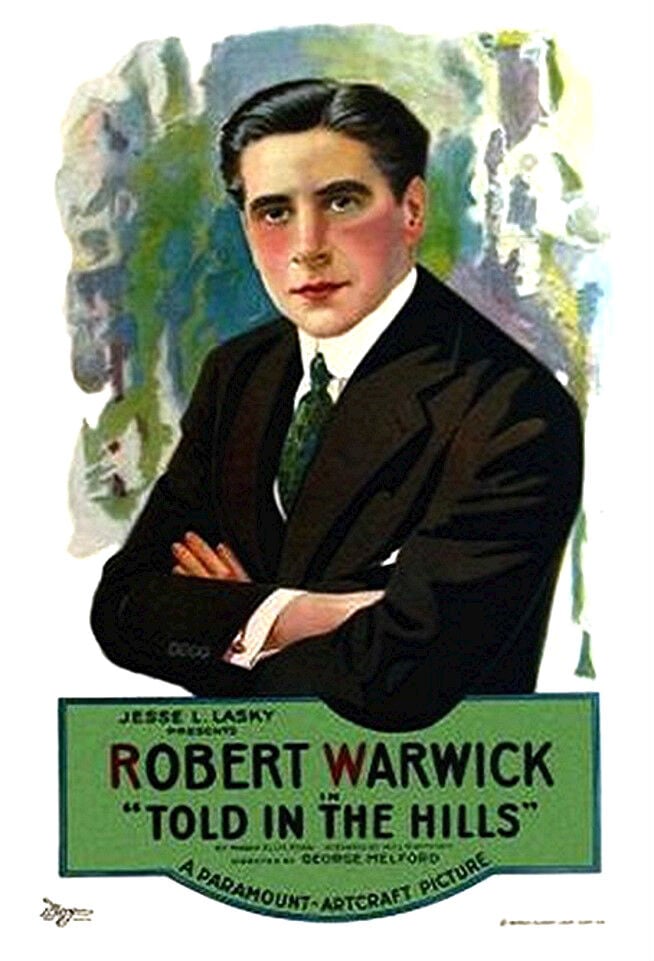
Before those films, in fact before “talkies” altogether, director George Melford came to Lewiston and Lapwai, Idaho, to film “Told in the Hills,” a Western romance that features more than 100 Nez Perce actors and creative collaborators.
More than a century after the film’s release in 1919, all that remained was 25 minutes of film footage. With that footage, plus more than 200 archival photos that were taken on set, the film has been recreated by Colin Mannex, executive director of the Kenworthy Performing Arts Centre, and film editor Tom Frank.
The recreated film will be screened during the Kenworthy Silent Film Festival, which runs Thursday through Sunday. The film features a score by Diné composer Connor Chee which will be performed live during the screenings.
The festival opens on Thursday with a panel discussion featuring Nez Perce cultural historian Nakia Williamson-Cloud, Boise State University archivists Gwyn Hervochon and Alessandro Meregaglia, and Frank.
The group will speak about not only the significance of the film but also the process of restoring and recreating “Told in the Hills.”
After the Nez Perce War of 1877, tribe members were discouraged from large gatherings, so the film marked the first in which many felt it was OK to come together and celebrate their culture, Mannex said.
The panelists will also talk about how the surviving footage ended up in Russia and how the footage made its way back to the United States thanks to the work of former Boise State University Professor Tom Trusky.
The technical aspects of restoring the footage with a 4K transfer will also be discussed, as will aesthetic choices made by Mannex and Frank “to offer continuity to the story while also preserving fidelity to the source material,” Mannex said, which includes a complete filming script.
“That is a great way to initiate audiences to the film, which is fantastic,” he said. “It’s got live music. It’s a multimedia event, but it requires a different kind of engagement than just simple cinematic immersion.”
On Friday and Saturday, the restored and completed “Told in the Hills” will be screened.
Mannex was tipped off to begin looking for the existing footage by Trevor Bond, the Interim of Libraries at Washington State University. It wasn’t truly lost, Mannex said, but largely neglected, forgotten and fragmentary.
Still, there was more than enough there to inspire the restoration project so the film could be celebrated within the community.
“It’s a story of, I think, national significance,” Mannex said. “It has a lot of material culture that’s evident in the regalia and the costuming of the Indigenous actors that is unavailable, really, in many other places from that particular time period.”
It’s believed the remaining film made its way to Russia simply by being at the end of the road film reels traveled in those days. It was prohibitive to send the reel back to America, so it stayed in Russia.
Once the 35 mm film did make its way to America, it was sent to a screen preservation vendor used by BSU called Screen Savers, who turned a low-resolution, 240p film file in such poor quality that the faces of the actors and the details of the costuming were undistinguishable, into a 4K version.
That process took a month or so, then Mannex and Frank went to the BSU Special Collections and Archives and combed through photos taken during the “extremely well-documented production process.” Many were promotional shots that showed behind-the-scenes moments that highlighted the historic significance of having so many Nez Perce in one place. Others featured actors in costume in the locations that corresponded to specific scenes in the script.
They then began the process of working those images into the film alongside the restored footage in accordance with the script.
“We’re so fortunate to have (the script) in its entirety,” Mannex said. “There’s no guesswork. With a lot of these lost or semi-lost silent films, if you don’t have the screenplay, you’re throwing things at the wall without really having a target. You don’t really necessarily know exactly what you’re shooting for. But in our case, we had a very strict, linear process that we knew that we had to follow for the sake of honoring this original production.”
The pair also visited the New York Public Library to gather information about Marah Ellis Ryan, who wrote the novel of the same name on which the film is based. The University of Washington, WSU, the University of Idaho and the Latah County Historical Society also provided photos for the pair to use.
“There are more photos out there that we will continue to access and find to refine this process as we move through,” Mannex said. “We see this very much as a work in progress. The ultimate goal is to get to a place where we feel comfortable with a physical media release, a Blu-ray DVD that we can gift to the Nez Perce community as a teaching tool and as a cultural resource, having all of those different materials synthesized and as a part of a coherent package.”
On Sunday, the festival will host two screens of a series of shorts directed by Nell Shipman, an actress, writer and director who ran her production studio from Priest Lake for about two years, ending when the company went bankrupt in 1925.
Mannex said Shipman was a complicated figure, someone who was able to convince high-profile people to work for her for almost nothing. She cared for a menagerie of wild animals that she purchased after they appeared in her film “Back to God’s Country,” and she worked as a writer, producer, director and studio owner in a time before women were allowed to vote.
“The agency that she was able to secure for herself is something that cannot be overstated,” Mannex said.
The shorts will be accompanied by new scores composed by Lionel Hampton School of Music graduates Isabel Martin, Mallory Hunt and Samuel Cooper. Mannex sees having live musicians perform during the shorts and “Told in the Hills” as a way to bring an upper level of production to the festival and bring the true experience of watching a silent film to the Kenworthy.
On top of the live soundtrack, Mannex said the fact that the main draw, “Told in the Hills,” is a locally made film makes the festival even more exciting.
“This is a story that I think is going to excite folks who are interested in finding points of connection with local history, geography and what our communities looked like 100 years ago as this film was celebrated in Lewiston and with a premiere in 1919, it’s fascinating to imagine all of the human points of connection involved in that process from over 100 years ago.”