
‘This doesn’t need to happen’: Spokane women suffer amid nationwide estrogen patch shortage
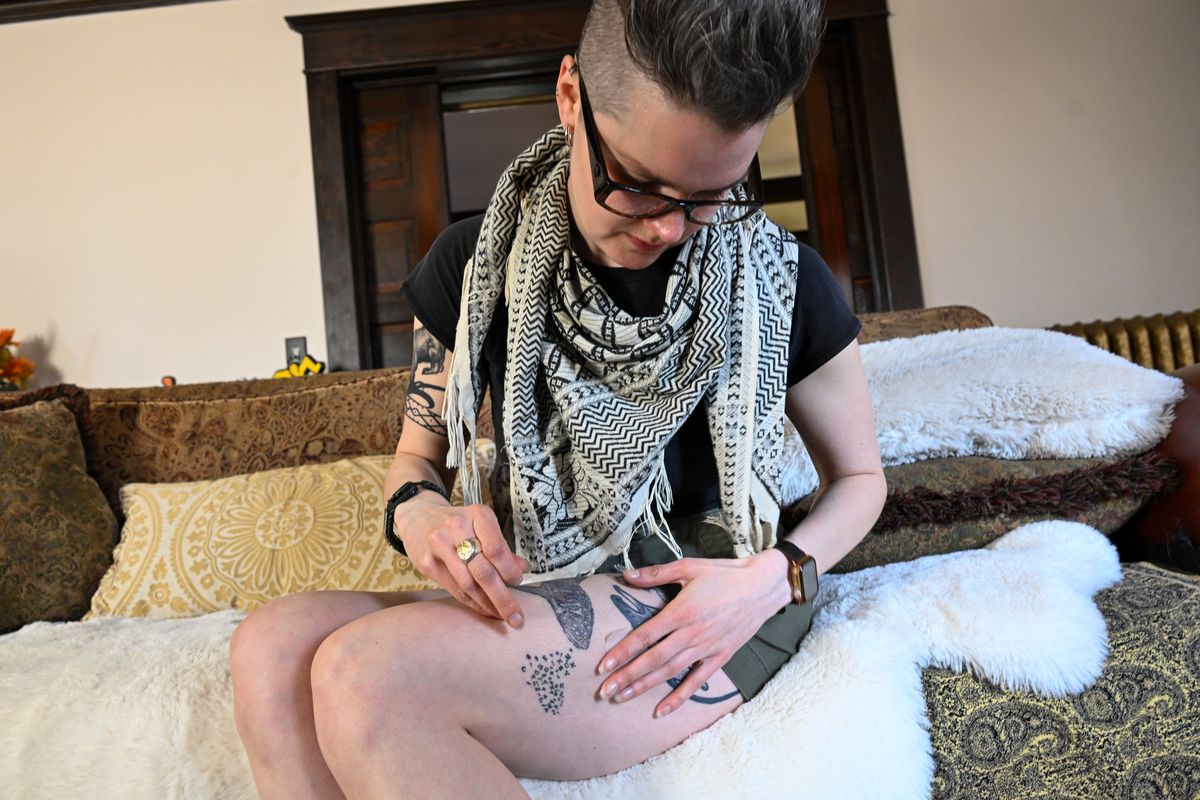
When Birgitta Hendron goes to the pharmacy for her estrogen patch, she now worries about whether it will even be there.
Over the past year, she has had to hunt down her medicine across the city. Several times, she has gone weeks where her hormone replacement therapy has completely run out.
Hormone treatment for menopausal women has been seeing shortages for much of the past year – causing thousands of women across the country to go without for weeks and months at a time. Left untreated, debilitating menopausal symptoms can return and keep people from living their fullest life. For some, the consequences can be worse.
“I have had lapses in the treatment because of the shortage,” Hendron said. “But I’m in a weird position because I will literally die young if I don’t have HRT.”
Hendron has premature ovarian insufficiency, a rare condition that caused her body to stop producing estrogen at the age of 30 and increases the likelihood of stroke and heart attack. Without consistent hormone therapy, she is at high risk of developing osteoporosis.
Because of her unique situation, Hendron is confident she will keep access to her medicine. But she is worried for older women who oftentimes are forgotten by the medical system.
“I have a very strong suspicion that as this goes on, we’re going to see a lot of older women getting the short end of the stick,” she said.
The shortage started last year when the FDA removed “black box” warnings on estrogen used to treat menopause. Since being put on the medication in the early 2000s, the medicine had warned of an increased risk of cardiovascular disease, stroke, breast cancer and dementia. Research over the past 15 years showed those concerns were overblown, and the warnings were removed in 2025.
In the months since that decision, demand for hormone treatment has skyrocketed as more women and doctors feel comfortable using and prescribing the medicine. According to data from health data and analytics company Truveta, use of the estrogen patch has increased 26% since the warnings were removed, but supply has not been able to keep up. Women use two patches per week to ward off symptoms, though the amount in each patch varies by prescription.
“I probably get a couple messages per day from patients that haven’t been able to locate their patches,” said Rockwood Clinic nurse practitioner Terese Quale.
The nurse fears the supply chain issues could last “a few years.”
Menopause occurs when a woman has not had her period for more than a year, which happens when the body’s hormone production begins to decline. Symptoms felt during menopause include hot flashes, night sweats, mood swings, rashes, vaginal dryness and pain during sex. Symptoms typically begin in the early 50s, but their onset can be much earlier or later.
Use of hormone therapy has had an “incredible” impact on her patients, and the fact that many patients have struggled to get their prescription filled has been “highly distressing to many.”
“I hear from patients every day that they did not know how bad they felt until they started feeling better. As women, we try to put our big girl pants on and acclimate to these symptoms, but it can really be debilitating to many women,” Quale said.
Having to come on and off her medicine based on the whim of the supply chain has caused Stephanie Shimkus to “feel just sick.”
“With hormones, you want continuity. You want continuity of circulating estradiol going through your blood that helps keep your systems online. Having this game of having estrogen and then not having estrogen can be much more disruptive than if you hadn’t had it at all,” she said.
Shimkus is a Spokane wellness coach whose wellness studio specializes in women with menopause. She relies on hormone replacement therapy, and so do most of her clients. Almost all of them have faced delays in obtaining their medicine in the past year.
“Every three months, you don’t know if you are going to get your patch. I have had to wait two weeks, three weeks, even four weeks. And you are always in fear the symptoms will come back,” Shimkus said.
Hendron is prescribed a three-month supply of estrogen patches, but she has been unable to get more than a month of supply at a time for the past six months. She is also limited in the kinds of patches she can use because she has developed an allergic reaction to the adhesive used in some patches.
Quale recommends women struggling to find the patch consider other forms of estradiol. The medicine comes in an oral pill, a gel, a mist spray and even in a vaginal ring. These other methods are easier to find than the patch, but they are more difficult to get insurance to cover and generally more expensive. Oral estradiol also comes with a very small risk of blood clots.
“Once you find something that works really well for you, it can be really alarming to not have that as an option, but other options are out there,” she said.
The women’s health nurse also tells her patients they should not cut their patches in half if they are running out of supply.
Shimkus is angry at pharmaceutical companies and the federal government for allowing these shortages to continue for the better part of a year.
“It’s just a lack of planning. It’s a lack of forethought, because this has been slowly getting bigger and bigger over the last few years. I had so much hope when the black box was removed that more women would get the relief they deserve,” she said.
“This doesn’t need to happen. I can freaking guarantee you no dude has ever run out of Viagra. This is just one more nail in the coffin that nobody really cares that much about women’s health,” Shimkus said.