
Bloomsday Perennial: Founder’s race times have slowed. His passion for the event has not
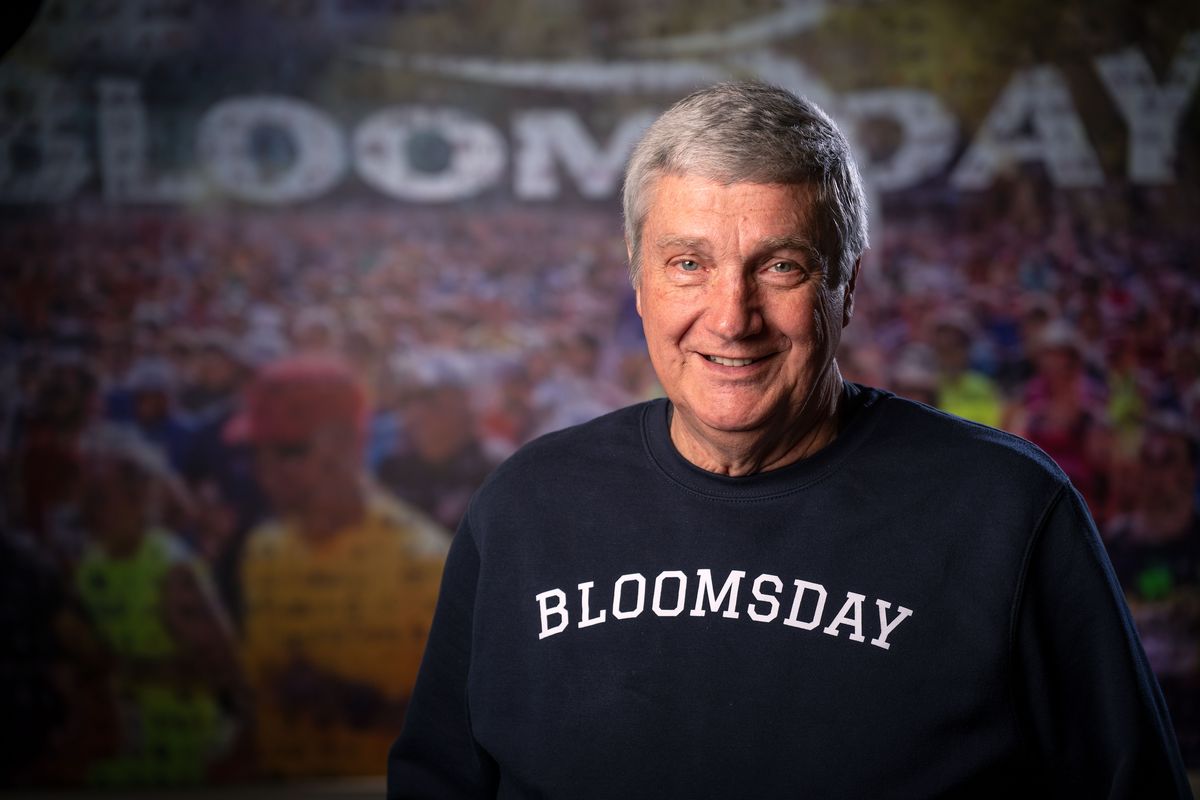
Based on the sport that stole his attention as he started high school, Don Kardong might have been on a path to found Hoopfest.
But thanks to a high school coach, Don Kardong became a talented runner, instead creating Bloomsday, one of Spokane’s premier annual events.
The first Sunday in May marks the 50th running of Bloomsday, an event that Kardong has lived and breathed since he brought it to life.
Kardong grew up in Bellevue and attended Seattle Prep, where he didn’t start running cross country until his sophomore year. “I was trying to get into shape for basketball,” he said.
He signed up for the new sport at the suggestion of his basketball coach.
“I later found out the cross country coach had twisted his arm to get me to sign up,” he said. “He had seen me in a PE class.”
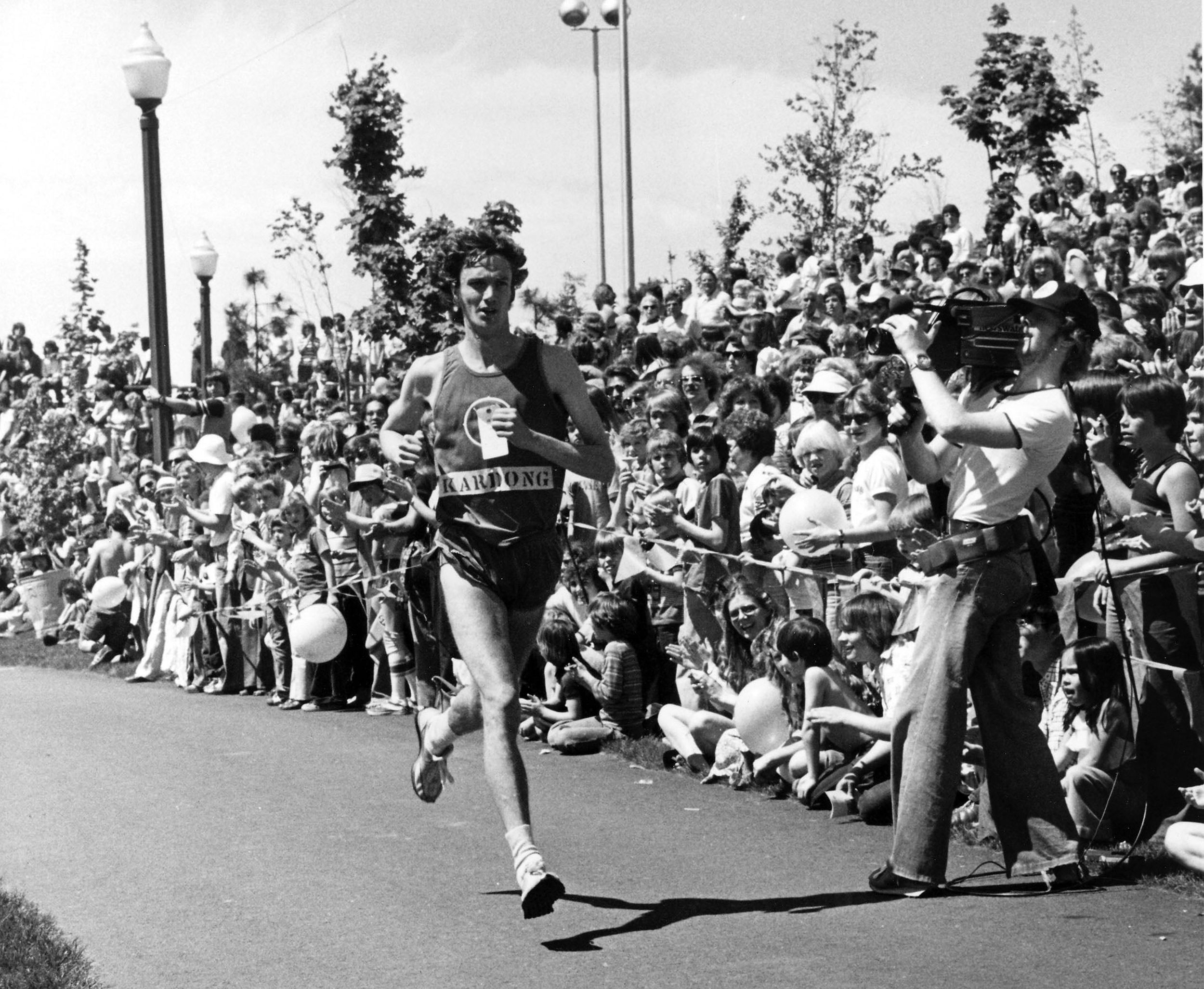
The cross country coach thought Kardong had running talent and Kardong soon found himself enjoying the new sport.
“As a basketball player I needed to be a foot taller, but I could run,” he said. “I thought it was great. I could run distances pretty well. I could run them really well once I got into shape.”
He won his first race that year, and he was committed. A hoped-for running scholarship never materialized, however, and Kardong wasn’t sure he’d keep pounding the pavement in college. He attended Stanford University, where he was able to continue his cross country career. His team finished second in the nation his sophomore year.
“That was pretty special,” he said. “I was pretty well hooked at that point.”
Kardong thought he had a shot at making the Olympic team, so when he graduated from college in 1971 he stayed in the Bay Area for a year to try out. He did that in 1972, but got sick with mono not long before the Olympic trials and didn’t make the team.
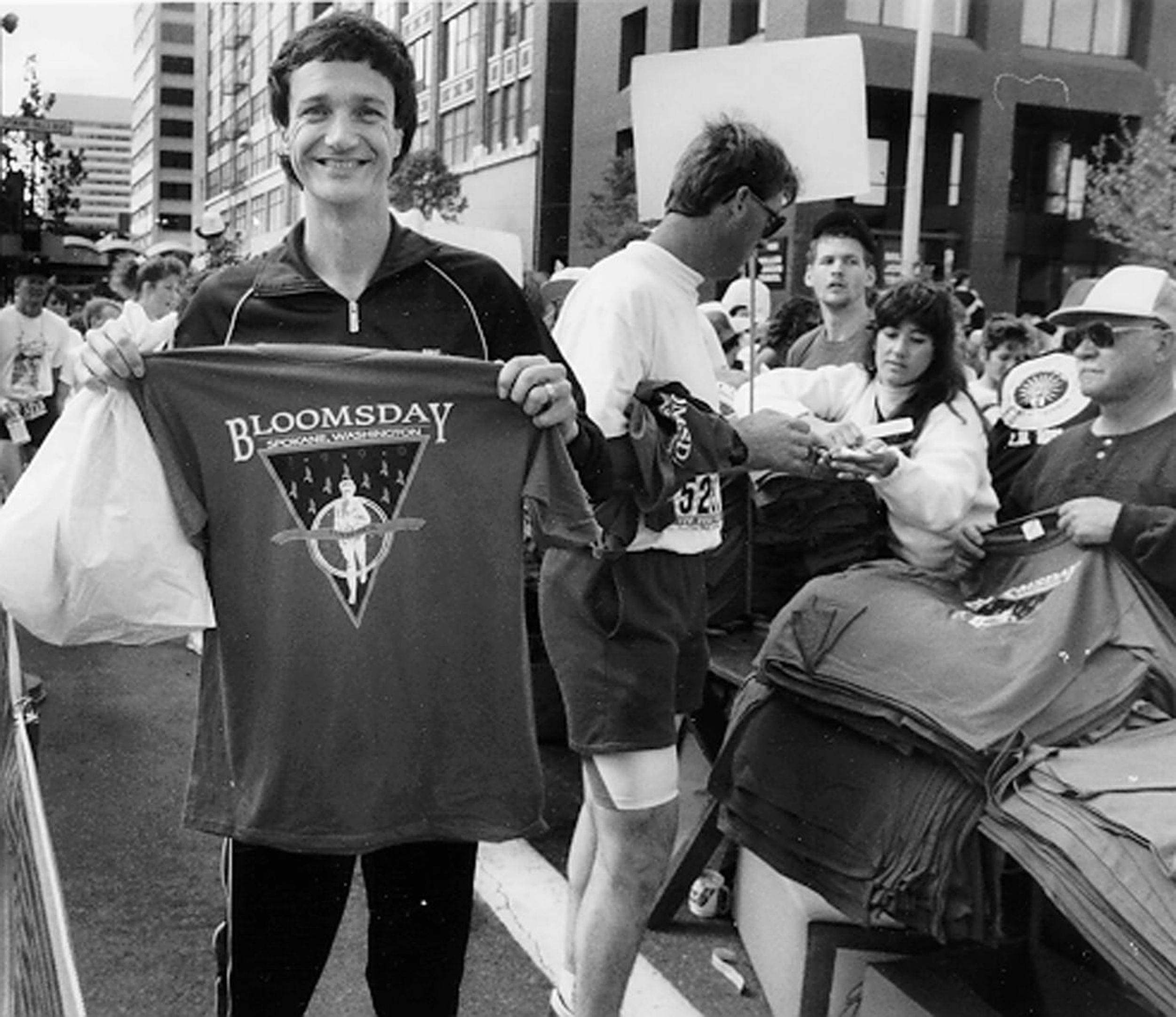
He moved to Spokane in 1974 and took a job as a sixth -grade teacher at Loma Vista Elementary, which closed in 1982. But Kardong wasn’t ready to give up on his Olympic dreams, so he was running twice a day to stay in shape. After school, he would coach all kinds of sports, including flag football and cross country.
“Everything that came along, I was coaching,” he said. “I was pretty tired by the end of the week. That’s when I started drinking coffee.”
Kardong’s hard work paid off and he competed in the 1976 Olympic trials, taking third in the marathon. The top three went to the Olympics, where he finished in fourth place with a personal best time, only three seconds from bronze.
More than a decade later, it would be revealed that many of the East German athletes, including the one who won the marathon in the 1976 Olympics, were doping. Despite that revelation, the results of Kardong’s race were never changed.
“The Olympic Committee hasn’t done anything about it,” he said. “I’m officially still fourth.”
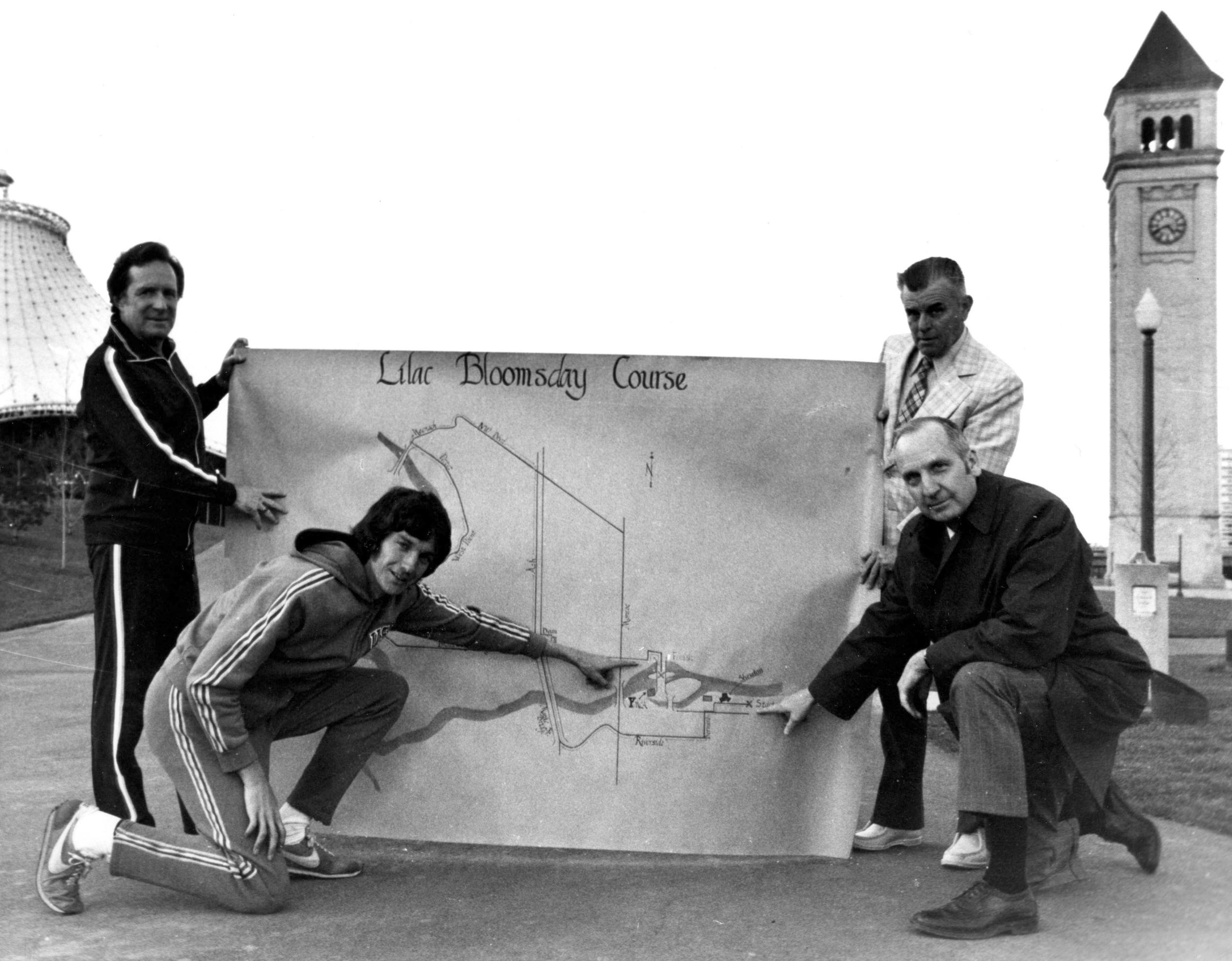
Kardong came back to his teaching job, but a comment about wanting a road race in Spokane was published by the newspaper and endorsed by the mayor. Bloomsday was born.
“I wasn’t looking to be an organizer of a running event, because I had a job,” he said.
At the time of the first race in 1977, the Maple Street Bridge was still a toll bridge. It was early on the race route and Kardong remembers the experience of running over it.
“I was leading,” he said. “I was the first person to run across the bridge. The woman in the toll booth had a big grin on her face.”
After crossing the bridge, runners went onto Broadway heading west.
“By the time we got to Broadway, Frank Shorter had taken the lead,” Kardong said of the runner who had won the gold medal in the 1972 Olympics marathon and the silver in 1976 .
About 1,500 people signed up that first year, which fell on a hot day, and nearly 1,200 finished.
“It was amazing, the turnout we got,” he said.
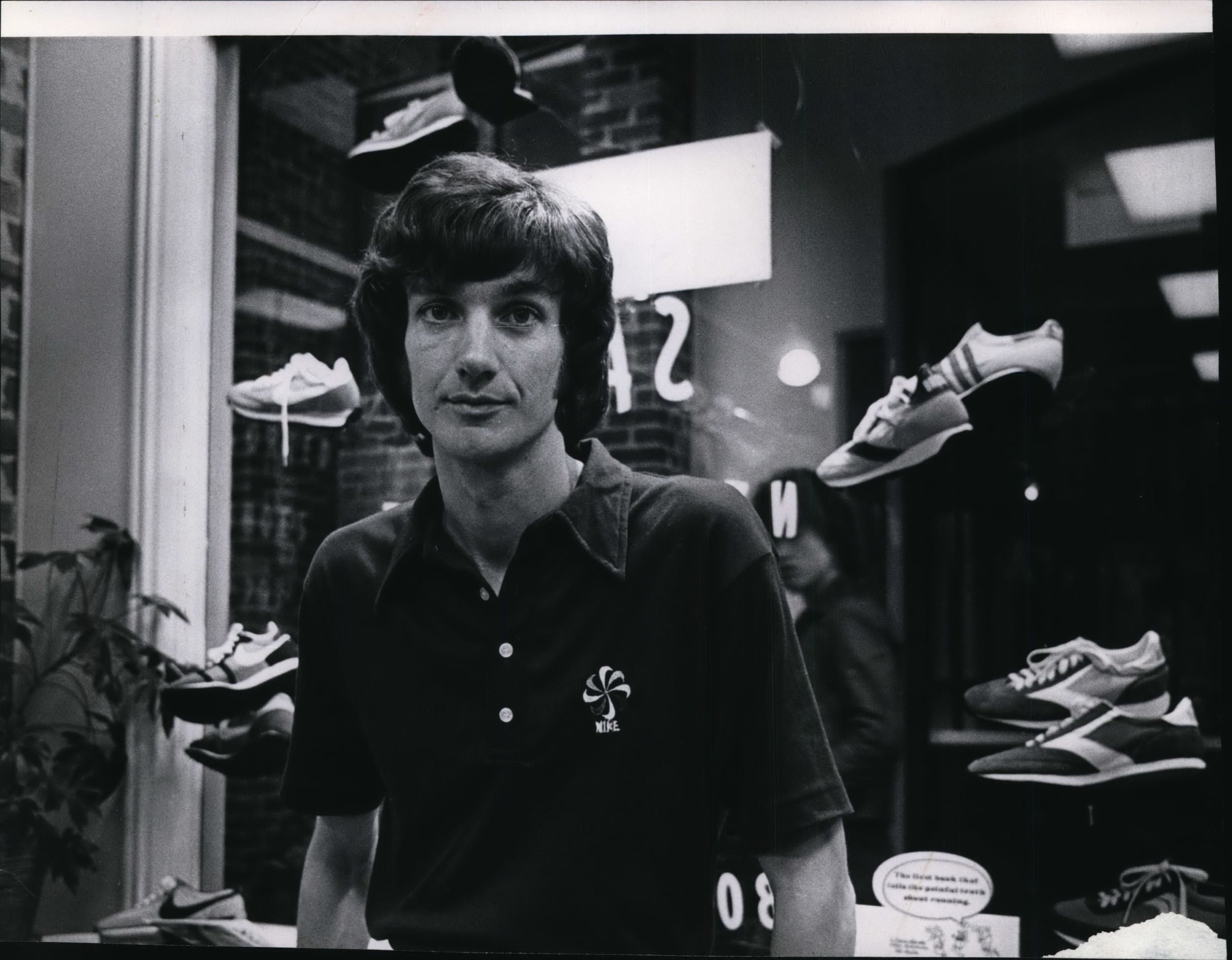
At first Kardong juggled running Bloomsday and teaching, then quit teaching to open a running shoe store in downtown Spokane called the Human Race. He still ran competitively the first few years of Bloomsday. He planned to try out for the Olympics again in 1980, but the U.S. boycotted that year’s competition. He said his competitiveness waned after that.
Still, he logged his best Bloomsday finish time, 37 minutes , 22 seconds, in 1981. He took third place in the first and third years. If he had to pick a favorite race, Kardong would pick the inaugural run in 1977.
“It’s hard to beat the first year,” he said. “It was an idea come to fruition.”
A close second among memorable races would be 1984, when he pushed his 7-month-old daughter in a stroller. Doing the race from the back of the pack was a foreign experience for him.
“My wife and I and my daughter were the very last people to start the race,” he said. “It was a very strange experience.”
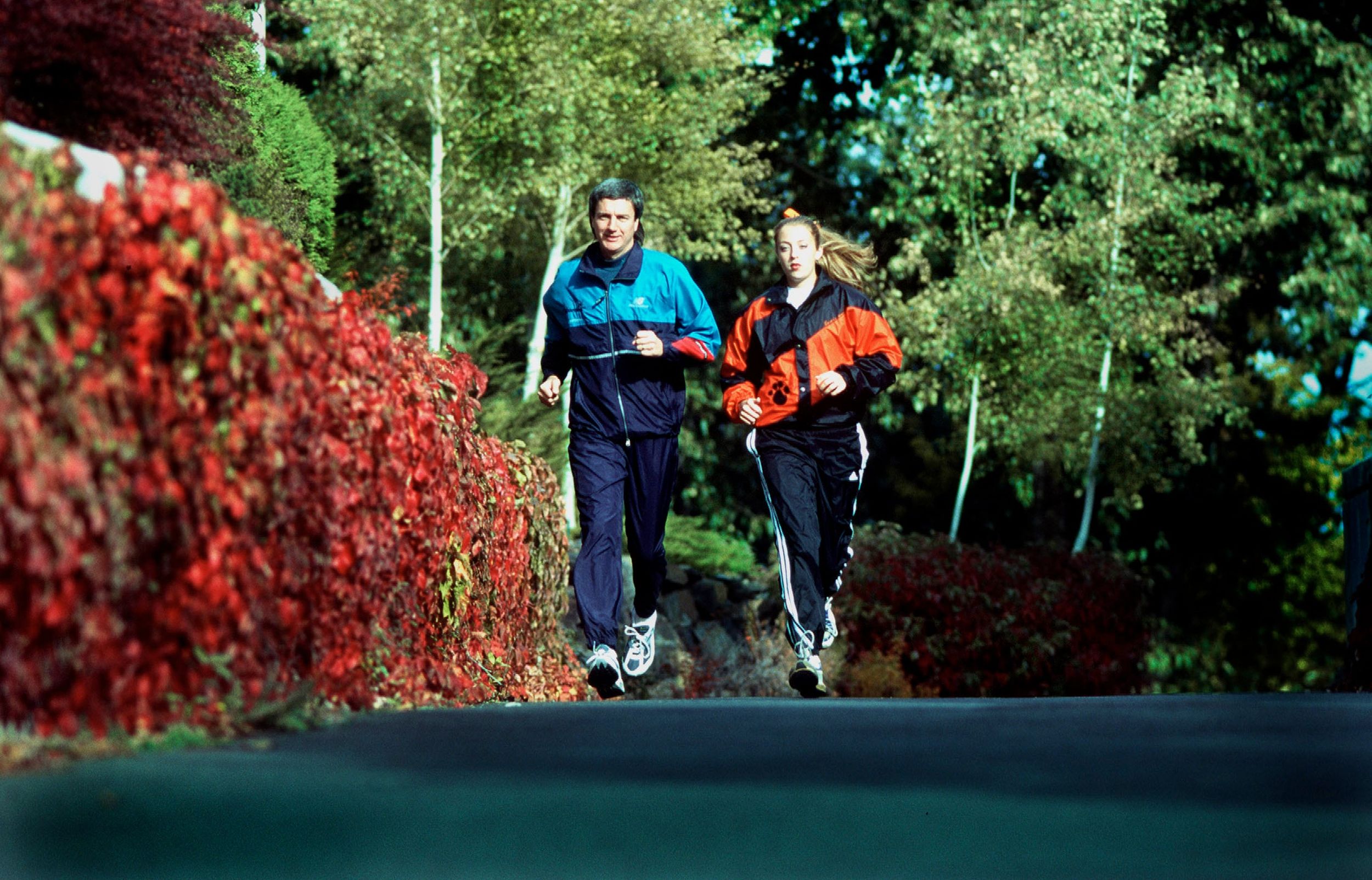
Kardong, 77, now walks Bloomsday.
“I’ve had a lot of muscle pulls, hamstring pulls, calf pulls either during Bloomsday or in training,” he said.
He’s had meniscus surgery on both knees and got a right knee replacement just before COVID-19 hit. His doctor recommended he not run on his new knee, which Kardong tried to ignore.
“I walk it now,” he said. “Up until COVID, I was running it in about an hour. After COVID? Two hours. It just happened so quickly. The thing is, I’m slow. I tell people I got old.”
Kardong often does the race with family members and friends, but even if he doesn’t, he’s never alone. Other runners often recognize him and walk alongside him during the race for a chat. Kardong said he expects a “platoon” to join him for the 50th race, including a larger family group than usual and some friends from high school.
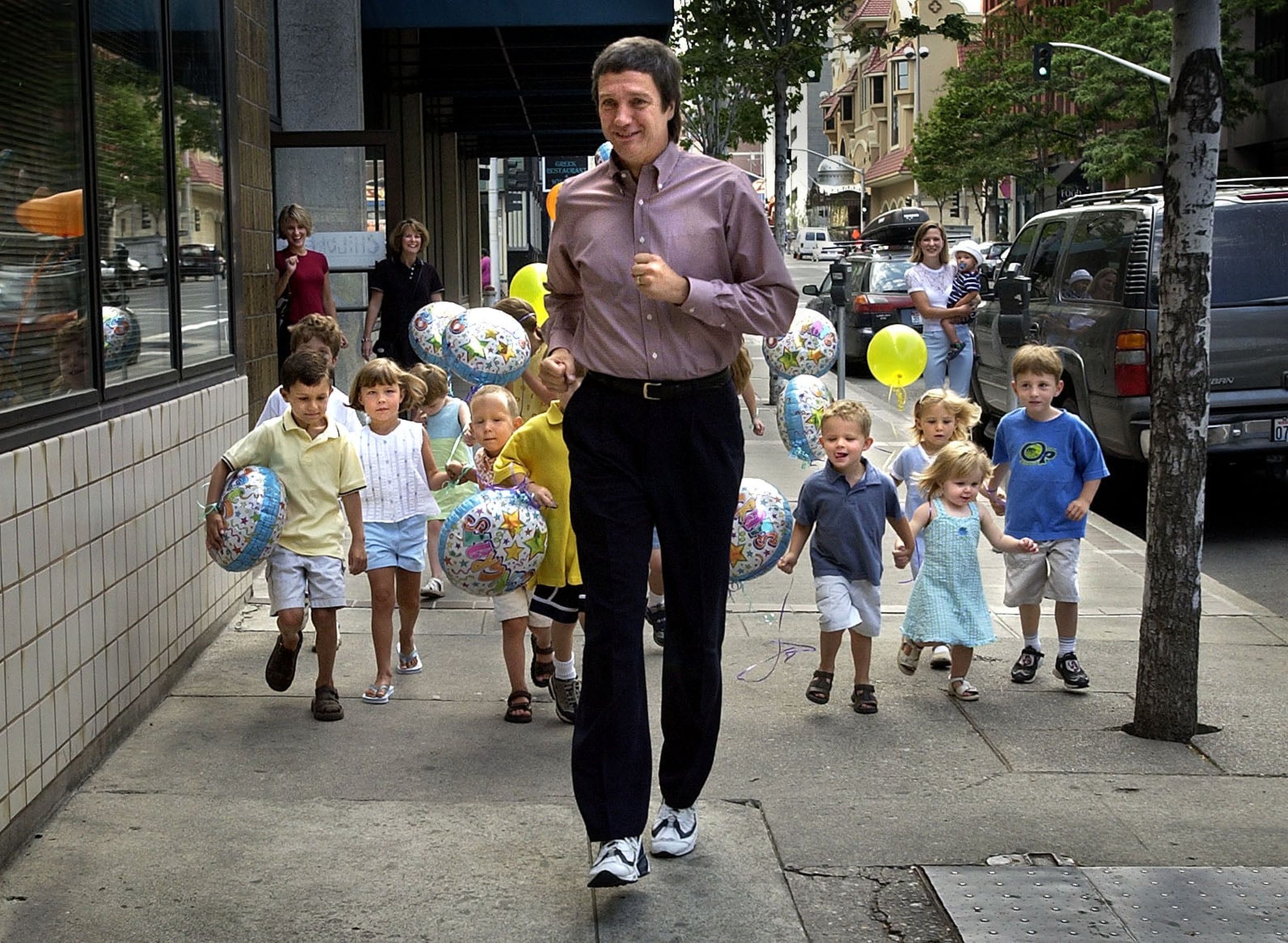
Doing Bloomsday gets a little harder every year, Kardong said, but he still enjoys it. While he’s currently one of the Perennials who has done every race, Kardong said he doesn’t have to remain a Perennial for the race to be successful and knows he won’t be the one to receive the Last Person Standing award created for the last Perennial. He still can be involved behind the scenes after he has to hang up his walking shoes, he said.
“Obviously I’m going to stay a part of the organization as long as I can,” he said. “I know somebody else will be the last person standing. I’m fine with that.”