
Book review: ‘Evelyn in Transit’ provides a portrait in living life on your own terms
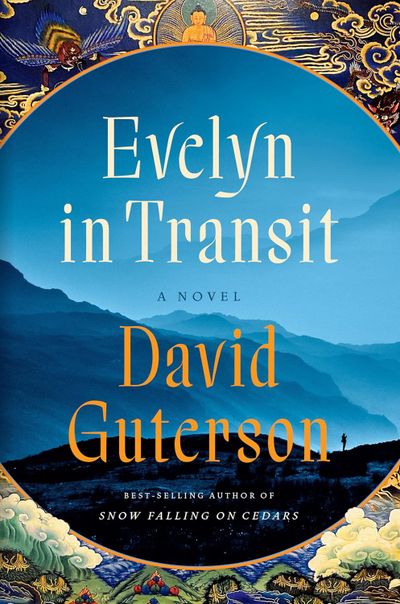

If you go What: David Guterson will talk about his latest novel, “Evelyn in Transit,” with Jess Walter on the Northwest Passages stage. When: 7 p.m. Feb. 5 Where: Gonzaga’s Myrtle Woldson Performing Arts Center, Coughlin Theater Tickets: $10 general admission online at
spokesman.com/northwest-passages; $55 VIP with Meet & Greet (plus one signed book); $75 VIP for two with Meet & Greet (and one signed book); students free with valid ID at Box Office. If cost is a barrier to attendance, please email bookclub@spokesman.com
“Evelyn in Transit” is about living life the way that’s right for you, not necessarily how others think you should.
David Guterson takes us on a journey of self-actualization that might even keep Abraham Maslow intrigued. We watch Evelyn Bednarz grow up, listening to her inner thoughts, and realize she will live her life on her own terms, which she describes as “the right way.”
As a child, her preferred lifestyle would fit more into the ancient Mound Builders. She would like to be one of them, if they still existed. Living in the wilderness, building burial mounds for the dead seems like her kind of life. She absorbs education from history books and nonfiction literature, always questioning teachers and authority. We get the feeling that she has her own way of thinking about what she should do, even if it doesn’t fit in with some pre-approved pattern by adults.
She loves to mow, but not when told to. Just leave her to the chore and she’ll finish it happily. Give her commands and she resists.
Guterson’s writing follows Evelyn over the years, changing her voice to match her age. You can hear a young girl’s thoughts flow through her mind.
“‘What Do You Want to Be When You Grow Up?’ Was her title because that’s what the teacher wrote on the blackboard,” Guterson writes as Evelyn. “The instructions were, have an introduction and a conclusion, have separate paragraphs with three to five sentences in each, spell everything right, explain.”
Evelyn went to a religious school with nuns. At that first assignment, she thought being a nun would be a great life. Well, maybe a nun who watches roller derby, like she did on television with her father, identifying with the rough-and-tumble roller-skating women on the screen. Then she discovers boys, which wouldn’t be something a nun might do.
We read on as she grows up, living on the road, sleeping out in the open and doing manual labor and meeting people like Scott on the way. In Scott, she learns about the ins and outs of complex relationships. She determines sex could be the key to successful relationships.
“Mostly just talking too much, explaining things she never asked about, like how they got power from nuclear power plants,” Guterson writes. “Okay, Scott had faults and shortcomings but then she and Scott would do it, and after that he had no faults at all. Great guy, super-smart, super-interesting, super-good-looking, super-everything. Superman.”
But this is not just about Evelyn. “Transit” also follows the path of Tsering Lepka, a Tibetan boy who the local monks are convinced is the heir to the legendary revered lama Norbu Rinpohe. The monks tell Tsering of past lives only they remember, changing the very course of his life, of destiny.
Their lives, of course, are destined to collide, as Evelyn gets a job at a monastery hauling rocks up a mountain to build a stupa. She heard if you help build a stupa you’d reach nirvana faster, maybe skipping a life or two, along the Buddhist journey. It sounds good to her.
“Evelyn in Transit” combines spiritual journey with discovery of what it looks like to live a life the way you want to.
No matter what anyone else might think.