
This day in history: Jewelry story said it was leaving downtown Spokane because of high parking costs. Warren Heylman calmly defended health building
From 1976: The Carat Shoppe, a jewelry store at Sprague Avenue and Wall Street, announced it was leaving downtown in protest of “higher parking meter rates and increased bus fares.”
“We’re giving up,” said co-owner Dennis O. Christman. “We just can’t fight these things,”
His window display was illustrated with sketches of parking meters and carried the words “gouge, gouge, gouge” and “rate increase – stick it in your ears.”
He said the increases, along with the closure of the Howard Street bridge, had “shut off our store traffic.”
He said the store would move into its sister store in Hillyard, where parking was much more convenient.
Meanwhile, in its Action Corner column The Spokesman-Review noted it had received many complaints about the proposed Spokane County Social and Health Services Center, which still houses the Spokane Regional Health District. Plans for the unique building recently ran in the newspaper.
The architect, Warren Heylman, “wasn’t at all defensive” when asked to explain himself and his design, which includes four rounded towers.
Heylman said the new building would “contribute to the many new shapes and shadows forming the skyline in our All-America city.” He noted that it was designed to compliment the county courthouse and the rest of the county campus.
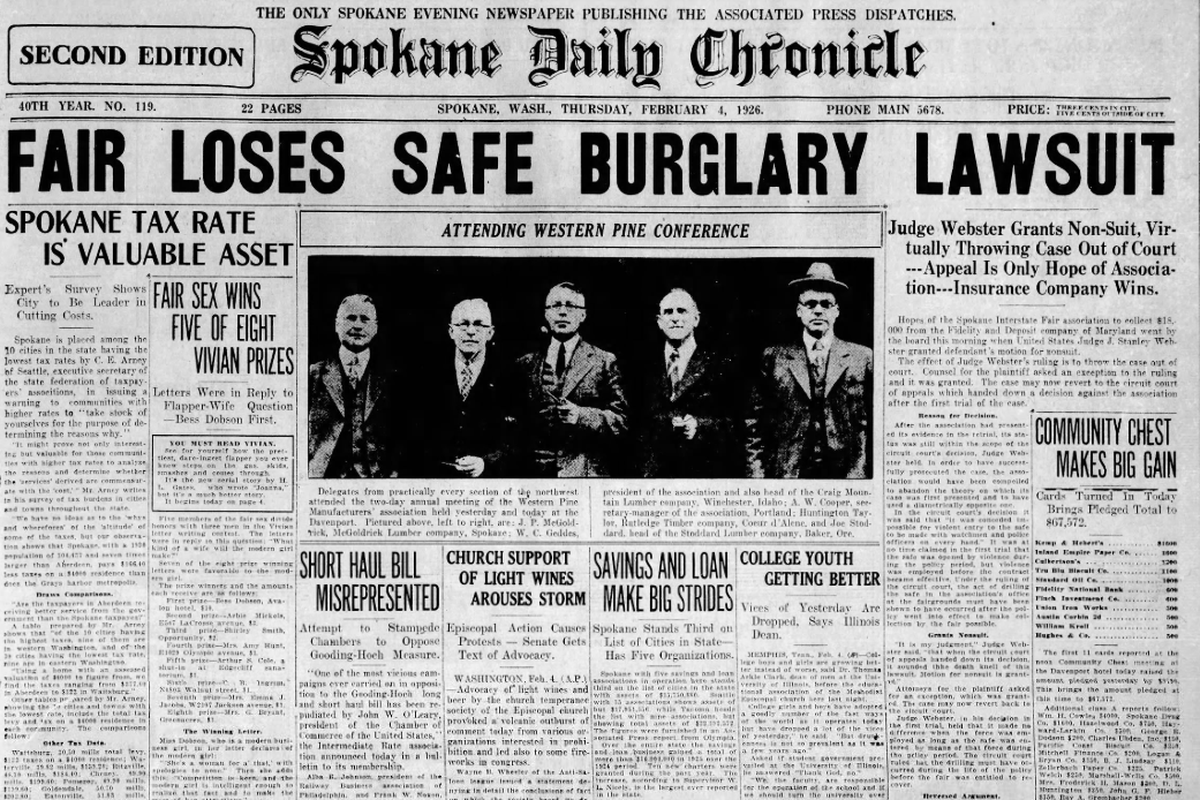
From 1926: The Spokane Interstate Fair lost its lawsuit involving what might be called the Mysterious Case of the Interstate Fair Safecrackers – but the mystery still remained.
The Interstate Fair had sued a Maryland insurance company for failing to pay up on the fair’s $18,000 loss following a nighttime safecracking theft from the fair’s office. The insurance company suspected that the theft might have been an inside job.
The company asked for dismissal of the case, which was granted.
Yet the trial shed no light on who might have been behind the theft. Someone had apparently gained access to the office in the dead of night, drilled a hole in the safe, and made off with the money. There were plenty of theories about who could have pulled off such a heist, but no proof and no arrests.