
‘We’re redefining who we are in the world’: Cardinal Blase Cupich, former bishop of Spokane, weighs in on U.S. foreign policy, immigration crackdown and more
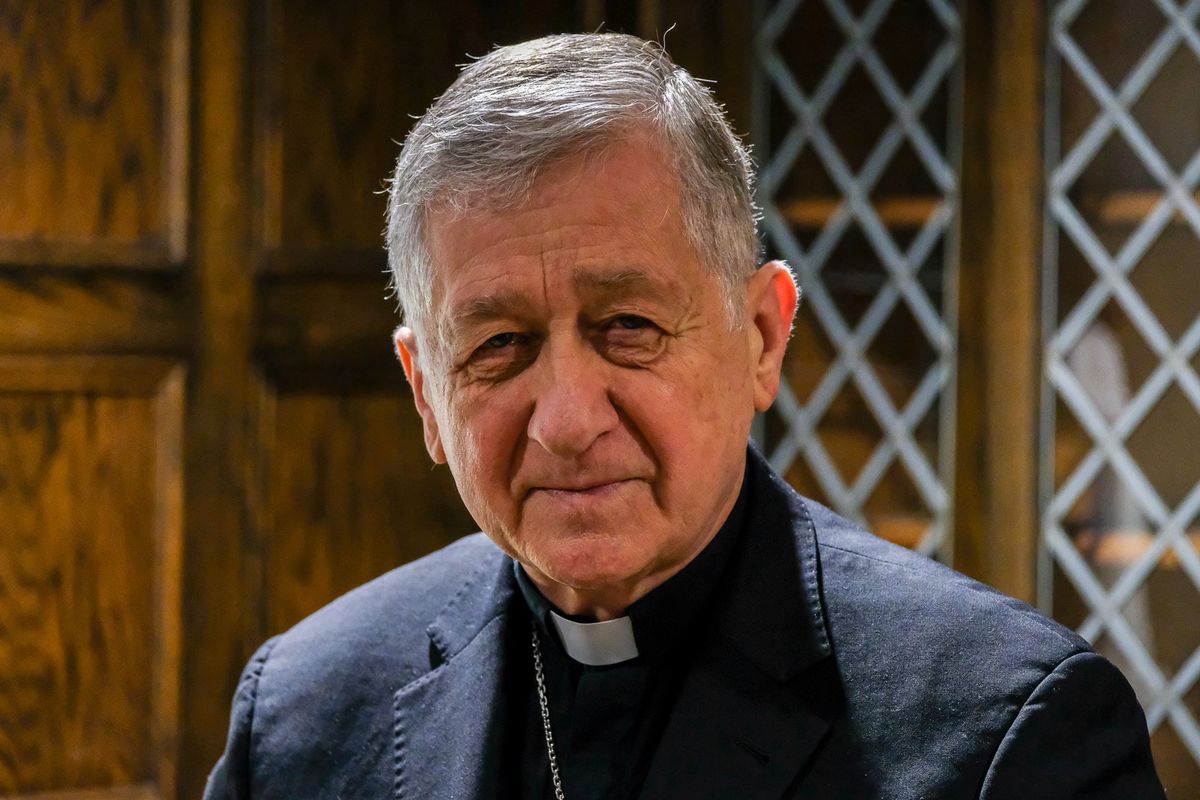
CHICAGO – Sitting in the rectory of Holy Name Cathedral, Cardinal Blase Cupich recalled how he started celebrating mass in an unfamiliar setting after he arrived in Spokane as the city’s new bishop in 2010: in the fields and orchards of Eastern Washington, where farmworkers labored on Sundays.
“It was the first time that I had an experience of immigrants actually picking the fruits and vegetables that are placed on the table of our people, and saw how hard they work and how dedicated they were,” Cupich, now archbishop of Chicago, said in an interview on Tuesday in the heart of Chicago.
Cupich said his four years in Spokane helped him understand how vital immigrants are, not only to the region’s economy, but also to its social fabric. Now the leader of one of the largest Catholic archdioceses in the United States, the prelate has become a prominent critic of the U.S. government’s approach to immigration enforcement, foreign policy and other issues that he insists should be matters of morality, not partisan loyalty.
“I’m not on either side,” Cupich said. “I’m on the side of human dignity. When I see that being violated or threatened, that’s when I speak out, whether that’s the person on death row, the child in the womb, the person who is poor and homeless or the immigrant. When it is a violation of human dignity, then we all suffer. That’s when we raise our voices.”
In a nearly 40-minute interview with The Spokesman-Review, Cupich never mentioned President Donald Trump by name – nor any other elected leader. By appealing to universal values, the cardinal said, he hopes to transcend the political divide that sees so many Americans talking past each other.
The grandson of Croatian immigrants, Cupich grew up in Omaha, Nebraska, and was named bishop of Rapid City, South Dakota, by Pope John Paul II in 1998. A dozen years later, Pope Benedict XVI named Cupich bishop of Spokane in 2010.
Cupich said that when Pope Francis chose him as archbishop of Chicago in 2014, he jokingly asked the pontiff how many people had refused the position before it fell to the bishop of the relatively small Diocese of Spokane. The pope laughed, Cupich recalled, but never told him why he was selected.
“It still is a mystery to me,” Cupich said, before explaining that he was given national and international responsibilities early in the half-century he has spent in the priesthood. At age 31, he was asked to join the staff of the Papal Nuncio in D.C. – the office of the Vatican’s ambassador to the U.S. government – and he later led the Pontifical College Josephinum in Columbus, Ohio, the only Catholic seminary in the United States governed by the Vatican.
Now 76, Cupich is among the most influential Catholic leaders in the United States. As an article published Tuesday in the National Catholic Register noted, his impressive “coaching tree” will soon include four of his former deputies – including the archbishop-designate of New York, Ronald Hicks – who have been appointed to lead Catholics in major U.S. cities.
Pope Francis made Cupich a cardinal in 2016, a role in which he helped choose the new pontiff, Chicago native Leo XIV, in May 2025. After the pope’s first address to the Vatican’s diplomatic corps, in which Leo warned that “a zeal for war is spreading” around the world, Cupich and two of his fellow American cardinals issued a rare joint statement on Jan. 19 that raised concerns about “the moral foundation for America’s actions in the world” in the wake of the Trump administration’s attack on Venezuela, its wavering support for Ukraine in the face of Russian attacks and Trump’s insistence on a U.S. takeover of Greenland.
“Our country’s moral role in confronting evil around the world, sustaining the right to life and human dignity, and supporting religious liberty are all under examination,” Cupich wrote along with Cardinal Robert McElroy, archbishop of Washington, and Cardinal Joseph Tobin, archbishop of Newark. “And the building of just and sustainable peace, so crucial to humanity’s well-being now and in the future, is being reduced to partisan categories that encourage polarization and destructive policies.”
In the interview on Tuesday, Cupich said the three American cardinals decided to issue the statement together after Pope Leo convened the Council of Cardinals in early January. At that consistory, cardinals from around the world “universally expressed a sense of alarm” about a shift away from a global consensus that emerged after World War II, Cupich said, “that put the importance of dialogue and negotiation first and foremost, before one resorted to violence or military action.”
The pope’s remarks to diplomats at the Vatican a day after the cardinals departed gave Cupich, McElroy and Tobin the language to express their concern to an audience of all Americans.
“We wanted to engage all the citizens,” Cupich said. “We didn’t mention any one person in the statement, because we thought that would be a distraction. Because this is about what it means for people living in a democratic nation, in which decisions really have to be validated by the electorate.”
In contrast to language coming from elected leaders who boast about their ability to dominate other countries with military might, Cupich called for resolving conflicts without going down “a pathway that’s going to unfold in greater violence and marginalization of people.”
Many Catholics support the Trump administration’s approach to foreign policy, immigration enforcement and more. They include Vice President JD Vance, who converted to Catholicism in 2019, as well as Rep. Michael Baumgartner, a Spokane Republican who sits on the House Foreign Affairs Committee, and Sen. Jim Risch, an Idaho Republican who chairs the Senate Foreign Relations Committee.
Cupich said he and his fellow cardinals chose their words carefully in an effort to bridge the political divide between Catholics, who make up an estimated 20% of U.S. adults, according to Census Bureau data.
“What we wanted to do is to help change the narrative, to say that there is more involved here than perhaps just the ability of our country, or any country that has a strong military force, to get its way in the world,” he said. “I think people of good will, who might have supported this kind of action of the government or even not thought about the implications of using military force just to dominate, might now take a second look, and we hope that they do that.”
One of the Trump administration’s first major acts in its effort to reshape the federal government was dismantling the U.S. Agency for International Development, which had worked to reduce disease, conflict and famine around the world at an average cost of about $100 per U.S. citizen, or around 1% of the federal budget. The United Kingdom, Germany and other wealthy countries have followed the U.S. example by cutting their own, smaller foreign aid programs, and a peer-reviewed study published Monday in the British medical journal The Lancet estimates that those cuts could lead to 9.4 million additional deaths around the world by 2030.
“The American people should know that that’s what’s taking place here, because we’re redefining who we are in the world,” Cupich said. “Is foreign aid about our self-interest, or is it about bringing about the health and well-being of people in the world who are suffering, who are living on the margins of society? That’s where we were before, and we’re seeing a shift away from that.”
That assistance has also served the United States’ interests, he said, pointing to the U.S. role in rebuilding Germany, Japan and other losers of World War II, alleviating the suffering of their people to create “a pathway forward in order for democracy to reign.”
That same moral responsibility informs Cupich’s attitude toward immigrants, but he also drew a personal connection to the people who are being targeted by the U.S. government’s aggressive crackdown, including what the Trump administration calls “Operation Midway Blitz” in Chicago.
“I was very much aware of having immigrant grandparents that I knew, and I knew their story of coming here,” he said. “I lived in South Omaha, where every six blocks there was a Catholic church built by that particular group of people from Poland, Lithuania, Czechoslovakia and different parts of the world. And so it was the air we breathed, that we had all these different cultures and were enriched. But I also – in my work as a bishop in both Rapid City and Spokane, and here – saw firsthand how these new immigrants enrich our country, enrich our culture.”
The immigrants he has met from Spokane to Chicago have shared the values of hard work, commitment to family and being “right down the middle with regard to the ethos of our country,” Cupich said, adding that many of them have enlisted in the military to defend the United States.
“It is an experience that I come from, that is in touch with, I think, the emotions that are so very ripe in this moment, with people who don’t have documents today,” he said. “I’m very sympathetic to them, and I see myself as one of them.”
Cupich said the immigration crackdown has affected many parishioners in Chicago, some of whom have stayed away from mass out of fear of being targeted by the Border Patrol or Immigration and Customs Enforcement agents who roam the city. Even some of his fellow priests in Chicago have been stopped by federal agents who demand to see proof of legal status, Cupich said – all of them Black or Latino.
“That word out there – that if you’re a person of color, you’re at risk – is going to affect everybody,” he said. “And I think that that’s what’s so unfair about this indiscriminate mass deportation that the bishops said we oppose.”
Despite that fear – or perhaps because of it – Cupich said attendance at Mass in Chicago’s Catholic churches has gone up by about 7% in the last year, and by 20% among adults age 35 and younger.
One of Cupich’s primary responsibilities in Spokane was overseeing settlements with victims of sexual abuse by Catholic clergy in Eastern Washington, and he said rebuilding trust with the many people who left the church as a result of that abuse is an ongoing project for which the work is never finished. He emphasized that the onus is on the church, not the victims.
“It’s never done, I think, because the wound is so deep,” he said. “But the way forward is to put our emphasis on healing those who have been wounded and to ask people to join us in that effort. The events happened decades ago, but that doesn’t mean that we can forget about it, because the people who are suffering from it carry that pain and wound to this day, and we have to be sensitive to that. I don’t think that we can have a strategy that says we’re going to have a marketing approach that’s going to bring people back to the church who might be alienated.”
Cupich said he believes sufficient safeguards are in place today – including background checks, reporting requirements and a zero-tolerance policy for abuse – to prevent the kind of misconduct that was once present in the church. But he worries that children are still being abused in other institutions that don’t have the same transparency and preventative measures in place.
Time for ‘a national discussion’
It has been four decades since Congress last passed comprehensive immigration reform in late 1986, and Cupich said federal lawmakers in both parties have a responsibility to come together and pass major fixes so that immigrants aren’t forced to live with the uncertainty of their legal status being revoked, such as the Haitians in Spokane and across the country who were on the brink of losing Temporary Protected Status last Tuesday. A federal judge’s last-minute order stopped the program from ending, but the Trump administration pledged to appeal the decision to the Supreme Court and continues seeking to revoke legal status from immigrants from numerous other countries.
Cupich called for “significant immigration reform” that includes better work visa programs, enforcement measures and a path to legal status for those currently living in the country without authorization, but he made a distinction between that proposal and the “comprehensive” immigration reform that Congress has repeatedly failed to pass for decades. Dealing with some of the complexities – for instance, for mixed-status families of U.S. citizen children whose parents or grandparents are unauthorized – may have to wait for the sake of passing meaningful fixes soon, he said, but should also be addressed by Congress.
Americans need to decide if they will be true to the poem by Emma Lazarus inscribed on the Statue of Liberty, Cupich said – “Give me your tired, your poor, your huddled masses yearning to breathe free” – and respect that so many immigrants are fleeing violence, terror and poverty.
“Rather than saying we’re only going to have people who are wealthy or good looking or a certain color, or do we really want to step away from that?” he said. “Because that’s our legacy. I’m a product – most of us are a product – of people who have fled poverty and fled violence to come to this country. That’s a major shift that we need to have a self-examination of our conscience as a nation about.”
Nothing in the statement he issued with his fellow cardinals negates the importance of a country protecting its borders and keeping people safe, Cupich said, but that should be done “in an organized way.”
“For too long, we’re in this situation because politicians have neglected their obligations with regard to significant immigration reform,” he said. “Both sides have used it as a political football, and it’s time now. This should be a major issue in this upcoming election. This should be a major issue, and we should have a national discussion about it.”
To make the compromises needed to pass such legislation would require people on different sides of the nation’s political divide sharing a common set of facts, Cupich said. With that in mind, he was troubled by the Trump administration immediately labeling the two protesters fatally shot by federal agents in Minneapolis as “domestic terrorists.”
“The immediate rush to create a narrative that was injurious to both of those people, it clearly was a strategic move to shape how people thought about this right away,” Cupich said. “But it undermines the credibility of government, when in fact government officials try to tell the American people, ‘Don’t pay attention to what you saw. Pay attention to what we say.’ ”
If administration officials continue to do that, Cupich said, he fears that Americans will lose any trust they still have in the government.
“Once that breaks down, then we open a whole can of worms going forward about anything else they say,” he said. “That, I think, is something they should take very seriously. I want people to believe our government. I want people to believe law enforcement. I think that’s very important. But if they do something that erodes that ability to believe, by telling us, ‘Don’t pay attention to what you saw,’ that’s very dangerous.”
Cupich warned that dehumanizing language – whether about immigrants, political opponents or anyone else – could lead the nation down a dark path.
“The Holocaust didn’t begin when they opened concentration camps; it began with words,” he said. “And that’s what we have to be very careful about, because what you can do is foment hatred that turns to violence against people that are being demonized. They’re the other. Even using the word ‘illegal alien’ is problematic for me. They’re undocumented. They’re not alien to the human race. They’re not extraterrestrial. They are human beings who just don’t have documents.”