
‘Unbelievable honor’: Spokane native Sean MacFarlane one of two Americans to referee men’s ice hockey at Milano-Cortina Olympics
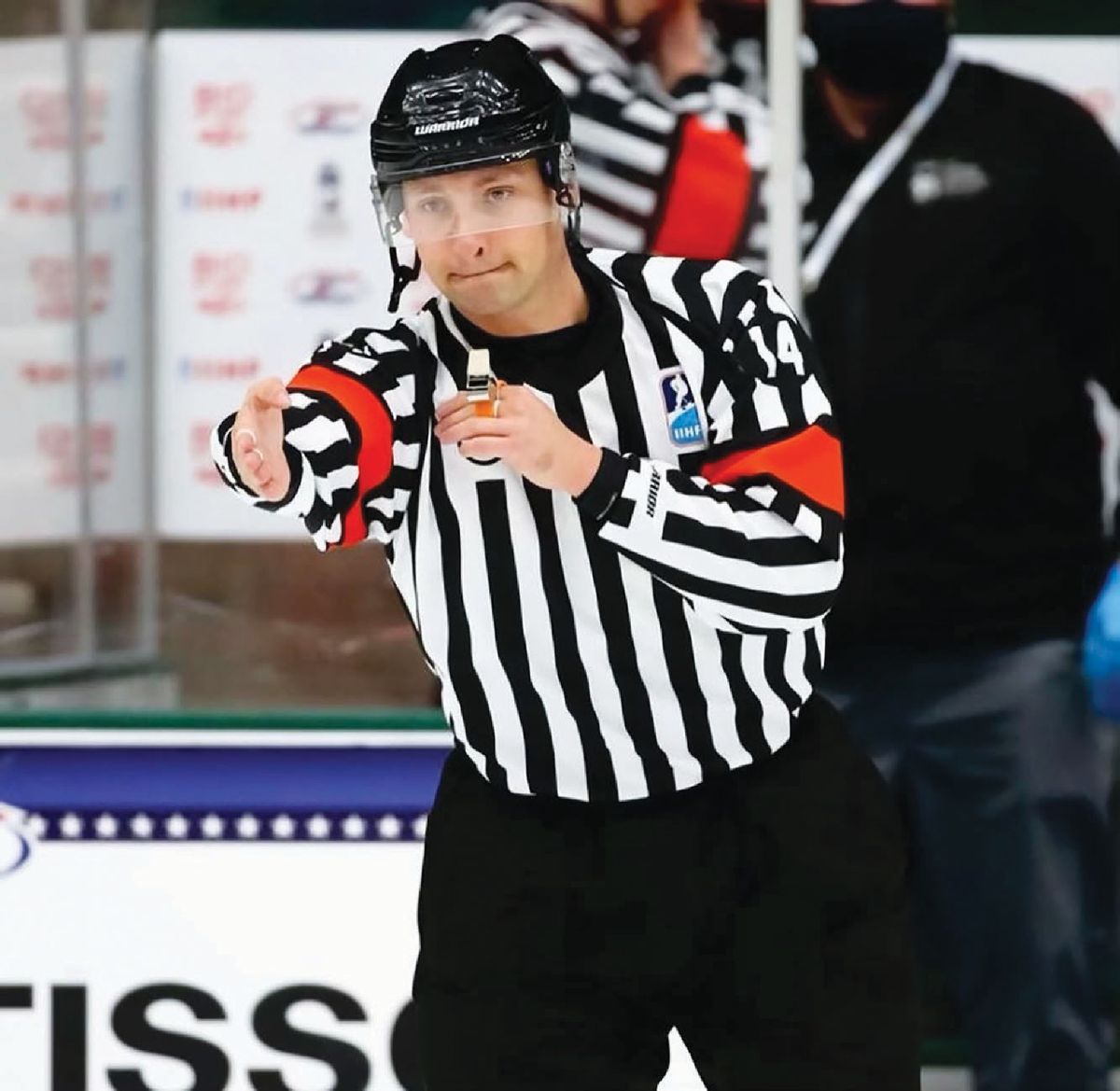
Not everyone who participates in the Olympic Games becomes a household name. Some want to avoid that distinction at all costs.
One of them? Spokane native Sean MacFarlane, who was selected as one of just two Americans to referee men’s ice hockey at the Milan Cortina Games.
“You know, I joke with friends and family that there’s nobody in the arena during a hockey game that hates penalties more than me,” he said. “I want to go into a game with not one person knowing who I am, what my name is or even thinking about me. So yeah, an ideal game is when nobody knows who I am.”
The men’s ice hockey preliminary rounds begin Wednesday, and MacFarlane – who is an official in the German professional league and a member of the International Ice Hockey Federation – will be there for his first Olympic assignment.
“To finally be here, it’s like every day that I kind of pinch myself and think to myself, ‘What the heck? This is actually happening.’ ”
MacFarlane, 34, grew up in Spokane playing youth hockey and dreamed of an NHL career. But early in high school, he had enough self-awareness that while he was maybe an above-average goalie for his age and area, he wasn’t going to make the pros as a player.
“As a kid, you always dreamed of playing in the Olympics,” he said. “You know, watching Sidney Crosby’s golden goal in 2010 – you want to be on the ice for something like that. … My goal growing up was to make the NHL as a hockey player, but I was a 5-foot-9 goalie. I wasn’t going anywhere.”
But there is more than one path to the Olympics.
He started officiating youth games at age 12 when he wasn’t playing. As he got older, MacFarlane realized he was good at it, enjoyed it and could turn it into a career.
When he turned 19, he moved to Minneapolis for eight years and worked in leagues all over the Midwest. In 2017, he obtained an international license – only four Americans each year are granted one – and continued to build his officiating resume.
MacFarlane just missed being selected for the Beijing Games in 2022 – and he was also the only official on the list who had not yet been assigned to a men’s world championship.
“I kind of assumed there was no chance that they sent me (to the Olympics) without proving myself at the top international level, at the men’s worlds. But still, you know, you get your hopes up. When you find out you didn’t make it, it’s pretty devastating.”
He has spent his time since then dedicated to making the cut in 2026.
“I had a good talk with my USA Hockey boss when I found out I wasn’t part of the group, MacFarlane said. “He said, ‘Hey, listen. This may seem like the end of the world right now, but you’re just getting started. You have a long road ahead of you, and you’re gonna have another chance at an Olympics.”
The next couple of years, MacFarlane kept working toward his goal. But when the NHL announced it would participate in the Olympics for the first time since 2014, that lowered the amount of officials from the IIHF by half. Instead of being one of the top 14, he’d have to be one of the top seven.
“It definitely added a lot more pressure and stress. But I think that was good for me.”
MacFarlane found out he got the assignment on July 1, and said last week: “I still don’t know if it’s really even hit me.”
There are 12 referees for men’s ice hockey at the Olympics, with five coming from the NHL and seven from the IIHF. MacFarlane is the only American referee selected from the IIHF, along with Andris Ansons (Latvia), Michael Campbell (Canada), Christopher Holm (Sweden), Michael Holm (Sweden), Jan Hribik (Czechia) and Andre Schrader (Germany).
The NHL referee contingent includes one American, Brian Pochmara, and four Canadians.
MacFarlane said he “gets the chills” thinking about the opportunity to take the ice with the best NHL and international players.
“It’s going to be the best hockey the world has seen since 2014 in Sochi,” he said. “It’s literally the best players of our generation that I’ll be on the ice with. It’s quite exciting. And, you know, there’s a lot of pressure that comes with it, because they demand perfection, and our job is impossible to be perfect. You just gotta focus on minimizing the mistakes, especially on that level when you know millions of people are gonna be watching every game.”
Numbers-wise, it’s harder to make the Olympics as an official than it is as a player.
“As a North American official, where we have such a strong group in the United States and in Canada, it’s extremely hard to find yourself at the top,” MacFarlane said. “It’s not only skill, but there’s a lot of luck that goes into it too – you know, having the right people in your corner with tournaments where you’re being graded, as well as how you deal with the pressure. I would say it’s equally as hard as competing as a player. But, yeah, to make it as a referee, I would say it’s not easy.”
MacFarlane’s last game in the German pro league before the Olympics was on Jan. 27, and he flew back to the U.S. for some brief down time before heading off to Italy last week.
“I remember just in Germany walking on to the airplane (to come home) thinking to myself, ‘What the hell? The next time you’re on the ice is going to be for the Olympics,’ ” MacFarlane said.
“It’s just crazy. It’s hard to wrap my head around, but it’s exciting. It’s an unbelievable honor.”