
Hegseth forces ouster of senior Army spokesman in latest internal clash
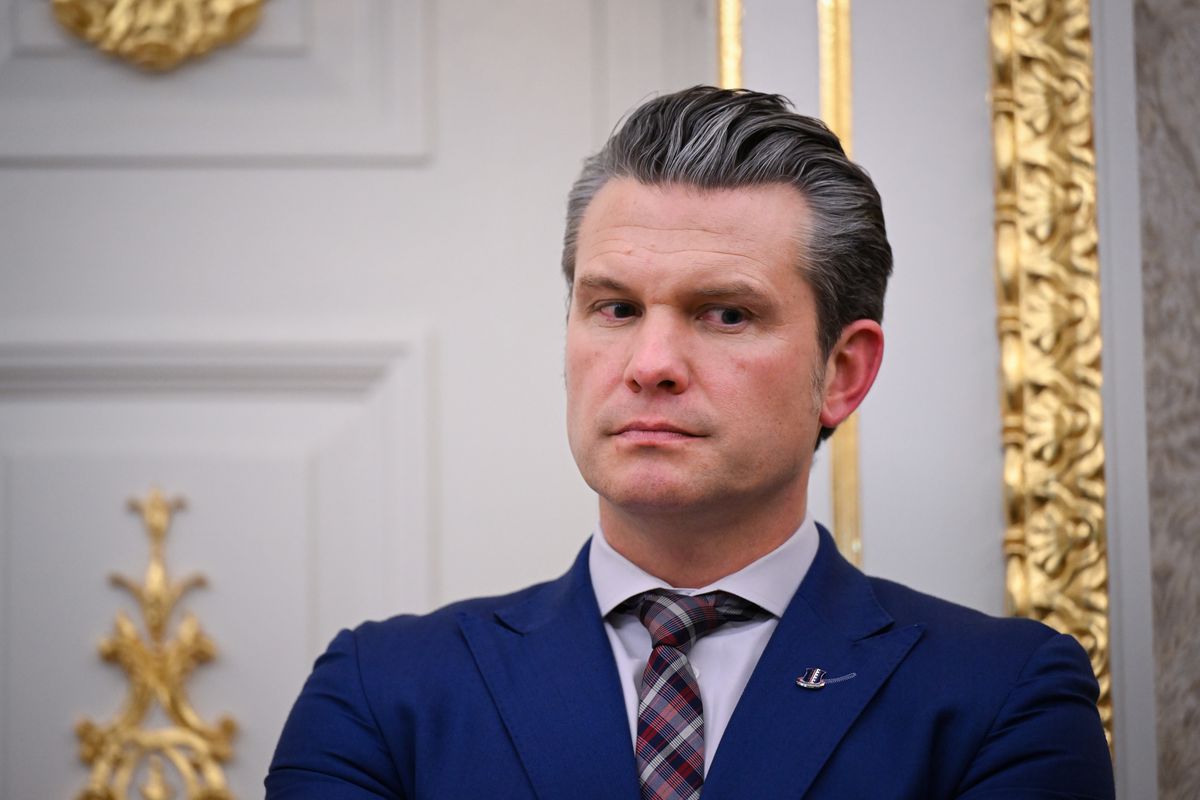
Defense Secretary Pete Hegseth has forced the ouster of a senior military adviser to Army Secretary Dan Driscoll, defense officials said, marking the Pentagon chief’s latest intervention into the service’s internal affairs amid long-simmering tension between two of the Trump administration’s top political appointees.
Hegseth directed Driscoll to fire Col. David Butler during a discussion at the Pentagon last week, officials said, speaking on the condition of anonymity to discuss a private conversation between Hegseth and Driscoll. It is at least the second time within months that Hegseth had raised the issue with him, including once at a meeting last year during which the defense secretary passed Driscoll a sticky note saying that Butler would not be promoted, people familiar with the discussion said.
Butler has served most recently as a spokesman and media strategist for Driscoll and Gen. Randy George, the Army’s chief of staff. He had been nominated for promotion to brigadier general, but Hegseth took issue with that plan for reasons that remain unclear, officials said.
Officials familiar with the matter said that Butler’s name appeared on a list of about three dozen promotion-eligible Army officers that should have been sent to the White House for approval months ago. It appears his inclusion was among the reasons those promotions have been delayed. After Hegseth’s order to Driscoll last week, these people said, Butler elected to submit his retirement paperwork rather than hold up his colleagues’ promotions.
Hegseth issued the directive Thursday, just ahead of Driscoll’s departure for Switzerland, where the Army secretary - in an unusual diplomatic role for the head of a military service - is participating in high-stakes discussions aimed at ending the Russia-Ukraine war. The Trump administration has made the Army secretary a point person in those complex, ongoing talks while Hegseth focuses on other issues, including reshaping the military at home and pressing the nation’s defense contractors to modernize.
Kingsley Wilson, a spokeswoman for Hegseth, referred questions to Army headquarters.
In a statement provided to The Washington Post, Driscoll acknowledged the colonel’s retirement but declined to address the reasons for it.
“We greatly appreciate Col. Dave Butler’s lifetime of service in America’s Army and to our nation,” the statement said. “Dave has been an integral part of the Army’s transformation efforts. He will be missed and I sincerely wish him tremendous success in his upcoming retirement after 28 years of service.”
Butler declined to comment.
The demand for Butler’s firing marks Hegseth’s latest clash with Driscoll, an Army veteran and close friend of Vice President JD Vance. Driscoll worked on the presidential transition team, and he has served since April as acting director of the Bureau of Alcohol, Tobacco, Firearms and Explosives in addition to his responsibilities at the Pentagon. People familiar with their relationship have said it appears that Hegseth takes issue with Driscoll’s rising profile and increasing responsibilities within the Trump administration.
Hegseth has not criticized Driscoll publicly, but he has remained silent as others aligned with the Pentagon chief have done so in pointed terms. That includes the far-right political activist Laura Loomer, an unofficial adviser to President Donald Trump.
Loomer launched an extraordinary broadside against Driscoll last year, publicly questioning why the Army had spotlighted Medal of Honor recipient Florent Groberg in a social media post; she noted that Groberg is not “US born” and had spoken as a private citizen on behalf of Hillary Clinton during the 2016 Democratic National Convention. Loomer was later made a member of the Pentagon press corps as Hegseth maneuvered to curtail scrutiny of his activities and stewardship of the federal government’s largest agency.
Butler’s previous work as the senior spokesman for Gen. Mark A. Milley, chairman of the Joint Chiefs of Staff from 2019 to until his retirement in 2023, appears to be a factor in his removal, officials familiar with the matter said. Milley has been a political target of Trump and Hegseth for years, dating to clashes between the general and Trump during the president’s first administration.
Supporters of Milley have credited him for playing a leading role guiding the nonpartisan military through Trump’s tumultuous first term, while critics have accused him of violating Trump’s trust by discussing the president’s behavior with journalists and describing him as a “fascist to the core” once in retirement.
Hegseth, a former Fox News host who served as a mid-ranking officer in the Army National Guard, has echoed Trump’s criticisms and taken administrative action against Milley, directing a suspension of his security clearance, revoking his security detail last year and ordering a Pentagon inspector general review of his past actions. Administration officials also had Milley’s official portrait taken down at the Pentagon.
Milley stayed on as President Joe Biden’s senior military adviser for nearly three years, during a turbulent period that included the fall of the U.S.-backed government in Afghanistan and Russia’s invasion of Ukraine. Trump and Hegseth have blamed Biden and Pentagon leaders at the time for allowing those events to happen.
At the same time, both men have downplayed independent assessments that found Trump’s 2020 deal with the Taliban helped set the stage for Afghanistan’s collapse. The administration has repeatedly claimed, too, that Trump would bring an end to the Ukraine conflict quickly after taking office, but that has failed to materialize.
Hegseth has forced out other military officers who worked for Milley on the Joint Staff, frustrating those who viewed them as evenhanded leaders caught in the middle of a political knife fight. They include Gen. James Mingus, who had gone on to become the Army’s vice chief of staff and was bypassed to run U.S. Central Command; and Lt. Gen. Douglas Sims, whose expected promotion to four-star general was rescinded by Hegseth last year. Numerous other senior military officers were fired last year, including Gen. Charles Q. Brown Jr., then the chairman of the Joint Chiefs.
Butler, over the last year, had helped manage high-profile Army events, including a sprawling parade of tanks and other military equipment through D.C. last summer. Butler said at the time that George and other senior Army officials were taking on the effort enthusiastically. He also was among a small group of Army officers who traveled with Driscoll to Ukraine in November on an unusual diplomatic mission as Trump has sought, unsuccessfully, to end the war there.
Several current and former defense officials expressed astonishment at Butler’s ouster, describing him as a steady hand and thoughtful strategist who has earned the trust of numerous generals, civilian political appointees and journalists.
One Army officer questioned why Hegseth would make an effort to fire a colonel on another Trump official’s staff. “It’s terrible for the Army,” the official said of losing its senior public affairs adviser.
“He’s about the most nonpartisan guy I know,” said a retired colonel who previously served with Butler, speaking on the condition of anonymity for fear of retaliation by Hegseth’s team. “That’s really too bad.”
Before becoming Milley’s spokesman, Butler held a high-profile assignment as the top U.S. military spokesman in Afghanistan under Army Gen. Austin “Scott” Miller. Butler was selected for the post after previously working for Miller at the elite Joint Special Operations Command.