
Was anyone at fault in avalanche deaths? Inquiry considers criminal negligence
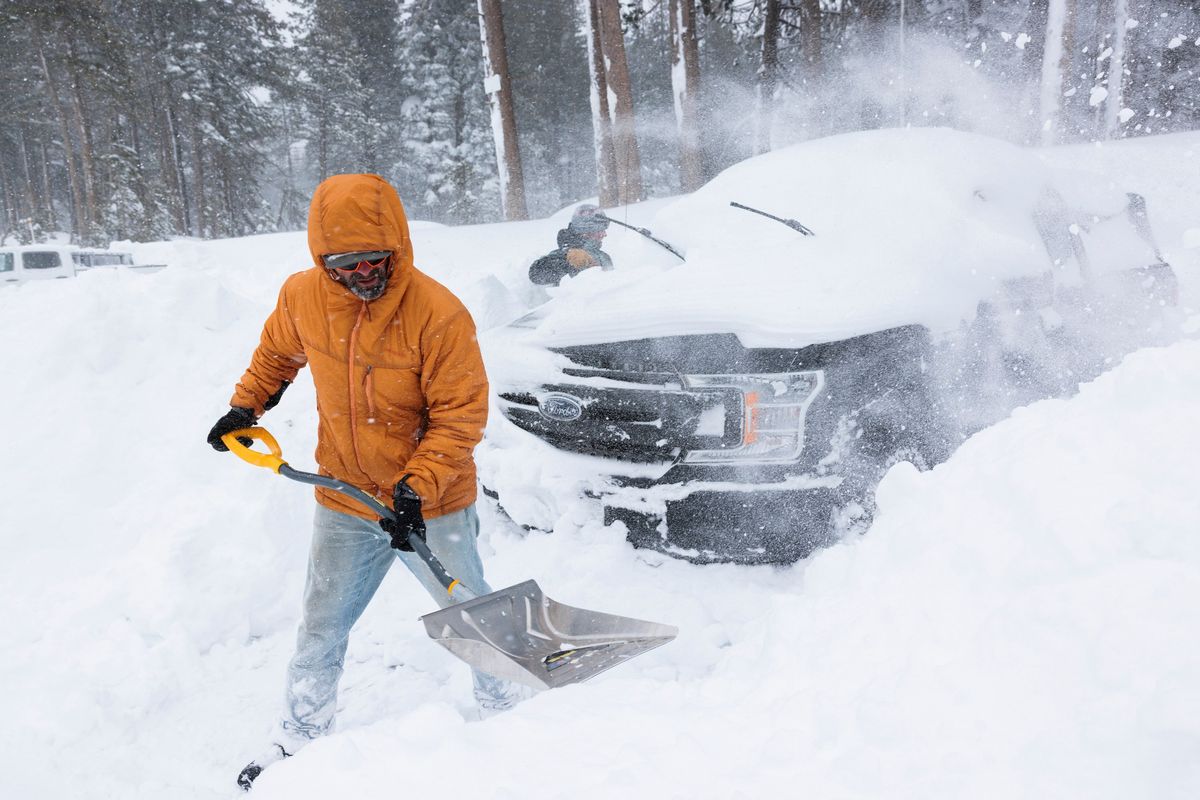
As authorities begin to piece together what led to the deaths of at least eight people in an avalanche in the snowy backcountry near Lake Tahoe this week, the risks taken by the skiers and their guides – and who was responsible for fateful decisions – are likely to be a key area of inquiry.
California’s workplace safety agency, Cal-OSHA, said Thursday that it had opened an investigation into Blackbird Mountain Guides, the company whose guides were leading the group.
The Nevada County Sheriff’s Office said Friday that it had also begun investigating the disaster to determine if there could have been criminal negligence involved.
Authorities have not yet been able to return to the area to recover the bodies of those who died. Nevada County officials announced Friday that they were conducting aerial surveys to assess the avalanche site and determine if they might need to use explosives or other measures to prevent another avalanche before crews return. As of Friday afternoon, they had not yet sent search teams back in to recover the bodies.
Authorities have released few details about what they believe occurred. However, forecasters and public safety officials had warned of a high risk of avalanches before the group began the trip, and additional warnings came during the trip itself.
Several experts and local officials cautioned that too little was yet known to assess whether Blackbird had been negligent.
In a statement Thursday, Blackbird said that the guides on the trip were highly trained. “It’s too soon to draw conclusions, but investigations are underway,” the company said.
The accident highlights the lack of regulation around backcountry skiing, whose participants are practicing a more dangerous form of the sport in remote areas, without the conventional avalanche control programs at resorts.
The avalanche occurred along a Castle Peak path that is rated as complex under an Avalanche Terrain Exposure Scale, which takes into account various risk factors, according to information provided by the Truckee Donner Land Trust, the operator of the huts where the skiers stayed.
The trust’s website also shows a separate, longer Johnson Canyon route that is rated as simple on the avalanche exposure scale, as well as a third path to the Donner Summit Rest Area that is rated as complex.
Experts cautioned that it would be premature to conclude why the group and the guides chose the route they took Tuesday morning.
This article originally appeared in The New York Times.