
Battle of the vises: Spokane flytiers face off in Iron Fly contest
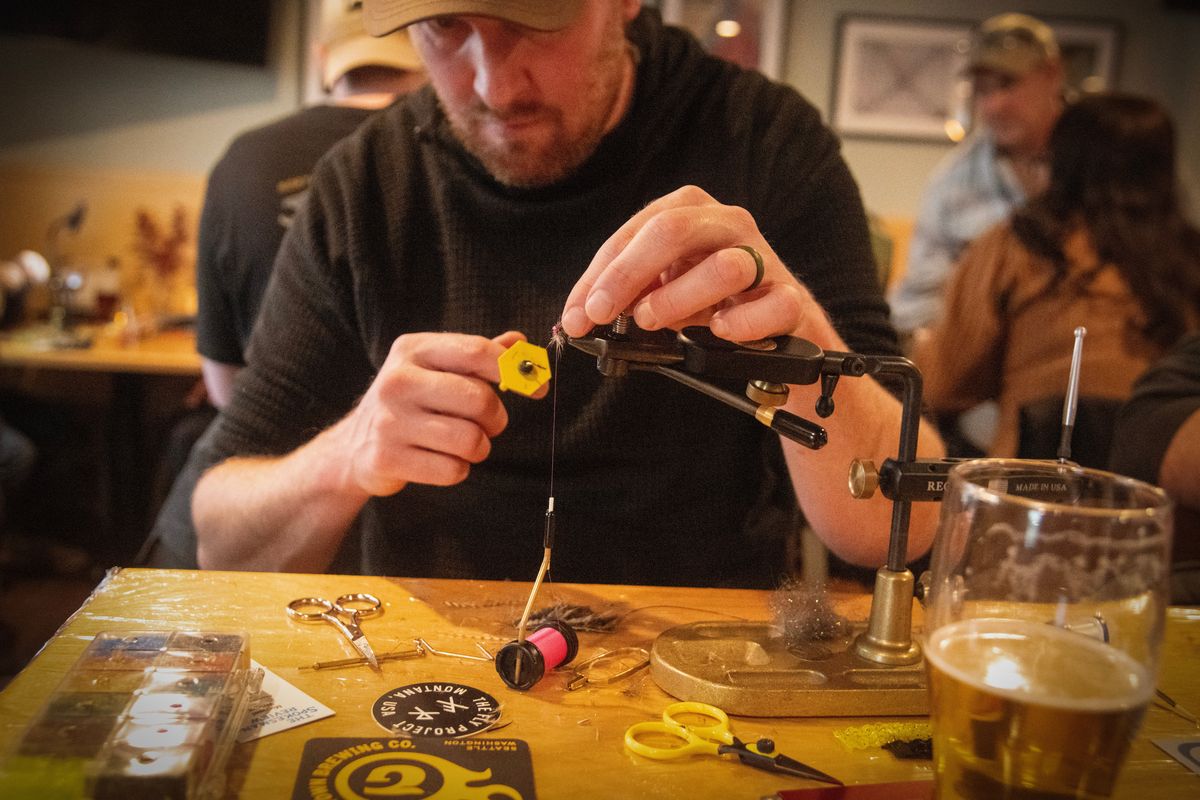
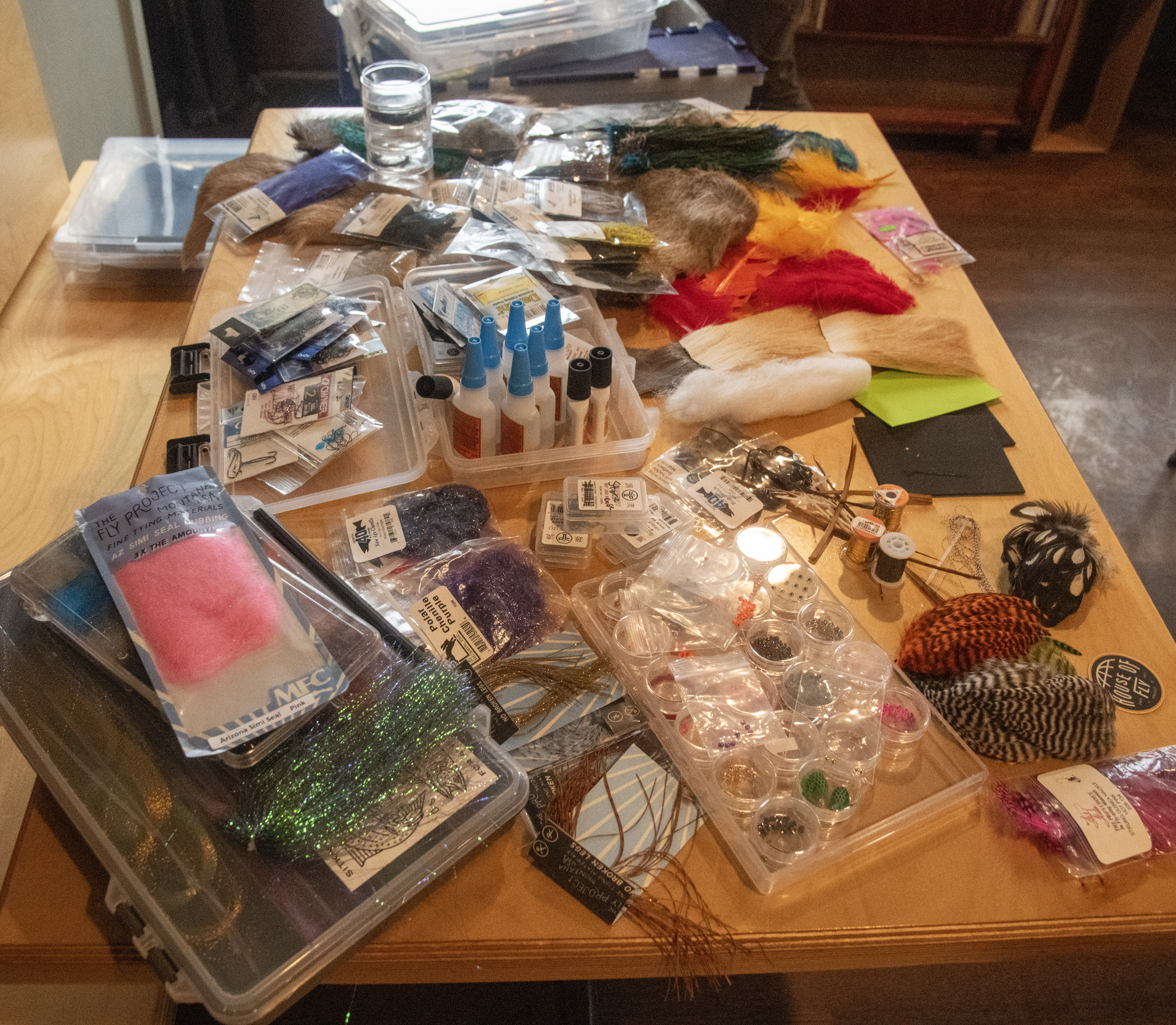
A table by the front door at the Radio Bar on Sunday afternoon was covered in an eclectic mess.
There were hooks, bottles of super glue, small packages of chenille and parts of at least a half-dozen animals – elk, deer, chicken, peacock.
At a few nearby tables sat a bunch of flytiers who had brought their own collections of fur and feathers along with their vises and varying levels of confidence.
They were there to compete in the Spokane Iron Fly, an “Iron Chef” style showdown between flytiers trying to prove they can create the best fish snack.
Similar competitions have been held around the country for years. This one, which appears to be the first to take place in Spokane, was put on by House of Fly, the fly-fishing arm of North 40 Outfitters.
Shortly after 2 p.m., Kristopher James, manager of the House of Fly store in Mead, explained the rules. During the first round, everyone would tie three versions of the same pattern. The judges – Dan Ferguson, of the Spokane Fly Fishers, and Derek Darst, of Saint Maries Flies – would rate them. The top three scorers would advance to the final round.
A card drawn out of a hat decided the fly to be tied in the first round: a Prince nymph.
Prince nymphs have been around since the 1940s. The standard version has a peacock herl body, a wire rib and a tail and a wingcase made from a stiff goose feather called a biot.
The original prince is still in wide use, but tiers have also created an inordinate number of variations. Materials and colors get swapped. The psycho prince, for example, trades the deep green peacock herl for bright -colored dubbing – yellow, purple, blue, chartreuse.
Iron Fly is meant to make tiers think creatively. So, James said the judges would rely on a loose definition of “prince nymph.”
“All we’re asking is that it’s a nymph and uses a biot,” James said.
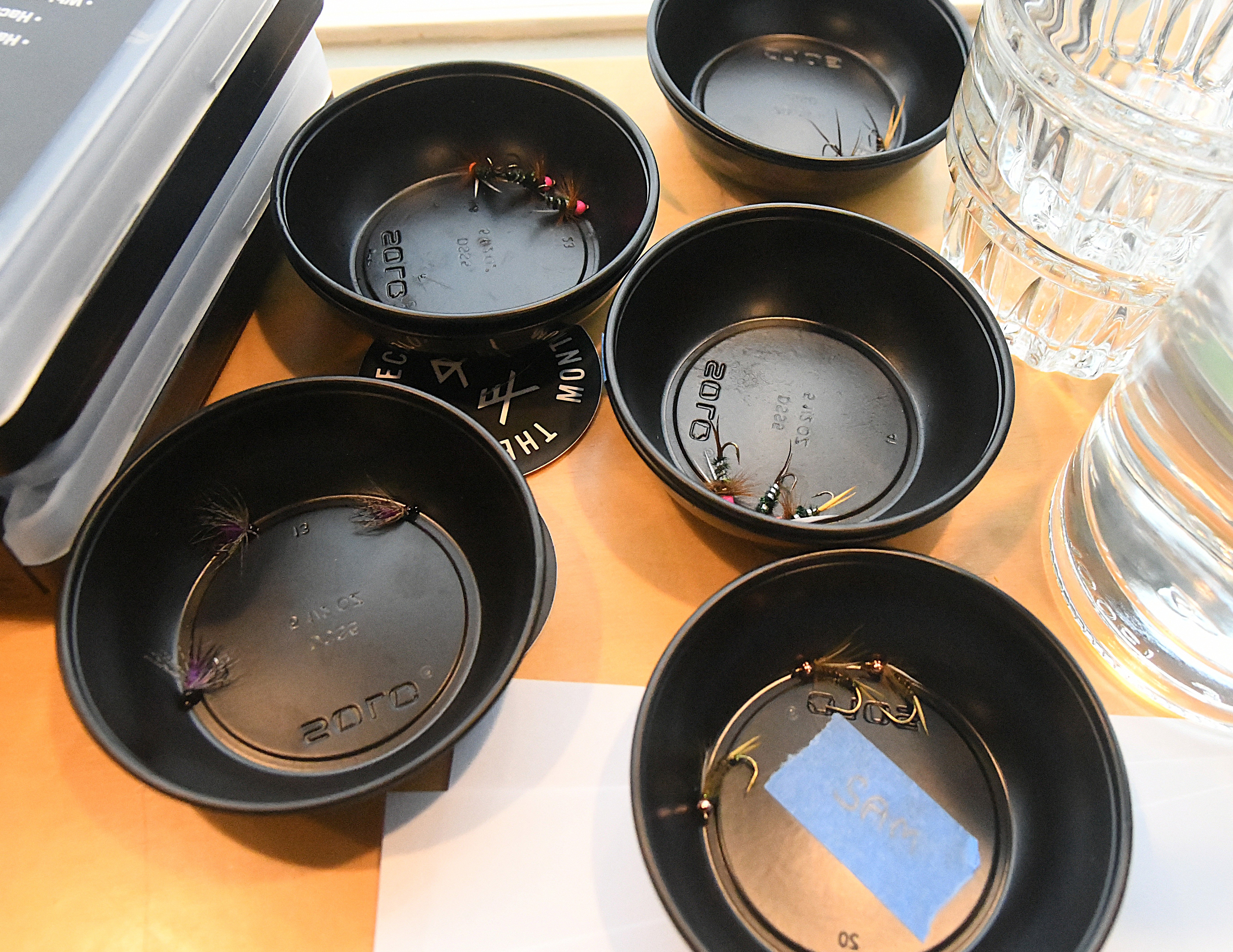
At the end of 30 minutes, the judges had the full spectrum of princes, from the traditional to the flamboyant. When the judging was over, they named the three finalists: Chris Mowry, Bob Newman and Sam Akerhielm.
The final was less straightforward. They were going to be allowed to tie whatever they wanted, but with some caveats.
First, they had to employ the day’s mystery material – a baby emu pelt.
Second, they could only use materials from the eclectic pile by the door, and none of their own.
And third, they were each assigned a tying tool that was less than ideal.
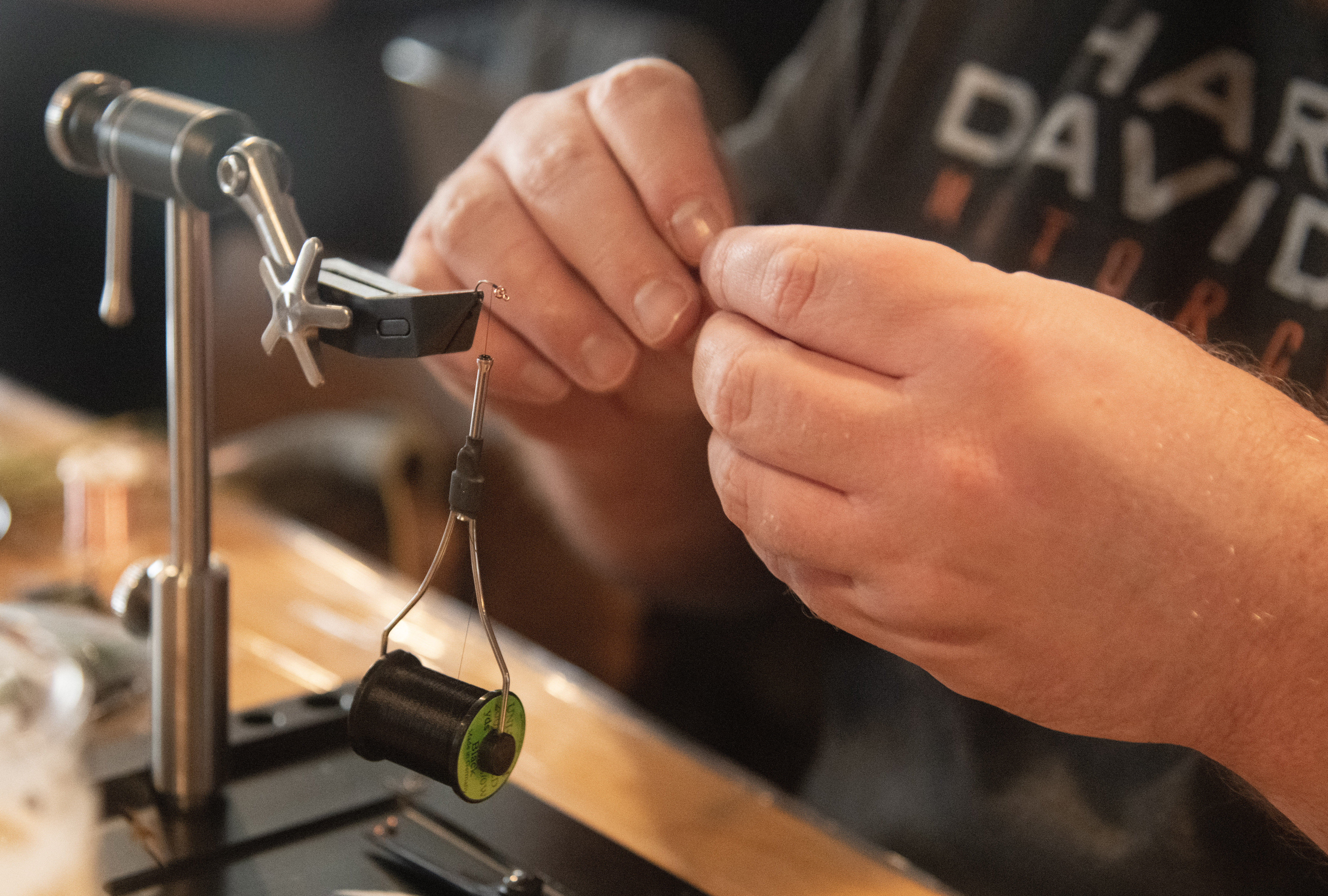
Akerhielm had to swap his vise for an unfamiliar one that didn’t spin. Newman had to load his thread into a 3D-printed bobbin and use that to wrap materials to the hook. Mowry got a spool of extremely thin pink thread.
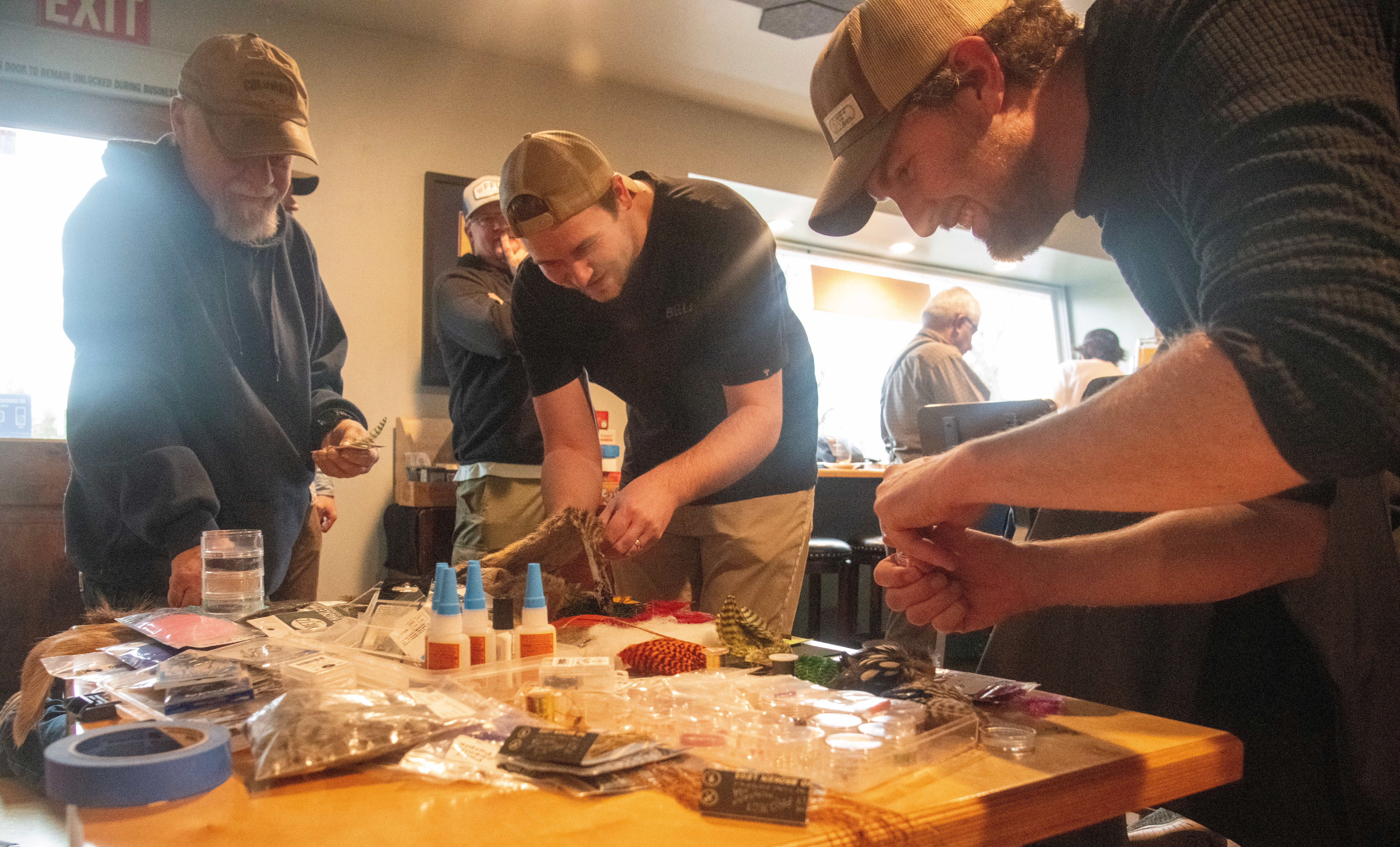
They huddled over the materials table. They clipped chunks of the baby emu pelt for themselves. Each tier decided the thin, wispy hairs would work best in some sort of a nymph pattern.
Newman tied a big, fluffy dragonfly. Akerhielm produced a soft hackle nymph on a jig hook with an orange bead. Mowry used the emu fur in a dubbing loop behind a pink bead, matching his pink thread.
“We’re going pink on pink,” he said.
In the end, the judges named Mowry the top tier of the day. He won a new Regal vise, which he said he’d already been thinking about buying.
When he walked into the bar on Sunday, though, he had a simpler aim.
“The goal of the night was to not be embarrassed,” he said. “Goal achieved.”