
This day in history: Willie, the parrot who cried for help, could not be helped. Spokane Coyotes prepared for radio debut

From 1976: More than 50 South Hill residents reported hearing a mysterious character crying for “Help!” from somewhere up in the trees.
That was Willie, the big green parrot.
Willie was a runaway parrot who had been heard for months, whistling various tunes morning and night and occasionally crying for help.
A Galloway, British Columbia, man was convinced that this was his parrot. Willie escaped from his home in September 1974 and apparently just kept on flying 250 miles south to Spokane.
He said his bird knows only one word – “Help!” – and that’s the word that many people on the South Hill were hearing from up in the ponderosa pines.
The owner was offering a reward for anyone capturing his pet. He suggested that Willie might respond to the phrase, “Silly bird.”
News of the bird would show up in Spokane papers one more time in May 1976, when a green bird appeared in Chewelah. It was not captured then either.
From 1926: The Spokane Coyotes would soon be howling on radio station KHQ.
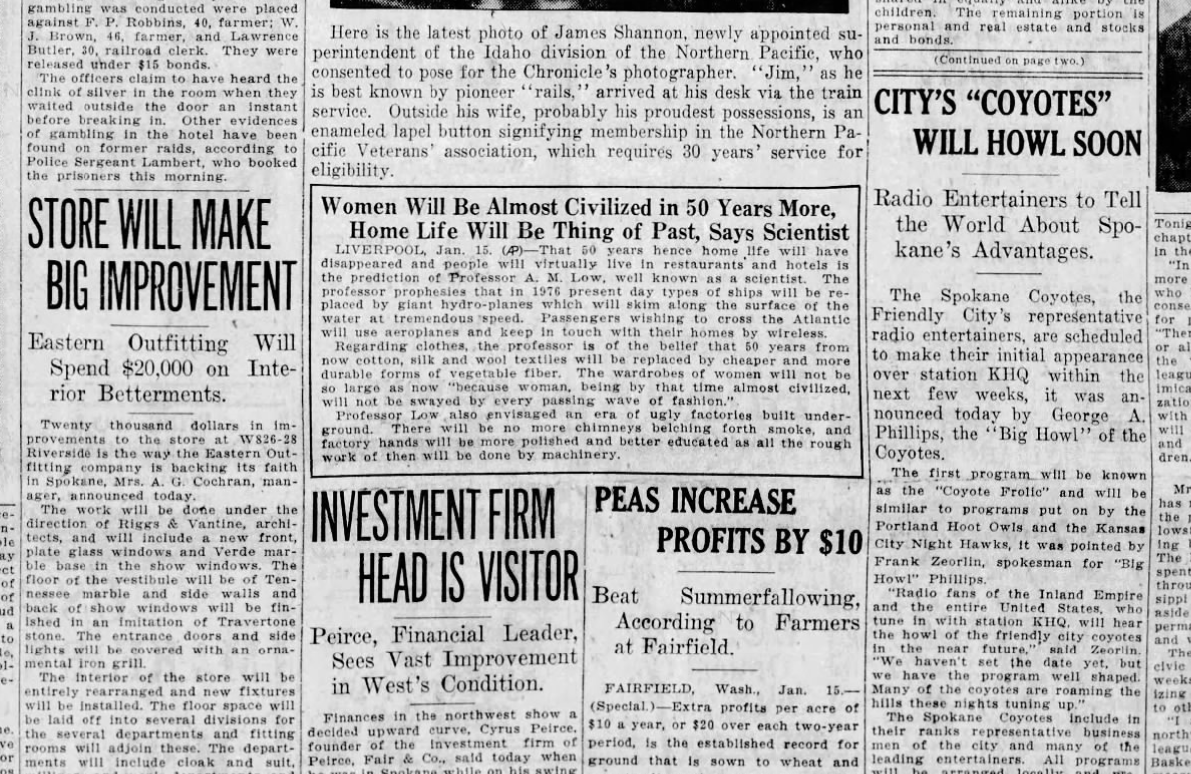
The Coyotes billed themselves as “the Friendly City’s representative radio entertainers,” said group leader George A. Phillips, who called himself the “Big Howl.”
They patterned themselves after the Portland Hoot Owls and the Kansas City Night Hawks, radio entertainers in other cities.
The Coyotes included in their ranks “representative business men of the city and many of the leading entertainers.” They said they had been “roaming the hills these nights, tuning up.”