
Then and Now: Maple Street Bridge
The Spokane River, especially the deep gorge west of the downtown Spokane waterfalls, splits the city. The first span over the gorge was a rickety, wooden Monroe Street Bridge built in 1889.
In the 1950s the city of Spokane broached the idea of a bridge farther west. The cost of a bridge spanning the gorge above Peaceful Valley, would be astronomical. Bridges built previously had cost thousands of dollars, but a Maple Street Bridge would cost millions, so planners settled on a toll bridge.
Ground was broken in 1956 and the massive supports began to rise from the valley floor.
The bridge opened to much fanfare on July 1, 1958.
The span was 1,716 feet long, towering 125 feet above the Spokane River, with a 50-foot-wide road surface and a sidewalk on one side.
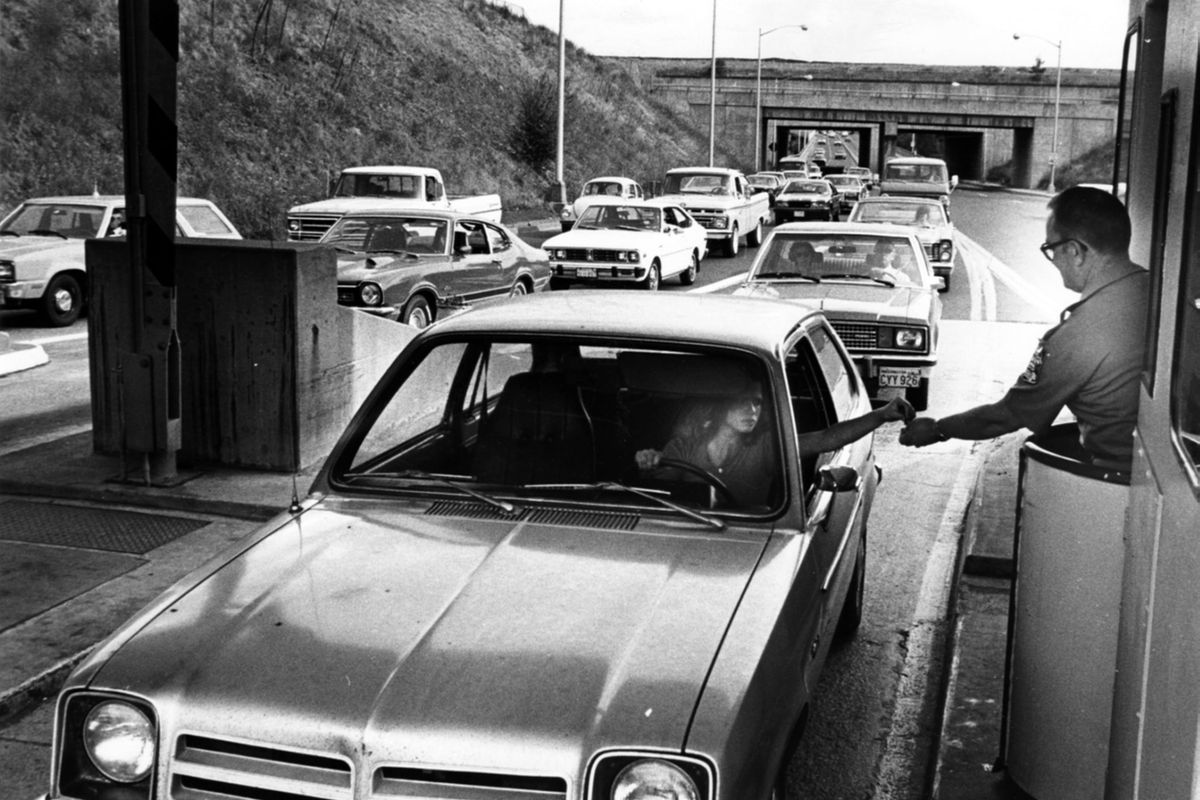
Spokane drivers would pay a 10 -cent toll. The new route took 40% of the traffic off the Monroe Street Bridge.
From the bridge’s opening day in July 1958, there were doubts that the bonds, which were sold to the Washington teachers’ retirement system, would be retired on schedule.
In the first month after opening, toll revenue averaged $460 a day. Darrell B. Hedges, executive secretary of the state toll bridge authority, said that $800 a day was required to cover interest on the bonds, debt repayment and maintenance. Hedges said he hoped the new Maple-Ash couplet would increase bridge traffic.
The State Toll Bridge Authority also pledged no new bridges, free or toll, would be built across the Spokane River within 10 miles of Maple Street until the bonds were retired, which put off the proposed north-south freeway at least until 1996.
Annual deficits in bridge revenue continued through the 1960s, leading to doubt that the bonds could be retired in 1996, as was forecast. The idea of the state stepping up to pay the debt was brought up many times.
In 1981, the toll was raised to 25 cents, but stayed at 10 cents for vehicles carrying three or more people.
In 1989, the state allocated $2.7 million to pay off the bonds, and federal funds found to pay for a new bridge deck.
In 1990, 32 years after it opened, the toll was removed from the bridge.