
Bernard LaFayette, a critical early Civil Rights organizer, dies at 85
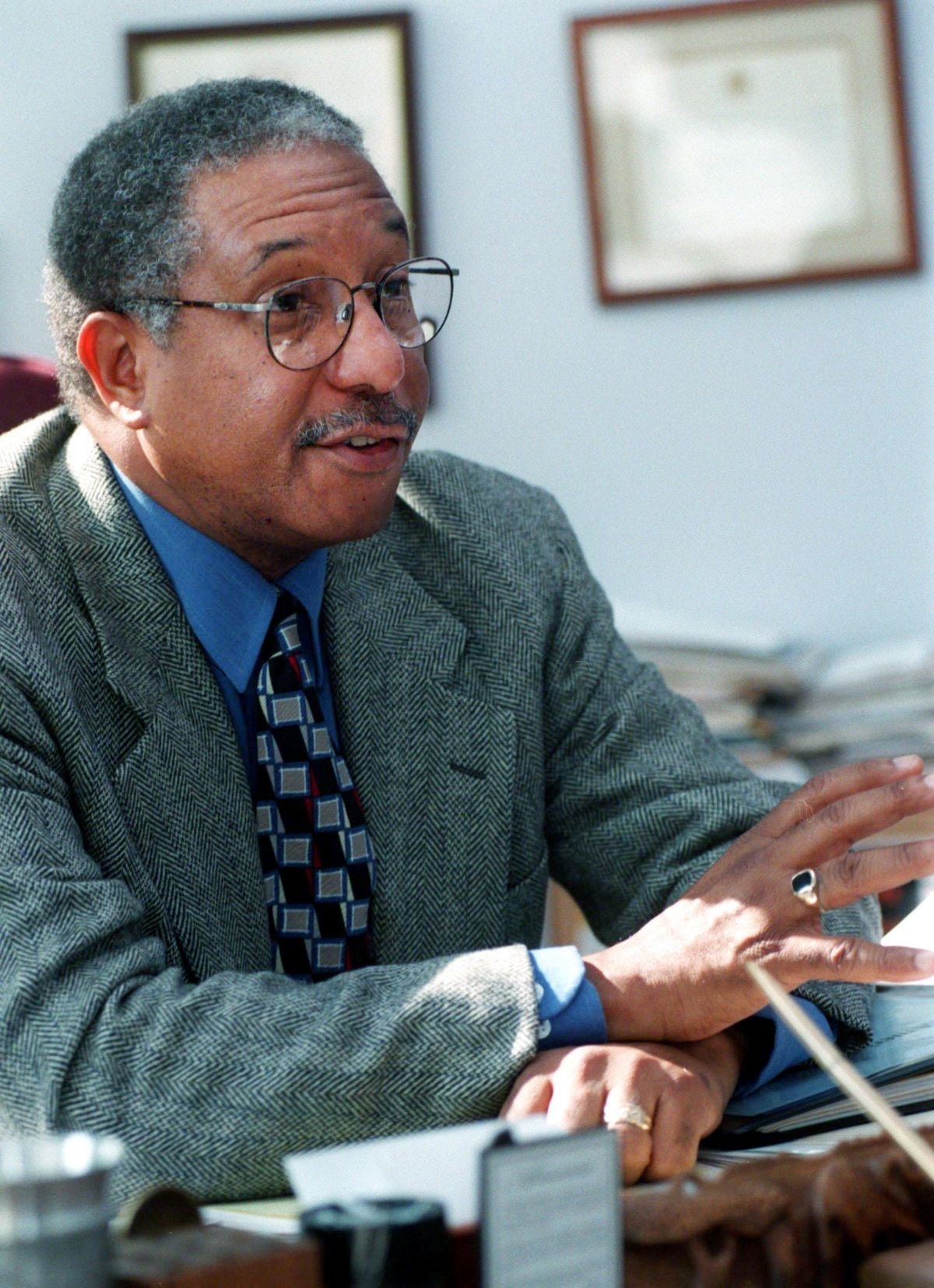
Bernard LaFayette, a key early Civil Rights organizer who helped integrate lunch counters and public spaces in Nashville and across the South during the 1960s, died on Friday. He was 85.
LaFayette once wrote the value of life lies not in longevity, but in what people do to give it significance. For LaFayette, there was the constant threat of death he and others faced during the Civil Rights Movement.
But because of his actions, Nashville became the first city in the South to desegregate public spaces. More Black Alabamians voted because of his efforts in Selma. Then later in life he poured himself into helping young people at the American Baptist College, much in the same way he was able to rally others his age in 1960.
“Dr. LaFayette walked these very grounds on ‘The Holy Hill’ as a young man, and it was here that the seeds of a movement were planted,” Nashville’s American Baptist College said in a social media post in announcing his death. “Dr. LaFayette gave his life immeasurable significance – and in doing so, he gave all of us a blueprint for how to live.”
LaFayette – an American Baptist alumnus who later rose in the ranks of the Civil Rights Movement with other American Baptist graduates Rep. John Lewis, Julius Scruggs, Jim Bevel, William Barbee, and the Revs. Kelly Miller Smith and C.T. Vivian – later became president of American Baptist from 1992-1999.
Forrest Harris Sr., who recently retired from leading American Baptist and who succeeded LaFayette, said in an interview LaFayette was “central” to desegregating Nashville and will be remembered “foremost [for] his commitment to pursuing justice in this country and sacrifice he made to making a better society.”
Bernard LaFayette in the Civil Rights Movement
LaFayette cofounded the Student Nonviolent Coordinating Committee in 1960. He had come to Nashville from Florida two years earlier to study at American Baptist College, known then as American Baptist Theological Seminary.
“I hadn’t been called to preach yet,” LaFayette said in a 2013 profile with The Tennessean. “But I was going to the seminary to prepare to be called.”
LaFayette and other Civil Rights icons such as Smith, Lewis, Vivian, Bevel, the Rev. James Lawson, Diane Nash and Marion Barry formed the student committee under the non-violence tutelage of the Rev. James Lawson.
Those teachings carried LaFayette through life.
“Nonviolence is not something that you simply embrace with your mind,” LaFayette said during a speaking engagement in Tuskegee, Alabama. “It embodies and affects your entire being.”
The student committee staged their first sit-in at Harveys Department Store in Downtown Nashville. The sit-in movement grew, and the first large-scale effort happened Feb. 13, 1960, at Woolworths, S.H. Kress and McLellan stores.
By the time the sit-ins ended, more than 150 students were arrested for refusing to vacate segregated lunch counters. LaFayette himself was arrested more than two dozen times.
After secret negotiations between store owners and protest leaders, an agreement was reached in May 1960, making Nashville the first major city in the South to begin desegregating public facilities.
After the sit-ins, LaFayette joined the Freedom Rides in 1961, and a year later, directed the Alabama Voter Registration Project. He soon became involved with the Rev. Martin Luther King Jr.’s Southern Christian Leadership Conference, rising to program coordinator in 1967.
He made his home in Selma, Alabama.
“If there is one person among them all who has refused … to put the nonviolent banner down, it’s Bernard,” the late Tennessean editor John Seigenthaler, who in the early 1960s worked on civil rights as an assistant to Attorney General Robert F. Kennedy, said in 2013. “He talks about it less as a theory and more as a way of life.”
Bernard LaFayette’s commitment to academia and faith
Both through his role as American Baptist president and in other venues, LaFayette was committed to continuing to training young people on the nonviolence movement and tactics.
He was “constantly moving around the country to do nonviolent workshops,” Harris said in an interview with The Tennessean on March 6. In fact, LaFayette said in his 2016 memoir, “In Peace and Freedom: My Journey in Selma,” that he pledged to King to carry on the nonviolence movement, Harris said.
In one of his last appearances in Nashville, LaFayette addressed American Baptist students at a May commencement ceremony.
“I am struck by the hinges of history that the revolving doors of education and justice are still open at American Baptist College after 100 years. Doors shaped and strengthened by the contributions of leaders like Dr. Bernard LaFayette,” Harris said about his predecessor at the graduation. “Over a century since 1924, we have weathered headwinds and climbed the yields of injustice,”
LaFayette’s life embodied American Baptist’s mission, the college said in its post.
“To educate, serve, and pursue justice in the world,” the college said. “He rode buses through a violent South. He registered voters in the face of danger. He marched alongside Dr. Martin Luther King, Jr. He later returned to lead this institution as our President – and never stopped teaching the world that change is possible through love, courage, and the power of nonviolence.”
Harris said LaFayette’s death is also a bigger reminder about the legacy of civil rights legends, several of whom have died in recent years. Another example is the Rev. Jesse Jackson, who died in February.
Honoring these figures’ legacy “is a call to reclaim and renew a public commitment to the cause of which they lived and died,” Harris said. “They represent a huge vision that has yet to be fulfilled.”
This article originally appeared on Nashville Tennessean
USA Today network via Reuters Connect