
Hey, Jody Allen: Here’s an exciting bid for the Seattle Seahawks from the part of Washington that really matters
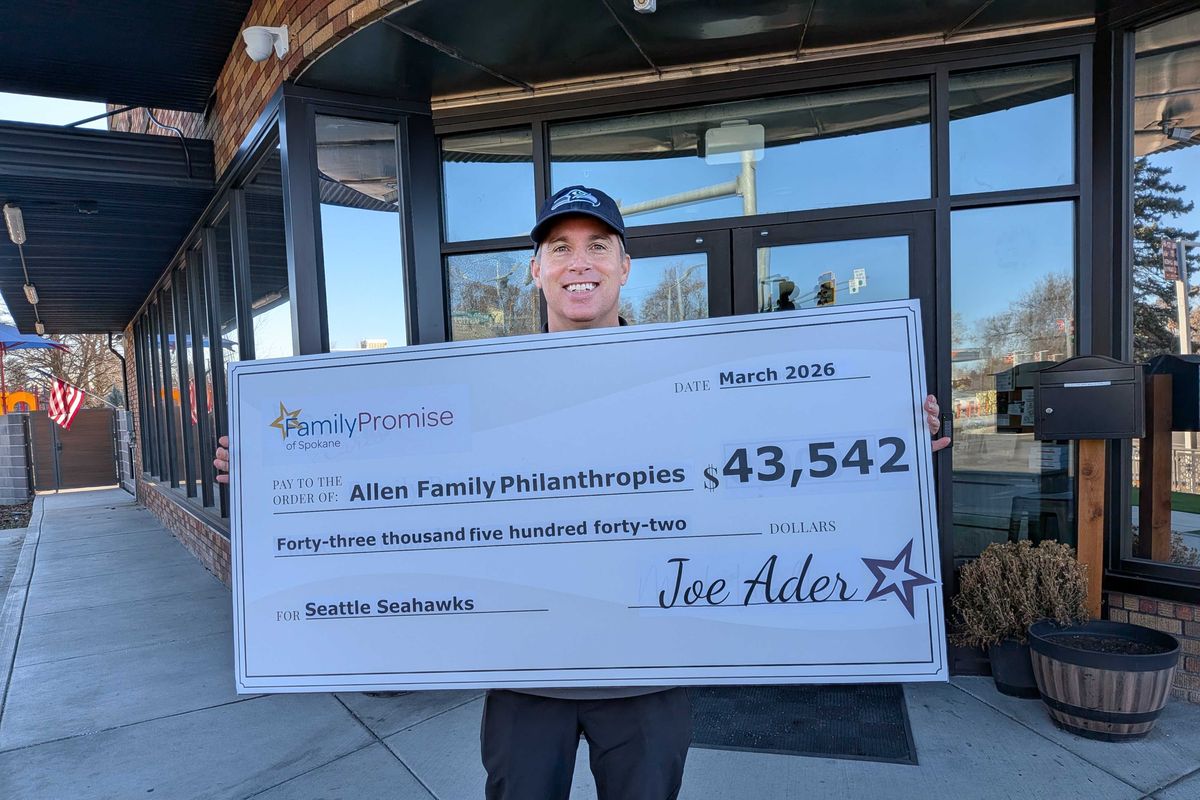
It’s unlikely the Seattle Seahawks will be owned by a nonprofit serving homeless children and their caretakers, but that’s not stopping Family Promise of Spokane from making a pointed bid anyway.
The estate of late Seahawks owner Paul G. Allen initiated a sale of the Super Bowl-winning franchise in mid-February in what is almost certain to be the largest sale of any National Football League franchise in its 105-year history. The Washington Commanders sold for just over $6 billion in 2023, and initial estimates have the Seahawks valued around $9 billion.
Some experts say the final sale price could climb even higher, and even topple the North American record for any sports franchise, established in 2025 when investment mogul Mark Walter purchased a majority stake in the Los Angeles Lakers.
Family Promise of Spokane’s bid submitted Monday offered just $43,542 for the team, or .00048% of the team’s estimated value.
Joe Ader, CEO of the nonprofit, said the value represents one dollar for each school-aged child experiencing homelessness in the state last year. The figure was pulled from an Office of Superintendent of Public Instruction enrollment database as of October of the 2024-2025 school year.
The number of homeless children in Washington could be higher. A November 2025 report from the office for the Washington State Legislature said more than 48,000 children enrolled in public schools were homeless. The data comes from federally mandated record-keeping required of all school districts and does not include those not in school.
“A lot of the discussion around homelessness revolves around downtown singles homelessness, and so the families nationwide that are experiencing homelessness are considered the hidden homeless,” Ader said. “You don’t see them in the streets.”
Around two-thirds of homeless children for the 2024-25 school year were “doubled up,” meaning they shared housing with friends, relatives and acquaintances, according to OSPI data.
“Often, families fear that their children will be taken from them if they are experiencing homelessness, so they’re usually hidden,” Ader said. “They’re sleeping in cars. They’re couch-surfing from place to place. They’re staying in motels until they can’t stay there anymore.”
The idea for the bid started as a joke in the Family Promise office, but Ader said he and his team saw an opportunity to capitalize on the success of the Super Bowl champions, the passion of their fans and the philanthropic nature of the former owner, Allen, who died in 2018.
“There’s thousands of people from this side of the state that drive six hours, sometimes seven hours, if there’s ice and snow across the mountain passes, to go to games,” Ader said.
The bid, if not accepted outright, includes a proposal for a 3% ownership stake that would fund the organization’s efforts to address family homelessness in Spokane County.
“If we can get it in front of those owners, current owners of the Seattle Seahawks, the Paul Allen trust, as well as maybe the future owners of the Seahawks,” Ader said, “these are folks that can make investments that would drastically change these numbers.”
Ader said Family Promise estimates that it will need to serve around 2,500 families in the county annually, which would cost around $13 million. The organization served 1,180 families in 2025 on a $6 million budget. In a news release announcing the bid, Family Promise said the increased funding would “end family homelessness in Spokane County.”
Family Promise is the predominant service organization in the region devoted to children and their caretakers, but services for youth and children are also provided by Catholic Charities, Volunteers of America and the Salvation Army. The groups receive federal and state pass-through funding from local governments, including Spokane, Spokane Valley and Spokane County.
George Dahl, a housing and community development administrator for the county, said the three entities work collaboratively to approach homelessness regionally. The municipalities agreed to a five-year joint plan just last year to guide that work. In 2025, Spokane County directed $14 million to homeless services, with 24% aimed at prevention strategies for families.
“Of course, we’d like to do more where appropriate, but really trying to stay true to the objectives outlined in the five-year plan, and then making sure that we prevent that family homelessness from ever really occurring,” Dahl said.
Arielle Anderson, director of housing and homeless services for the city of Spokane, said a little over $1 million of the city’s $7.4 million in Core Homeless Response System Funding was directed to youth and young adults. More funding is needed across the “resource-scarce” homeless services system, regardless of the demographic, she said.
“There just isn’t enough of all the things that are necessary to assist folks, but we do what we can with the funds that we have,” Anderson said.
Family and child homelessness is an issue that Ader approaches with the football adage “If you can touch it, you can catch it,” which he said was oft repeated in his house as a child. It’s a solvable issue, he said.
“Homelessness doesn’t start downtown on the streets,” Ader said. “That’s where it ends. It starts when that person was 3 years old, or an infant or in elementary school. And so these are cycles that can be broken, and we have the opportunity to do that every day right now.”