
Hot dogs and sled dogs: The hard-partying tradition of ‘trailgating’
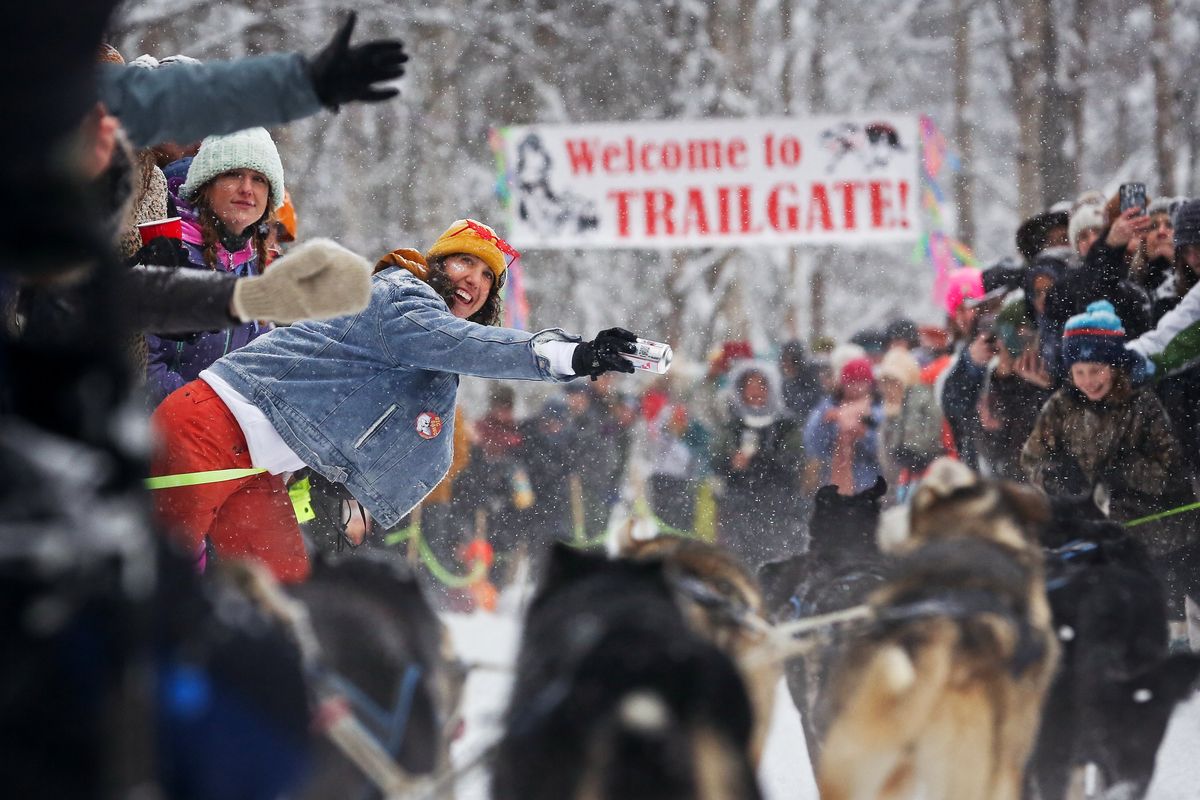
ANCHORAGE, Alaska – Coming down the hill on Cordova Street, near downtown Anchorage, Alaska, Iditarod mushers and their dog teams raced toward the city’s trail system. Waiting at the bottom of the hill were dozens of people gathered to cheer them on, Bloody Marys and hot cocoas in hand.
The Bootie Alley trailgate party has taken place here for 18 years. As mushers and their teams of a dozen sled dogs whizzed by, spectators yelled, “Bootie, bootie, bootie,” hoping mushers would throw dog booties into the crowd.
“Me and my friend came down here to watch the mushers with our little kids so they could see it well, and it just morphed into this,” said Shawn Silverthorn, one of the event’s founders.
Under a couple of tents, Silverthorn and his family cooked and served free food to anyone who passed by. Hundreds of hot dogs, breakfast burritos, popcorn, cinnamon rolls, chili, 5 gallons of hot chocolate and 10 gallons of coffee donated by local roasters filled plastic folding tables at the parking lot party. A Bloody Mary bar with elaborate pickled garnishes was a highlight.
This trailgate party was one of many that popped up across the city Saturday in honor of the 54th ceremonial start to the Iditarod Trail Sled Dog Race, which officially takes place along a nearly 1,000-mile route from Willow to Nome. An 11-mile preliminary route through Anchorage lets mushers celebrate the race with the community before Sunday’s official start.
Starting at 10 a.m., mushers departed every two minutes from West Fourth Avenue downtown, guiding their teams along snow-packed city streets and trails. Spectators turned the route into a string of informal parties commemorating Alaska’s culture of community and winter revelry.
“You can give people high-fives and enjoy a brat or a beer,” said Thomas Rosenbloom, who mushed in the Iditarod race in 2017. “You work really, really hard to get to the start line here, so it’s a great opportunity to celebrate it with everyone.”
Along the Chester Creek Trail in Anchorage, parties merged into one another. Sunken, snow-carved seating areas housed groups sipping on hot coffee and cheap beer. Carly McNeil stayed warm in a knee-length beaver fur coat, black-bear-fur gloves and dyed fur earmuffs – all bought secondhand. “We kind of get silly in the winter time,” she said.
Fur clothing and accessories are common. The race and its parties are the culminating events of the two-week long Fur Rendezvous Festival, also called “Fur Rondy.” Beginning in the mid-1930s, Fur Rondy brought new revenue and lively sporting events to the growing region. It harks back to the state’s fur-trading history, when Alaskans would gather to sell and buy supplies after months of dark days in the wilderness.
The Iditarod is known as an extreme endurance event. Some would say winter in Alaska is, too. People are ready to party by the time March arrives, said Kelsey Schober. For about a decade, she has helped organize one of the biggest trailgate parties, at Eastchester Park in Anchorage, where scores of people gather to drink mimosas at a serpentine bar made of snow, eat hot dogs and dance to a local DJ set.
“Everything cool that happens in a community is because people just do it,” Alex Troutman said after cooking and serving 250 hot dogs for Eastchester Park partyers.
The race also commemorates the 1925 Serum Run, a dog-sledding relay that delivered lifesaving diphtheria antitoxin over 600 miles to Nome and prevented an outbreak.
At Eastchester Park, Tara Wheatland – known to attendees as Dr. Balto – roamed the crowd with a plastic party syringe and a pitcher labeled “RX Diphtheria Serum – Take one dose annually during Trailgate.” Filling the syringe with a mix of whiskey and peppermint schnapps, she “inoculated” people by squirting the drink into their mouths.
Year to year, the race alternates between northern and southern paths to distribute the economic boon among villages along the way. The changing climate has forced adaptations. Last year’s start was 300 miles north, in Fairbanks, because of lack of snow.
On Sunday, at the official race start in Willow, hundreds of people gathered at Willow Lake to watch the 37 dog teams begin their long trek to Nome. Food vendors set up along the trail, which crosses the frozen lake, but many trailgaters held picnics to share bites and beverages with family, friends and anyone walking by.
Across the lake from the starting line, Jonathan Michaud grilled cheddar bratwurst from Mat Valley Meats; his “Maui Wowie” teriyaki-marinated, thinly cut ribs; and hot dogs.
“We like to eat real food,” he said. “Hot dogs are for the kids.”
Michaud, whose friends and family call him “the Guy Fieri of trailgate,” has been coming out for about a decade. Members of his party pull children in a small dog sled and offer canned mojitos and homemade Jell-O shots to all.
Beyond Willow Lake, gatherings continue through the week around each of the race’s checkpoints as mushers arrive and take off from remote villages.
Silverthorn and his family, who host the Bootie Alley trailgate in Anchorage, see the tradition as an intrinsically Alaskan way to show up for one another.
“It’s old-school Alaska,” said Deanna James, a Bootie Alley volunteer. “It’s about bringing people together. It doesn’t matter who you are; if you want something warm to drink or eat, these boys will get it to you.”
This article originally appeared in The New York Times.