A deep dive on how Washington State’s season unraveled in David Riley’s second year

PULLMAN – The most sober assessment of this Washington State season, the most salient summary of the reason the Cougars’ season petered out in nondescript fashion last weekend, may have come from their starting power forward.
Seated at a podium inside the Orleans Arena, where WSU’s season came to an end with a loss to Portland in the WCC Tournament’s second round, fourth-year junior ND Okafor described things this way.
“I think on the road, we gotta learn how to play with composure and learn how to stick together,” Okafor said. “I mean, at home, we have all the confidence in the world. We talk to each other because we feel like we’re home, we’re comfortable. But away, when we’re in different environments and stuff, we’re not in our natural habitat, and we struggled with that all year. That’s what really slowed us down.”
Among the many ways to capture this WSU season, the second with coach David Riley at the helm, the patterns Okafor described may do the best job. The Cougars may have finished 12-20 overall, the program’s first time finishing a campaign under .500 since 2018-19, but the real story may come in how drastically different the club looked at Beasley Coliseum compared to away from it.
Consider this: On the season, the Cougs went just 1-12 against Division I teams in games played outside the state of Washington. They earned just one true road win, eking out a comeback victory over Portland in late December, and while they came close to picking up a few others, they couldn’t hang on to double-digit leads in those contests. Many of the same trends haunted them: They secured a nice lead at halftime, made shots, avoided turnovers – only for all three to change in the second half, costing them important games.
It’s all water under the bridge now, potentially another sea of offseason change around the corner for WSU, but think about the difference some of those wins could have made for these Cougars. They blew what seemed to be comfortable leads in road setbacks to San Francisco, Oregon State, LMU and Pepperdine. If they find ways to win only two of those – heck, just one – maybe they find themselves with a better seed for the conference tournament, and perhaps they could have won a game, orienting the optics a bit better headed into the offseason.
Instead, WSU ended the season with losses in seven of its last eight games, falling out of contention for a key bye in the conference tournament and into the No. 8 slot, two spots behind where they were picked in the preseason poll. By season’s end, freshman guard Ace Glass landed on the all-WCC second team and the all-freshman team, and Okafor earned an honorable mention honor. But the rest of the end of the Cougs’ season sounded like a thud.
All told, WSU went 0-4 in Quad 1 games and 0-10 against Quad 2 teams.
What went so wrong in Riley’s second season? And as he heads into his third, what can he do to turn things around?
“I think there’s a lot of factors that go into the season that we had,” Riley said, “and I think the inexperience is something that I need to do a better job recruiting too. There’s a lot of good coaches in this league. So we had a good team that got better throughout the year, and the reality is, so do the other teams, and we weren’t able to improve at a fast enough rate to take those guys over.
“There’s just a lot of different factors that go into that consistency that we needed to play at this level. You saw flashes of it at different times. We have a great group of young men, but there’s some clear things I think that when I look back at this season, that we could have done a better job in.”
• • •
By a few measures, these Cougars were better than last season’s. They reduced their turnovers from nearly 17 per game to 13. They got to the free throw line more consistently, logging a free throw rate of 74.5%, and they improved mightily on the glass, particularly when it came to offensive rebounds. Last season, WSU gave up an offensive board on nearly 34% of possessions, according to KenPom, ranking nearly last in the country. This year, that number dropped to 28%, which ranked No. 76 nationwide.
But by several statistics, this WSU team was worse. Their efficiency on 2-pointers, which Riley takes pride in, dropped from 58.2% (No. 6 nationally) to 54.6%. Some of that had to do with the fact that they relied on the 3-pointer at a higher rate than any of Riley’s previous teams, dating back to his time at Eastern Washington.
This season, nearly 45% of the Cougars’ shot attempts came from beyond the arc, which is the 72nd-highest clip in the country. That’s a higher percentage than any of Riley’s Eagles teams logged, even the 2022-23 season, when they ran off 18 straight wins, the longest streak in the nation that year. After these Cougs bowed out of the conference tournament last weekend, Riley acknowledged as much, saying, “My teams have always shot a lot of 3s. This team has probably shot more 3s than any of my other teams.”
Did that play a role in the way WSU’s season went up in flames? It’s not necessarily good or bad that the Cougars took lots of triples – the team with the highest share of shots coming from 3-point range, Alabama, is ranked No. 15 and will likely earn a No. 3 seed in the NCAA Tournament – but what’s clear is this: Opposing coaches noticed and adjusted accordingly.
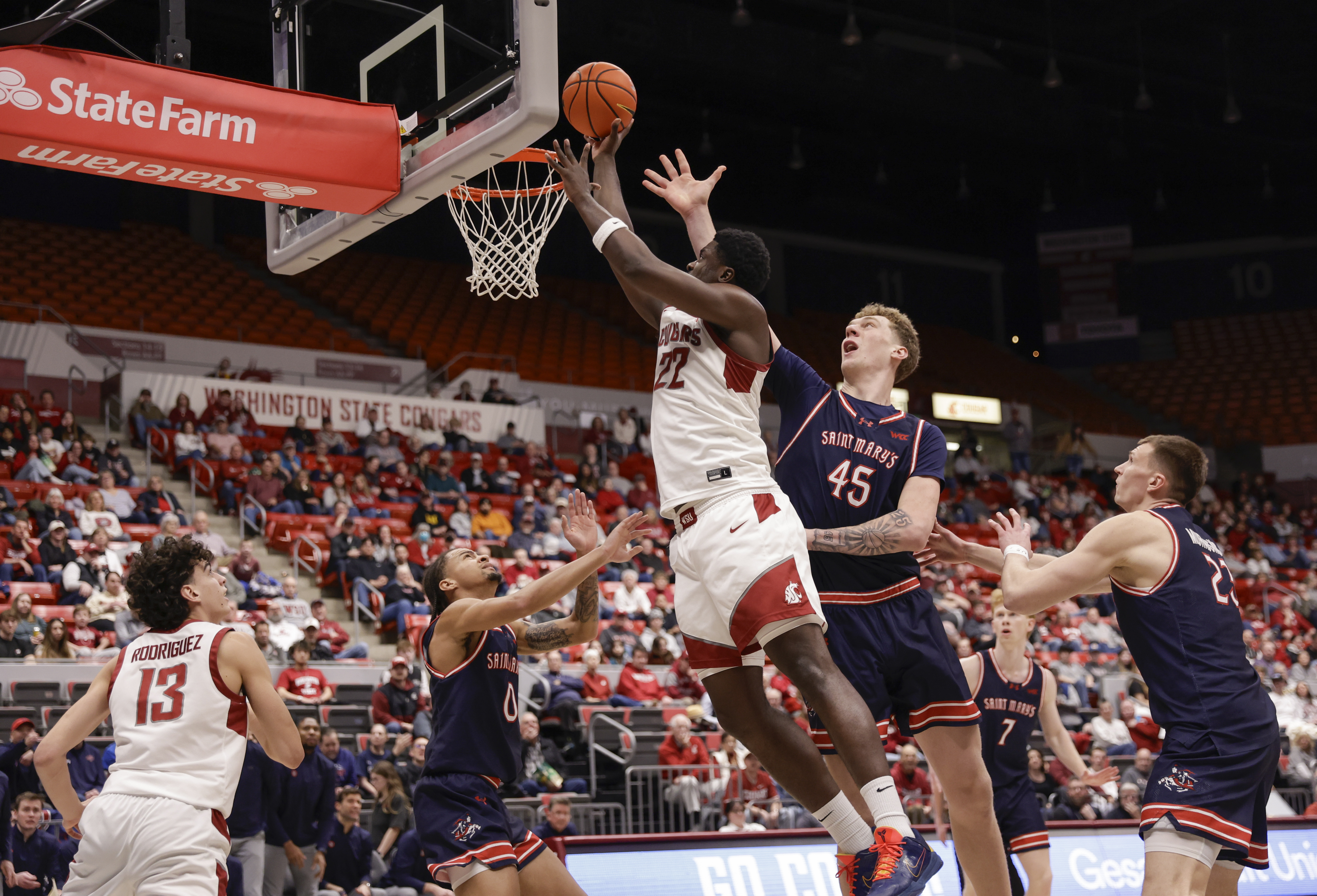
Take WSU’s home loss to Saint Mary’s, for example. In the first half, the Cougars took 12 triples and made 7, trailing by only one at halftime. In the second, the hosts took only seven treys, missing all seven.
A few days later, WSU traveled south to take on LMU, which struggled to contain the Cougs’ barrage from deep in the first half. In the first 20 minutes, WSU lined up 13 triples and sank seven. In the final 20, the Cougars made just 2 of 7 3-pointers.
What stands out the most from those two games is the reduction in attempts. In one game, St. Mary’s coach Randy Bennett began switching many of WSU’s actions to free up shooters, taking away those looks. In another, LMU coach Stan Johnson did the same, helping his Lions erase a 15-point halftime deficit and knock off Riley’s bunch.
“We couldn’t get reversals.” Riley said after that game. “We were taking early contested 2s rather than getting the ball around to the second side. You do that, and along with making some errors, you lose your rhythm offensively and you let them get going. That’s a recipe for disaster.”
In other words, the Cougars didn’t have many answers on offense when their first actions were taken away. Sometimes they could get buckets from Glass, who averaged a team-best 16.4 points per game, including a game winning and-one to beat LMU in the teams’ first clash, back in early January. And when his teammates could get him a deep catch, Okafor almost always cashed in, converting a sharp 58% of his shots. His improved touch around the basket ranks among the more promising developments for the Cougars this season.
But those kinds of occurrences profiled more like exceptions than rules. It was especially true on the road, where the Cougars couldn’t generate enough responses to opponents’ runs to stay within striking distance.
Good luck overstating the importance of that trend during this WSU season. In their road loss to Oregon State, WSU led by 12 with about 12 minutes to go. But the Beavers ripped off a 15-2 run, taking a one-point lead with some six minutes left. WSU converted exactly one field goal the rest of the game, falling at the first sign of real adversity.
Then there was the Cougars’ road loss to San Francisco in January. In the second half, WSU held a seven-point lead with about seven minutes to play. The Dons followed with eight straight points, pulling within one. Guard Jerone Morton used a pair of baskets to keep the Cougars treading water, including leading by four with 2½ minutes left in the game, but USF responded with a 9-0 run to close the game – one punch, then the knockout blow.
In those instances and many others, the Cougs couldn’t produce enough mental fortitude. After WSU’s home loss to Saint Mary’s, the topic was top of mind for Riley.
“They threw punches, and when we didn’t get off the mat, that’s where they were able to separate,” Riley said. “But you don’t get tough by saying you’re tough. You get tough by going through hard things, and that’s where the experience matters. We’ve gotta make sure that we keep building and have some more continuity and keep growing as a group.”
It wasn’t just St. Mary’s mental stamina that impressed Riley, though. It was the Gaels’ experience.
• • •
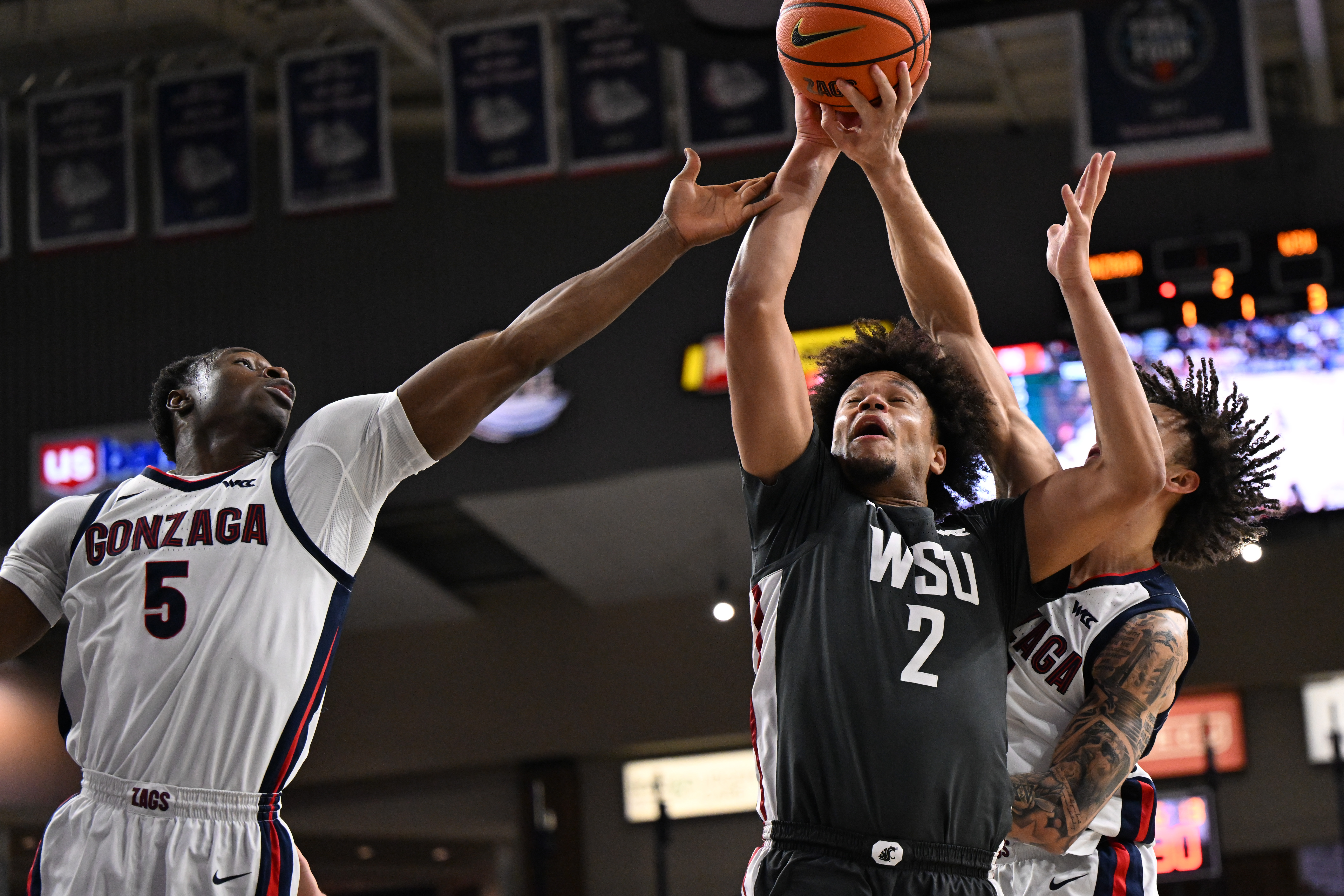
This Washington State team had an average D-I experience of less than one year. The number is 0.93 years, according to KenPom, which ranks No. 297 nationally – about 60 spots up from the bottom of the entire country.
That doesn’t have to be a death knell – ironically, the Gaels rank lower with average experience at 0.76 years, and even Santa Clara is a tad lower at 0.92 years – but it certainly didn’t help this WSU team. Many of the transfers they asked to play key roles on this team, from forwards Eemeli Yalaho and Simon Hildebrandt and Emmanuel Ugbo to the guard Morton, had experience at the D-I level. The problem, it seemed, came in their new roles.
At Texas Tech, where he spent the first two years of his career, Yalaho played sparingly, often slotting in as a small forward. At WSU, he played far more minutes, and mostly at the power forward and even center spots. At Morehead State, where Morton shined for two seasons, Morton had the ball in his hands a ton, playing point guard. At WSU, he found a niche as something of a 2-guard alongside Glass.
Ugbo’s season came to an end early – in February, a Whitman County judge issued a full protection order for a woman against Ugbo, prompting WSU to suspend him for the final nine games of the season – but when active, he acquitted himself well, though his outside shot sometimes betrayed him. That came after a year at Boise State, where he played about 10 minutes per game, earning minutes by way of physical defense.
Washington State played five transfers this season, and when Riley and assistants identified them via the transfer portal, they were looking to improve in two areas most: on defense and in the rebounding department. In Riley’s first season, the Cougars were largely undone by their inability to generate key stops, which often eluded them when they couldn’t secure defensive rebounds.
This season, the Cougs registered some improvement in the turnover department. They became much better on the glass, which is a testament to the hard-nosed nature of Yalaho, Okafor, Ugbo and others, none of whom ever publicly complained about doing that kind of dirty work.
Still, it’s possible that considering some of this team’s offensive woes, Riley and coaches slightly over corrected via the portal.
The other side of this equation, the part that can never be ignored at Washington State in this day and age, is the dollar signs. According to an earlier report from 247 Sports, WSU spent roughly $800K-$1M in revenue-sharing money on this roster.
Sound like a lot? It shouldn’t. According to that story, many of the Cougars’ opponents in the WCC and future Pac-12 easily outspent them. San Diego State’s number stood around $5-6M, LMU around $5M, Santa Clara and San Francisco roughly $4M, Utah State $3-4M, Saint Mary’s $3M and Oregon State a bit under $2M.
If the Cougars are to improve next season in the first year of the new Pac-12, where their road environments will jump from 794 at Pepperdine to as many as 10,000 at Utah State, they’ll need more funds to work with. They’ll need more revenue-sharing dollars, plus more contributions from the Cougar Collective, which supplements those figures with its own donations.
Riley’s best teams at Eastern Washington all had veteran players. Even last season at WSU, he had the luxury of coaching many of the same players he did at EWU. As he mentioned as early as December, this year was a first for Riley, who had to assemble nearly an entirely new roster in the offseason and spent the summer and fall months implementing an offensive system that thrives with experience, players like LeJuan Watts and Ethan Price and Dane Erikstrup, who had gotten to know it over the years.
So ahead of this season, Riley and coaches had to spend more time coaching the basic tenets of their system, as opposed to adding new wrinkles and working on individual skill sets. Can the Cougars avoid such a fate headed into next season? That much will depend on whether they can retain their best players, including Glass, Vavers, Okafor, Yalaho, Morton and guard Tomas Thrastarson.
“It’s really hard to be successful if you don’t have continuity,” Riley said after that home game against Saint Mary’s. “You look at the conference and the teams that are winning it, there’s a direct correlation with how much money you have to pay players and where you finish in the conference. It’s very, very clear that that matters. But the other piece of that is that same correlation could be said for retention, and you also probably need money to keep players, and that’s a piece of that as well.
“It’s not rocket science. Retention makes you tougher and more resilient. It’s a big part of the deal. It’s easy to say in this day and age that, you know, you’re gonna have to rebuild a roster every year. There’s ways to avoid that.”