
Washington to stop printing hunting, fishing licenses on waterproof paper
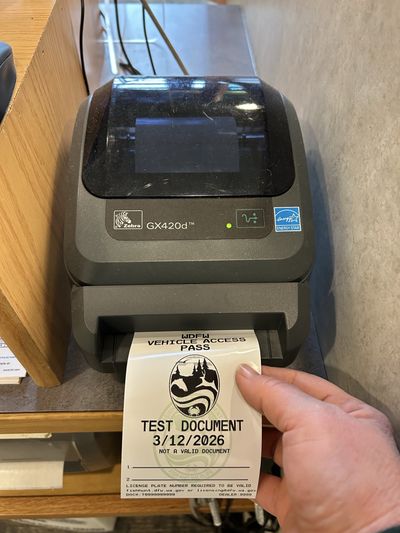

Old printers, paper jams and disappearing ink have conspired to usher in a major change for Washington hunters and anglers.
Starting this July, the state will no longer print hunting and fishing licenses on waterproof paper.
The Washington Department of Fish and Wildlife announced the shift away from th rubbery, receipt-sized paper this week.
It wasn’t a complete surprise. In December, the agency launched its mobile licensing app MyWDFW, which will allow hunters and anglers to hold and display licenses on their phones starting this year.
Paper licenses will still remain available long into the future. After July 8, though, they be printed on standard paper. People will even be able to print them at home.
Regular printer paper may be less durable, but it comes without the the raft of problems waterproof paper posed for hunters, anglers and license dealers.
Jennine Griffo, WDFW’s licensing division manager, said the paper requires specific printers that are technologically obsolete and prone to mishaps.
“The paper goes off center. It misprints. It jams,” Griffo said. “It requires a lot of reprinting. It’s just getting difficult.”
Griffo also said the paper itself is also getting more expensive and harder to find as other states move away from it and digital licensing becomes more common.
Montana, which had long printed licenses on bright yellow waterproof paper, ditched it in 2020 after an especially bad bout with disappearing ink. At the time, a spokesman for the Montana Department of Fish, Wildlife and Parks said about half of the licenses issued the year before had to be reprinted because of the issue.
Oregon stopped using waterproof paper around the same time, said Michelle Dennehy, a spokesperson for the Oregon Department of Fish and Wildlife. She added that some stores that sell licenses will offer licenses on waterproof paper for an extra fee.
Idaho continues to use waterproof paper despite facing the same issues other states have.
“We’ve had the disappearing ink issue,” said Roger Phillips, a spokesman for the Idaho Department of Fish and Game.
Idaho offers digital licensing options and a “hard card” – a version of a license that looks and feels like a credit card. Phillips said there are no plans in the near future to ditch the waterproof paper.
Washington gets both the printers and the waterproof paper through Brandt Information Services, according to WDFW spokesperson Jennifer Sepulveda.
The Florida-based company manages hunting and fishing licensing and other systems for more than a dozen states, including Oregon and Idaho, according to its website. The company is also behind WDFW’s new mobile licensing app.
Attempts to reach Brandt through its website were unsuccessful.
Washington’s move takes effect on July 8, even though the new license year begins on March 31. Sepulveda said the delay in the shift is partially because the agency has enough waterproof paper to print the licenses it expects to sell between now and early July.
Griffo said they also wanted to make the change easier on customers purchasing licenses this spring.
“We’re trying to be mindful of change and the impacts to our customers,” Griffo said.
The move will also be a major shift for the roughly 550 businesses that sell WDFW licenses. Griffo said the company that provides the printers will collect them and that they’ll get recycled. Once that’s done, it will be up to each dealer to decide if they want to print licenses for customers.
The 2026-2027 license year is the first in which digital licenses will be accepted. WDFW is requiring that people use one of their two apps to hold and display them. The MyWDFW app works for both hunting and fishing licenses, while the Fish Washington app works only for fishing.
Catch record cards for salmon, steelhead and sturgeon will be available through the apps, as will carcass tags. WDFW says those features will be available without cell service.
Some hunters have doubts about the idea of relying on a mobile app for their tags and licenses. The Conservation Coalition of Washington said in a Facebook post this week that the shift “feels like another change being put upon the hunting and fishing community,” and that they have concerns about “glitches” that could lead to people being wrongly ticketed for violations.
Dan Wilson, a Spokane hunter and co-chair of the Washington chapter of Backcountry Hunters and Anglers, said he doesn’t like the idea of always using either an app or a full sheet of paper, but that it’s clear the old system had problems.
“Change is hard,” he said. “It’s even harder when we look for downsides before we have a chance to compare the benefits accurately.”