
Indigenous authors discuss cultural fantasy boom, a demand for stories that uplift underrepresented voices
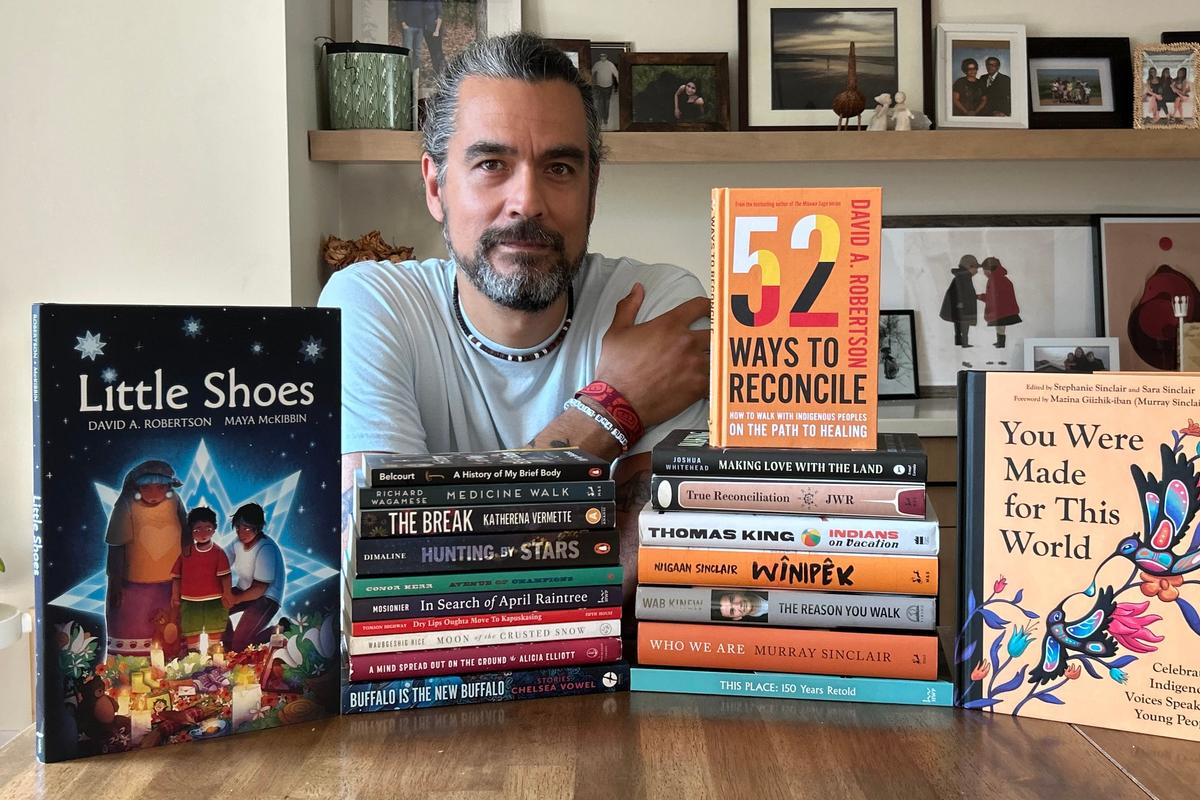
Since the late 2010s, a surge of fantasy books by Indigenous authors have been published across North America in an ongoing movement that could open more doors for Indigenous creatives and help readers from these communities see themselves in books.
From middle-grade fantasy series, like “The Misewa Saga,” “Healer of the Water Monster” and “Lei and the Legends,” to epic fantasy like “The Raven and Eagle” trilogy and from young adult fantasy like “To Shape a Dragon’s Breath” and “Elatsoe” to romantic fantasy with “The Halfling Saga,” there are plenty of stories to choose from that are told from Indigenous perspectives.
Tlingit author Caskey Russell (“The Raven and Eagle”) believes there are several reasons Indigenous fantasy is seeing a surge.
One reason for that, he said, is the rise and persistence of popular fantasy in literature and media, particularly the influence of fantasy-oriented videogames on books.
Born from homesickness and hobbit-fanaticism, the first book in Russell’s trilogy “The Door on the Sea” is about Elān, a young boy who traps a salmon-stealing raven in his cupboard, unaware it would hold the secret to saving his people from the shape-shifting Koosh invaders plaguing their shores. With a crew of unlikely characters, Elān must face stormy seas and other dangers to retrieve the Koosh’s most powerful weapon that only the raven knows about.
“I have heard from a number of the readers of my book that they’d love to see it in videogame form,” Russell said.
Another reason for the increase in publication, he said, is readers’ desire to see fantasy that isn’t entirely inspired by European or American worldviews. Escapism from the contemporary chaos of the world and the desire for a world where people can see justice is plausible, too.
Social media is also involved with the rising popularity. Native Hawaiian author Malia Maunakea (“Lei and the Legends”) said social media has amplified her voice and projects by forming connections with other like-minded readers and writers.
“I think publishing has seen that there is enough demand for these stories as a result of these movements. Every reader deserves to see themselves in books!” she said.
Her series follows 12-year-old, part-Hawaiian Anna Leilani Kama‘ehu as she encounters mythological creatures, learns about her heritage and embraces who she is.
“They say a rising tide lifts all boats and I do believe that the Black Lives Matter and #OwnVoices movements that spotlighted stories written by minority authors brought attention to Indigenous authors as well,” she said.
Norway House Cree Nation author David A. Robertson (“The Misewa Saga”) believes the boom expands to all forms and genres and that the progression and momentum of Indigenous literature have led to this moment.
Taking inspiration from C.S. Lewis’s “The Chronicles of Narnia,” Robertson’s series follows two Indigenous foster siblings who discover the magical realm of Askī and partake in quests to protect the land and its inhabitants.
He said the surge has to do with the importance of their storytelling, the skill of it and the appetite Canadians have for it.
“This wouldn’t be possible without consumption by the public. It wouldn’t make business sense,” Robertson said. “But, we do well, and publishers want to be a part of that.”
Indigenous authors have used the genre to share their cultures and history, including legends that have been passed down for generations.
Russell grew up listening to and loving stories from Tlingit oral tradition. He said the characters, plots, ethical and moral questions and interactions with the supernatural are relatable.
“I also grew up reading fantasy, which I loved but was often inspired by European worldviews and ideas – that influenced me in wanting to write Tlingit-inspired fantasy,” Russell said.
Russell doesn’t retell any stories or songs that are property of clans – including his own.
“I wrote new stories inspired by Tlingit oral tradition,” Russell said. “Also, for many reasons, I ditched any notion of making my novels ‘authentic’; the notion of authenticity is contested and causes heated debate, and, as I saw it, limited my ability to create new stories and characters.
“So I set the novel in an alternate universe. Come to think of it, this might be the reason Indigenous writers are turning to fantasy.”
For Maunakea, her son loves Rick Riordian’s “Percy Jackson” series and she said he would read them for pure enjoyment.
“My goal was to replicate the vibe of those fantasies: to give readers a wonderful adventure to lose themselves in while sharing the legends that I grew up with,” she explained. “Since Hawaiian gods, goddesses, aumakua (family guardians) are prominent in my stories, the appropriate categorization of them within the boundaries of traditional publishing is fantasy.”
She said she hears from teachers and librarians how excited they are to have such stories to offer, especially in Hawaii and the Pacific Northwest, where there many Pacific Islanders live.
“They’re fun fantasy adventure stories that will appeal to fans of ‘Percy Jackson’ or the movie ‘Luca’. They just happen to be set in Hawaii and are written by a Hawaiian,” she said. “They’re wonderful eye-openers for adults and kids who have ever wondered what Hawaii is like behind the glitzy facade of tourism.”
Robertson’s books describe Cree culture and incorporate stories about the sky and constellations.
“This is just another avenue that I found would be a good way to share a message about land, foster care and traditional living,” Robertson said.
He said he loves the possibility of the fantasy genre, describing how people can do so much with it, in terms of sharing messages.
“The only real limit is your imagination,” he said.
While these books share cultural legends, they also delve into deep messages that directly relate to Indigenous communities.
Beyond foster care and environmental stewardship, Robertson’s series discusses language (each book includes a glossary with Swampy Cree words and their pronunciations), community, history (the Beothuk people inspired the last few books), traditional storytelling, mental health and more.
“My stories are all about building community, sharing history and enlightenment about contemporary issues. It’s about reconciliation, representation and empowerment,” Robertson said.
As for Maunakea’s series, she would like readers to embrace that struggling with their identity – whether it’s connecting to their culture or something else – is totally normal.
“You are enough. You belong. And that it’s never too late to learn who you are (and who you want to be),” she said.
As for what effect this trend will have in the long-run, Maunakea aspires to see readers are treated to a much more varied smorgasbord of bookish delights.
“Ingesting familiar retellings is cozy and comfortable. Inviting new cultures to the table expands our knowledge pallet in exciting and unknown ways,” she said.
She hates to call this surge a “trend,” since, by definition, trends come and go. She’d love for this to be a permanent shift in awareness of the demand for stories that lift up traditionally underrepresented voices.
For Robertson, he hopes such fiction opens doorways to explore storytelling in any form and genre.
Robertson loves seeing Indigenous creators finding success and feels they all lift each other up.
Maunakea shared a similar sentiment, describing how they are all cheerleaders for each other.
“Boundaries are constantly being pushed and traditional storytelling expands to make way for new ideas that are so exciting to read,” she said.
Russell hopes young Indigenous readers and writers will continue to dream up new narratives from Indigenous worldviews.
“The stories and oral traditions of Indigenous cultures are incredible. I love seeing them inspire new stories (and perhaps new myths and fantasy) from Indigenous writers,” Russell said.
The next installment in Russell’s series “The Eagle in the Mountain,” is scheduled to be released in September of this year.
Maunakea’s next book “The Shark Prince” will be released on Tuesday.
The last “Misewa Saga” book was published last year and Robertson is currently looking for a new avenue to broaden the story of his series, including graphic novels.