
This day in history: Expo site features linger two years later. Water shortage affects farmers in Northwest
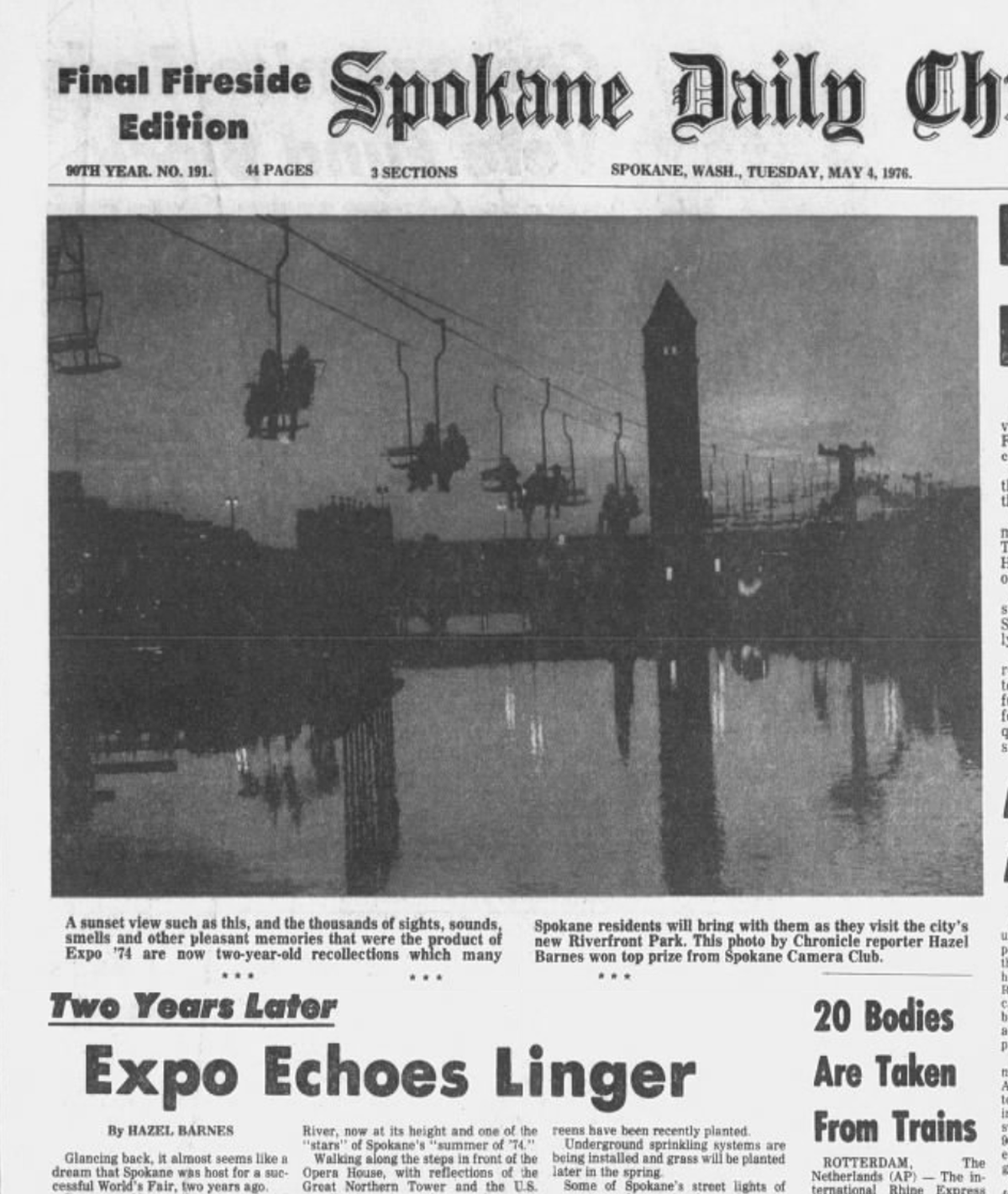
From 1976: The Spokane Chronicle looked back on Expo ’74 on the two-year anniversary of its opening, and said “it almost seems like a dream.”
But the “echoes lingered” – and that was an understatement.
The site was slowly being converted into Riverfront Park, but some of Expo’s iconic sites – the U.S. Pavilion umbrella and the Clocktower – still dominated the area.
“The conversion process – with the tearing down of buildings and the tearing up of asphalt – lacked the color of excitement that accompanied preparation for the fair,” the Chronicle reported. “But now red tulips are blooming in narrow elevated beds lining much of the waterfront along the south channel of the Spokane River.”
And a visitor strolling through the unfinished park could still recall the old sights and sounds.
“Memories flooded back on a visit to the (site of the) Alberta Amphitheater, the International Amphitheater and the Folklife Festival,” the Chronicle reported. “One could almost hear the voices of a visiting choral group or the sounds of a neighboring high school band or see the German and Ukrainian dancers as their bouffant skirts billowed in the wind.”
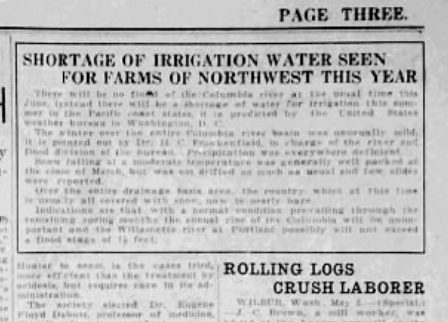
From 1926: The Spokane Chronicle ran a headline that could be recycled 100 years later: “Shortage of Irrigation Water Seen for Farms of the Northwest This Year.”
“The winter over the entire Columbia River basin was unusually mild,” according to the U.S. Weather Bureau. “… Precipitation was everywhere deficient. … The entire drainage basin area, the country which at this time is usually all covered with snow, now is nearly bare.”