
The Ride of My Life | Rich Landers
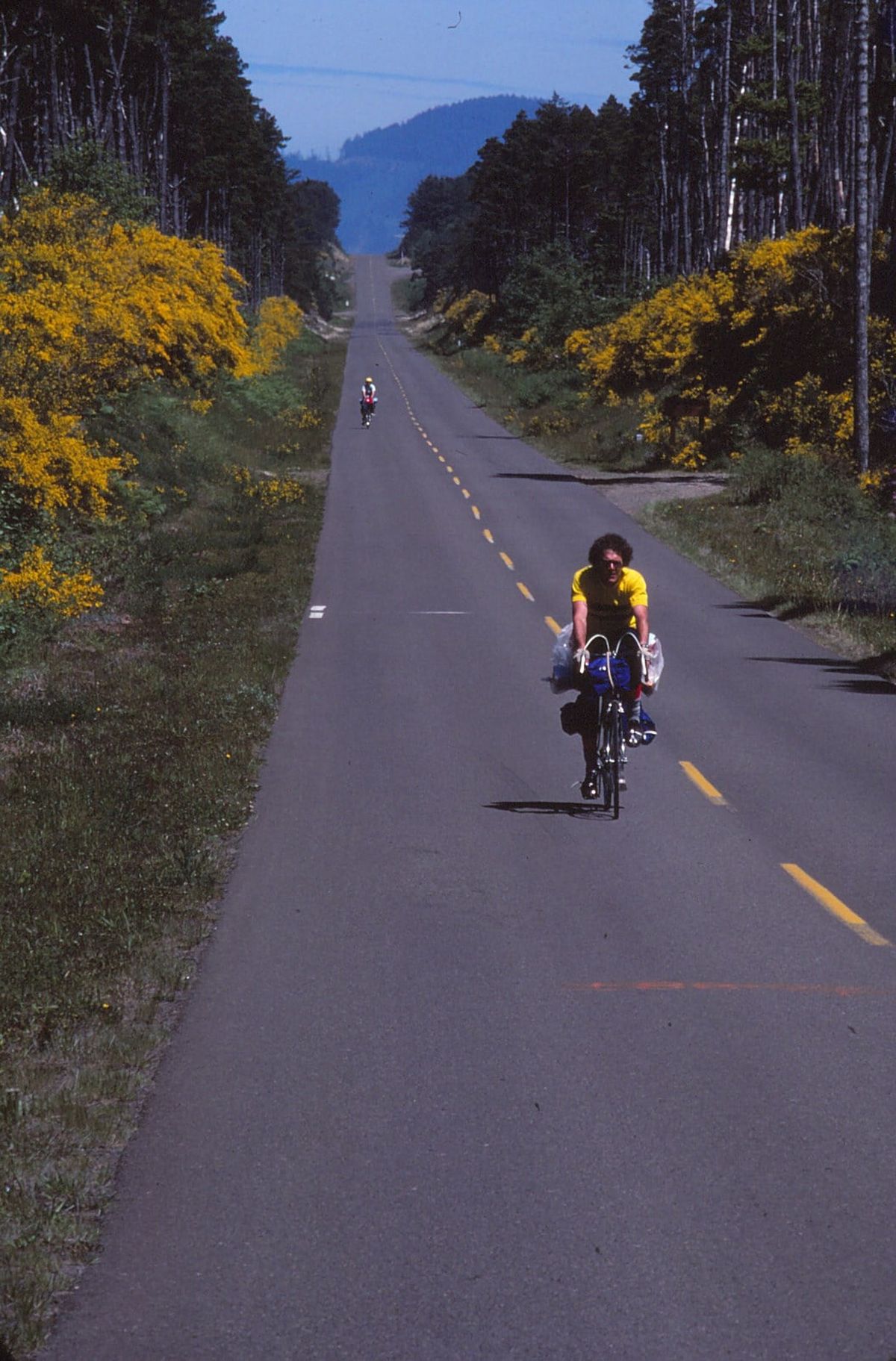
In 2013, my youngest daughter redirected the family discussion on a new chapter in her life with a counter punch to my parental instincts.
Out of college and entering her first window of uncommitted time, Hillary announced plans to join another young lady for a fall-winter bicycle tour across the USA.
“But wouldn’t this be a good time to look for a job?” I suggested.
“What did you do when you were 24?” she asked, as if she didn’t know the answer.
Realizing Hillary had taken a commanding position, I shifted gears.
We began spinning in the same direction, talking about routes (Southern Tier), maps (Adventure Cycling), a touring bike (her mom’s) followed by ongoing consultations on training, gear and safety.
Weeks later, on a final shake-down ride, I gave her a “fanny bumper” – a blaze-orange slow-moving vehicle triangle I’d saved nearly four decades as a memento. Hillary thought the “Bikecentennial 1976” logo was cool. She mildly surprised me by promising to wear it. And then she was off on what I knew would be the ride of her life.
Understanding the value of a long-distance bicycle tour didn’t come to me naturally. My awakening occurred in the University of Montana Ballroom as I absorbed an evening program about two couples tackling a bicycle tour from Anchorage, Alaska, to the tip of South America.
Greg Siple, who struck me as conspicuously unjockish, recounted the 18,272-mile, two-continent bicycling odyssey he called Hemistour. The stories, photos, and Siple’s anyone-can-do-this attitude rewired my mind with the potential for muscle-powered adventure.
When Siple also mentioned that an operation called Bikecentennial was organizing in Missoula, I tagged onto a wheel pedaled by people with vision.
I signed up for leadership training to guide two-wheeling tourists in the inaugural year of the TransAmerica Bicycle Trail.
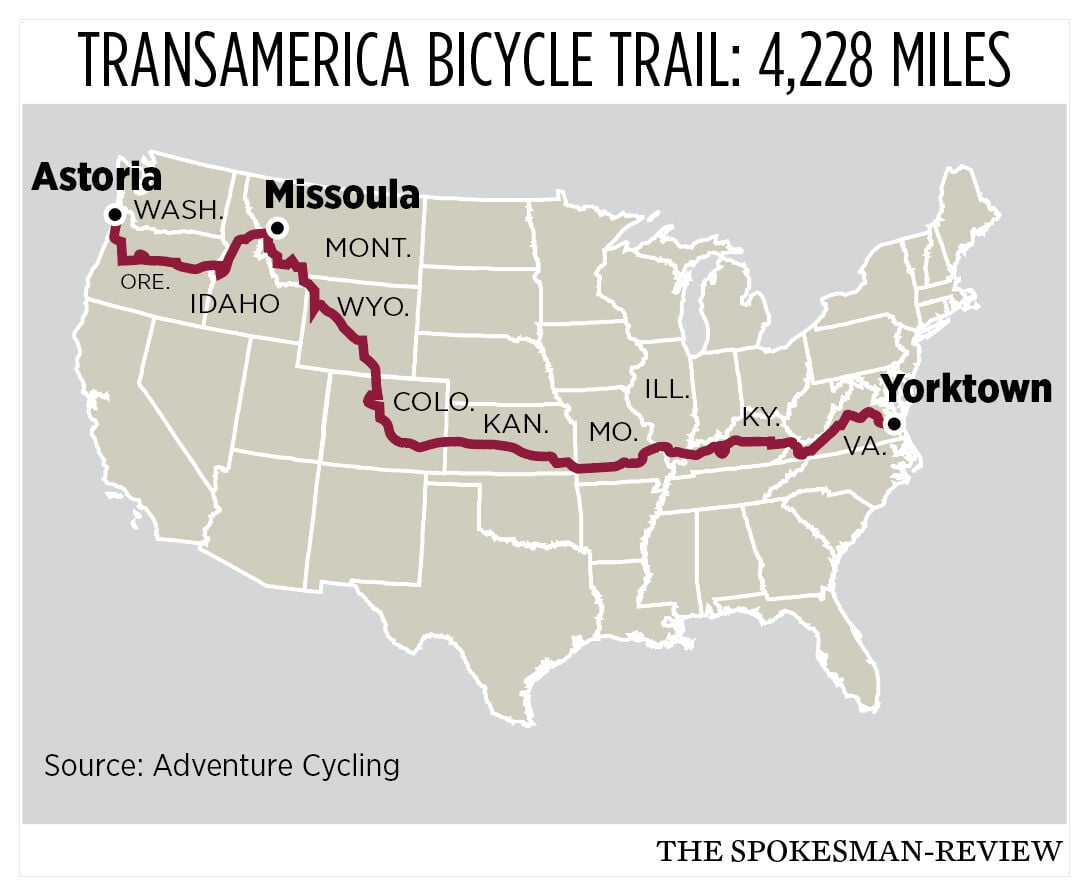
The pureness of the Bikecentennial mission captured my heart and led me years later to serve on its board as the nonprofit transitioned to Adventure Cycling. I could think of nothing more purely beneficial to civilization and the planet than encouraging more people to ride bikes.
But before I served, I indulged.
Rather than ushering a single group 4,300 miles from coast to coast in the nation’s Bicentennial year, I was the only B-76 leader to plan five two-week trips in sequence from Oregon to Virginia. These tours were geared to cyclists who couldn’t commit an entire summer but wanted to sample a section of the Coast-Cascades, Rocky Mountains, Plains-Ozarks, Bluegrass, or Appalachian regions.
That schedule allowed me to pedal with independent cyclists during the hundreds of miles between the end of one group trip and the beginning of another. I had the best of both bike touring worlds that summer and savored every mile and acquaintance along the way.
I was a wide-eyed Montanan who knew little about the real world except that I wanted to see it. The bicycle was my vehicle to that end, breaking down barriers like a tank.
My bike was the power that generated the confidence I needed to explain to one tripper (a physician twice my age) that we were going to enjoy ourselves on a group budget of $5 per person per day. Ten cyclists sharing costs for campgrounds and cooking one-pot meals could tour lavishly on that amount in 1976.
Living was cheap even when I was riding alone between group trips. A splurge for a cheese omelet, toast, hash browns and coffee at Jeane’s Cafe in La Crosse, Kansas, cost $1.30. A 15-cent tip earned me a smile and a wink.
While times have changed in 40 years, the TransAm experience has not.
Adventure Cycling has added two more coast-to-coast routes offering the same reward regardless of whether it’s through the north, the heartland, or the Southern Tier. The payoff is the adventure of being on the road long enough for bicycling to become your way of life.
For a young Montanan, it was a graduate degree in America.
I experienced fireflies in Kansas, heat lightning in Illinois, chiggers in Kentucky. I played my first game of basketball with African Americans, took my first walk through tobacco fields, and sampled the soft, ripe lips of a pretty girl with a southern accent.
The TransAmerica Trail became my community.
The day I rode into Ash Grove, Missouri, a Bikecentennial rider was killed in an accident with a motorist. The flag in the city park was at half-staff that night and a local minister had scheduled a prayer breakfast.
Townsfolk were in shock and they needed us to know that. Some bikers rode on, but a few of us stayed.
That was the first time I was compelled to attend a memorial for someone I didn’t know.
My TransAm education had begun with a group in the relentless rain and daunting hills of the Oregon Coast.
I recall five straight days of pedaling and camping in wetness ranging from downpour to soaking fog, with no relief in sight, as we started climbing eastward through the drizzle and into a raging snowstorm at Santiam Pass.
My body felt like an overloaded electrical socket powering a bike and 40 pounds of gear, producing heat under my water-soaked woollies and generating a smile when the foul weather tried to bully me and three other riders into frowns.
After mugging for photos in 3 inches of snow at Santiam Summit, I soared off the pass and abruptly broke out of the clouds.
Steam rose from the sun-drenched wet pavement and a surreal mist glistened among the pines in the rain shadow that sprawls east of the Cascades.
At Sisters, I said goodbye to my first group and continued solo into Idaho, often sharing the bitter edge of narrow roads with wide-load logging trucks.
I was a savvy road warrior by the time I coasted over Lolo Pass into Montana.
Landscape changes
Mountain passes are the most obvious transitions in the West.
The ride through the forest over Montana’s Chief Joseph Pass is a one-day passage from the hangouts of elk to the clean scent of sage and rustle of yellow-headed blackbirds in the Big Hole Valley.
Togwotee Pass separates the spectacle of the Tetons from the red-rock badlands of Wyoming.
Among the bad things in the badlands is the wind. After crossing Beaver Divide, I recall looking down and being shocked that I was still in second gear – and I was riding downhill!
Campgrounds at Jeffery City, Wyoming, were refuges for wind-battered bikers.
Reaping the rewards of a coast-to-coast ride is all about determination, spirit, and especially about pace – a discipline you must acquire like a taste for dark beer.
Even though I’d already pedaled a thousand miles on the TransAm Trail before I met my second group in Missoula, I was about to be served one of my most important touring lessons.
The teacher was Margaret Jones, 58, a silver-haired conspicuously unjockish adventurer from Washington, D.C.
That two-week tour into Yellowstone Country began on a dusty, mostly gravel detour route.
The day of tough riding left three strong men in the group visibly shaken while Margaret came to camp, slightly behind us, but fresh as a wildflower.
Her contagious curiosity rubbed off.
Soon all of us were parking our bikes numerous times each day to hike a trail, socialize with locals or explore the ruins of homestead cabins.
She also packed a washcloth for a nightly ritual to refresh her body and her attitude, even when the only available water came from a campground spigot.
Margaret taught us to look at each day not in terms of the destination, but as an enriching journey.
Discovery became part of the routine.
One day I would ride through land turned upside down a century earlier by mining dredges. A few days later, I’d pedal through pristine alpine meadows near Breckenridge, Colorado, where the high lakes were still frozen in the first week of July.
After grinding to the top of 11,541-foot Hoosier Pass, I assured one TransAm rider, “Hard to believe, but it’s downhill all the way to Virginia.”
Beating the heat
By the time I reached Pueblo, I’d made the transition from the Rockies to the Plains.
I adjusted to waking before sunrise, eating lightly and putting away as many miles as possible before resuming the daily struggle with suffocating heat and headwinds.
I craved more fruits and vegetables and drank as much as two gallons of water a day.
My attention began to focus less on the scenery and more on the people.
So many drivers waved, I had difficulty keeping my left hand on the handlebars. I sometimes stopped and had chats with three or four farmers or townsfolk a day.
Riding to Houston, Missouri, I noticed more people sitting out the heat on their porches.
The dogs wouldn’t come out of the shade to chase me. By the time I reached Falls of the Rough, Kentucky, I had developed a taste for corn muffins, grits and chess pie.
Within a single week I visited a Trappist monastery, a bourbon distillery, and Monticello. I noted in my journal, “What a country!”
Around Berea, Kentucky, the trail makes a quick transition from the rolling hills and immaculate green horse pastures to the Appalachian Mountains, where coal trucks rule the road.
The ravages of poverty were apparent. After eating a snack, a young man watched me tuck the wrappers in my handlebar bag and said, “Why don’t you just pitch it in the river? Everyone else does.”
Off-trail adventure
I detoured from the TransAm Trail in the final weeks of my two-wheeling summer to avoid the tendency to be obsessed with finishing.
The foreign country they call The South offered so much more to discover.
I spent three days at the 41st Old Time Fiddler’s Convention in Galax, Virginia, marveling at the cloggers and music by groups such as the Swamp Opera String Band, Coffee Gap Corn Lickers, Sorghum Syrup Soppers, and Cousin Curtis and the Cash Rebates.
I dedicated a few days to hiking a stretch of the Appalachian Trail, where a family offered to share their campsite.
I serenaded their young children to sleep with my harmonica.
I had a small campfire crackling when they woke the next morning. The warmth of their grateful smiles soothed any urges I’d had to rush on.
The Republican National Convention was voting the day I met with my last group for the two-week tour from Radford, Virginia, to Yorktown.
Ford or Reagan: either one would have envied being part of a grassroots group that clicked so smoothly.
We quickly bonded with nonpartisan support for each other as we traveled the Blue Ridge Parkway and mingled with the salt of the earth.
I relearned some lessons from Bert Smit, a 68-year-old German who also had a feeling for pace. I got him into a draft line once to help him through a tough day.
But he soon dropped out.
“It’s not the people leading the line who are crazy,” he said. “It’s the ones who follow.”
After 50 years, I don’t think much about the rain, snow, hills, heat, and headwinds that tried to consume my attention in the summer of ’76.
My daughter doesn’t dwell on touring hardships, either – although she argues that the TransAm Trail headwinds near Jeffery City, Wyoming, are a breeze compared with the Santa Ana winds out of California.
But if you ask about Hillary’s tour, her memories, like mine, boil down mostly to the ride, the trail and the people who opened our eyes to America.
Editor’s note: Landers’ stories written in 1996 and 2016 were edited into this single updated story.